Tag Archives: Auschwitz

One Person of Integrity can make a Difference

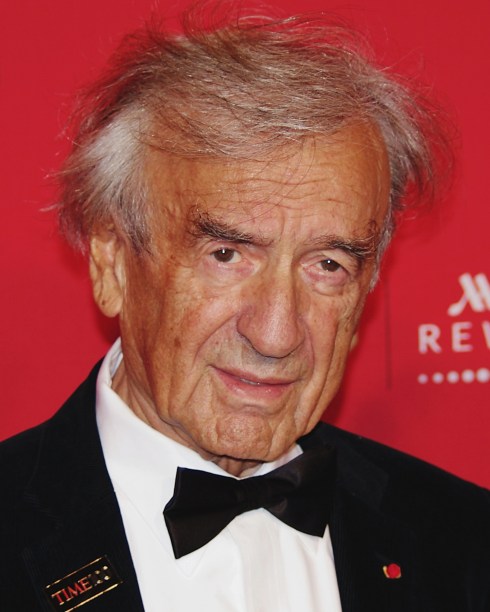
Elie_Wiesel_2012_Shankbone

“One person of integrity can make a difference” is a quote from the late Elie Wiesel who departed this world yesterday at the age of 87.  This is a man who had every right to say these words, because in his strength, survival and life, it is nearly impossible to find anyone who made such an enormous difference with strength and integrity of enormous proportions.

We all know the story of the plight of the Jewish people during Hitler’s rule.  6 million Jews were killed in numerous concentration and death camps set up primarily to solve what the Nazis saw as the Jewish problem.  The most notorious of all the camps, the camp that symbolized the horrors committed during this time was Auschwitz.  One estimate is that 1.1 million of Jewish victims of the Holocaust were  murdered in Auschwitz.  Although most people who ended up there never left, there was a small percentage that did survive, and although for many the horror was too great to relive, there were those who would tell their story.  No one did so with greater skill, honor and integrity than Elie Wiesel.

Ever since his death I have thought a lot about what it was that made Elie Wiesel great. People are often thrust into difficult even horrific circumstances.  To survive as a functioning decent member of society is, in itself heroic, but to tell the story and make it a cause is taking that heroism to another level.  In 1944 at the age of 15, Wiesel was taken by the Nazis from his home in Romania with his family and deported to the camps in Poland. His mother and a sister were killed in Auschwitz and his father was murdered in Buchenwald a few weeks before its liberation.  To be there when that happened, to lose one’s parents and a younger sister in so short of a time would already be enough to destroy anyone’s spirit, not to mention the countless horrors he witnessed during his stay in both Auschwitz and Buchenwald.  Rather than let his spirit be crushed, Wiesel came out of this horror of all horrors with a resolve and strength of character unparalleled.

 “Never shall I forget that night, the first night in camp, which has turned my life into one long night, seven times cursed and seven times sealed….Never shall I forget those moments which murdered my God and my soul and turned my dreams to dust. Never shall I forget these things, even if I am condemned to live as long as God Himself. Never.”
Elie Wiesel, Night

It is my contention that not only do Jews everywhere owe a debt of gratitude to Elie Wiesel, but so do good and decent people of all faiths.  History books tell the story of the Holocaust, but nothing can ever do so with the power and purpose of someone who was there, experienced humanity in its darkest moments, and in their survival remained committed to letting the world know, all in the hope that somehow it could prevent humanity from ever doing anything like that again. Elie Wiesel did all of that, and he did so with a dignity unfathomable.   This man who was almost killed as a teenage boy, went on to live a life that will keep his spirit alive forever.

“For in the end, it is all about memory, its sources and its magnitude, and, of course, its consequences.”
Elie Wiesel, Night

I found an ironic symmetry yesterday as Elie Wiesel passed away at 87 just hours before sunset and the beginning of the day on the Jewish calendar commemorating the day in which my father, also a Holocaust survivor also passed away at the age of 87.  The education I received from both my parents, both survivors, always made me aware and knowledgeable of what took place during that time that everyone would hope to forget but are obligated to remember.  With that in mind I leave you with this one last quote from the great Elie Wiesel of Blessed Memory.

“The opposite of love is not hate, it’s indifference. The opposite of art is not ugliness, it’s indifference. The opposite of faith is not heresy, it’s indifference. And the opposite of life is not death, it’s indifference.”

Rest in Peace Mr. Wiesel and thank you. I will try to never be indifferent.


LIKE THIS POST? SHARE IT ON FACEBOOK OR TWITTER

HOW TO BUY THE BOOK

READ MORE OF WHAT I HAVE TO SAY IN THE DAILY COLUMN

JOIN “THE GLOBAL COALITION FOR ISRAEL” ON FACEBOOK

GLOBAL COALITION FOR ISRAEL IS NOW ON TWITTER @gcimovement

IN CONJUNCTION WITH GLOBAL COALITION FOR ISRAEL

A Jewish Leader Tells the Whole World…NEVER AGAIN

YV


I started this piece numerous times and when all was said and done I decided to just sit back and write it entirely from the heart.  After just listening to Israeli Prime Minister Benjamin Netanyahu’s speech to Congress I am so overcome by emotion that I want to hold on to this moment, even if only for myself.

Part of what makes us who we are is our history.  Having just finished listening to the speech I can’t help but think of my family’s history.  It was 60 years ago when the reign of Hitler’s Nazi party ended.  60 million people died in WWII and 6 million Jewish souls were lost.  Among those murdered by the Nazis was an estimated 104,000 Dutch Jews, 75% of Holland’s Jewish population in 1940. Included in that number were 3 of my 4 grandparents, an aunt and uncle, and numerous other relatives I would never know.  My parents went through life with pain I can’t even imagine having lived through one of the darkest times in the world’s history.

As far back as I can remember I have heard the words “Never Again”.  Today I watched Holocaust survivor Elie Wiesel who suffered in the concentration camps of Auschwitz and Buchenwald, receive a standing ovation in the United States Congress.  Today the leader of the Jewish state of Israel, Benjamin Netanyahu, stood up in front of the nation and the entire world and basically said NEVER AGAIN with the words “The days in which the Jewish people stay passive in the face of genocidal enemies; those days are over”.

This is only about politics to those making it about politics.  What this is ultimately about is the survival of not only the Jewish people but the survival of our modern-day civilization.  Today a Jewish leader stood up in front of the world and told the world that the Jewish people will never again be led to slaughter.  For that reason, as the son of Holocaust survivors, as a Jew, and as an American, I found myself moved to tears and say thank you to the State of Israel and Prime Minister Benjamin Netanyahu.


LIKE THIS POST? SHARE IT ON FACEBOOK OR TWITTER

HOW TO BUY THE BOOK

CLICK TO JOIN “THE GLOBAL COALITION FOR ISRAEL” ON FACEBOOK


Freedom: Not a Religious Concept

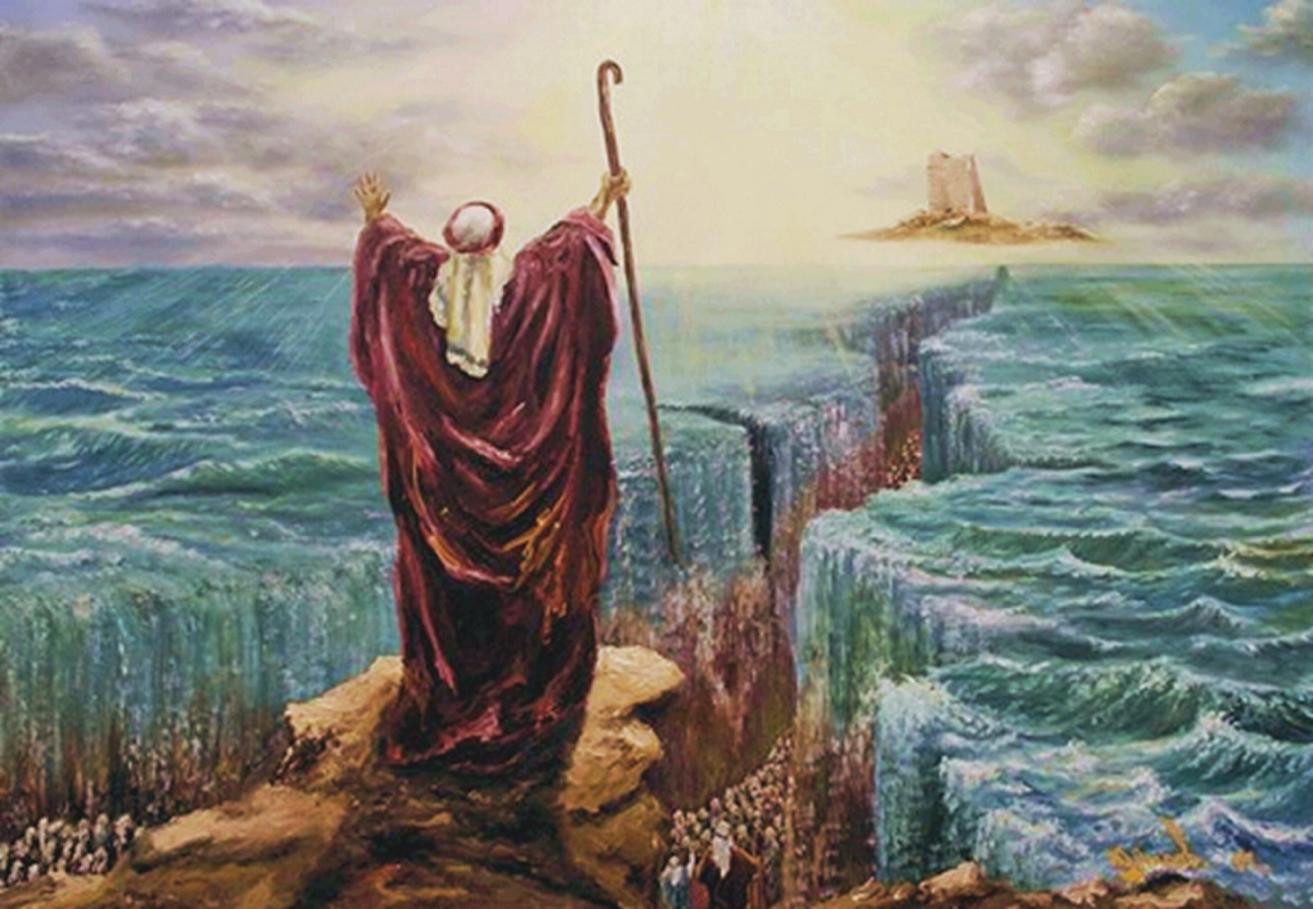
mosesEvery year as Passover approaches I find myself intrigued by how many Jewish people, even those relatively uninvolved in religious observance, put importance on some form of celebration of the holiday.  Seeing as it is a holiday that begins with sitting around a table with friends and family, telling a story and eating, naturally it is partially due to how uncomplicated and potentially enjoyable this form of observance can actually be.  However, when thinking about it this year I came to an entirely different and much deeper explanation.  The attraction to Passover is that it has very little to do with religion.  Passover transcends religion, inasmuch as it about something not provided by religion.  That would be the basic theme of Passover, the importance of freedom.

We live in an increasingly complex society.  People consider freedom to manifest itself in issues once not even considered important to humankind.  In the United States, freedom now has become connected to lifestyle choices, possession of weapons, and how to treat your body.  In Muslim populations, as well as ultra-religious communities everywhere, levels of freedom are often gender based, men are often provided with freedoms women are not provided with, and when not are based on first accepting the basic rules of the community.    In more progressive, liberal environments, freedom is expressed by the decriminalization of things like drugs and prostitution.  And in some parts of the world, freedom is still about the basic right to survive and live as the person you were born to be, without restriction from governments or dictators.

Freedom has always been the ultimate weapon.  Take away someone’s freedom and the belief is that you have the ultimate control over what they do.  It is the primary and justified complaint against religious leadership.  The belief that impacting someone’s freedom because your belief system considers their personal choices to be wrong for society and the individual, sets up a scenario where people do exactly what is expected of them.  Ironically it takes away from the freedom given by God that is very possibly the most important freedom that exists. The freedom of choice.

The truth is that no one can take that freedom away from any man or woman ever.   The consequences may be dire, but the freedom remains.  My grandparents, when presented with the option to accept Baptismal papers in 1943 Amsterdam, refused to accept them.  Everyone, including them, knew their chances survival would be greater had they accepted them, but they made the ultimate sacrifice in choosing the freedom to live as Jews and subsequently die as Jews by refusing the papers.  They let no man take away their freedom to be Jews, even though it resulted in them being murdered in Auschwitz.

The lesson to be learned is that what makes Passover so attractive is that it is truly about freedom.  A freedom that no government, religious institution, or random individual can ever take from any of us.  That freedom is the freedom of choice.    And the reason no man can ever take it away from us is because it is a freedom given to us by God.  Where religions and governments have failed all over the world is in their unwillingness to take second place to man’s freedom to decide for how he wishes to live his life. A freedom no one can ever take away and a freedom and a concept far greater than religious observance, for it is a freedom given directly to man by God.  That is a freedom all men and women share equally, and the expression of that is part of what makes the celebration of Passover so attractive to so many.

Happy Passover to all who celebrate, and to those who do not, in the theme of the day I wish you a life filled with true freedom.


Remembering My Father

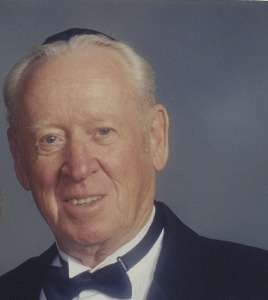
dadc193 years ago today in Rotterdam, Holland, my father Nardus Groen was born.  His life was one filled with substance, meaning, and love.  I remember him fondly and miss him often.  Despite what one might take from the book “Jew Face”, I was aware of my father’s faults.  Every human being is flawed and my father was no exception.  However, one of the things I witnessed from the time I was a child, was that he never spoke one bad word of his parents who were murdered in Auschwitz.

My father was a great man.  I say that with certainty and pride.  He was principled, strong, ethical, and loving.  I often wonder if he would have liked the book “Jew Face” and my portrayal of his life.  I have often said that the greatest joy for me in writing the book was that in writing it I felt as though I got to know my parents as young adults.  My father never was able to confirm if that feeling of mine was justified, but it is one that I keep with me and cherish.

To use more modern vernacular, when looking at my father in the most difficult of times, my father was a bad ass.  He claimed in later years that he often felt fear, but his actions during the worst of times showed a behavior that showed otherwise.  The hardest thing for me as his son has always been the feeling that I have never been close to being the man that he was.  But then again, many never will be.

He was proud of who he was, and as a Rabbi he tried to use his understanding and extensive knowledge of Judaism to help and teach others, Jew and non-Jew alike.  The debate on what makes one truly religious is an endless one, but in my eyes and the eyes of many others, my father was indeed very religious, even if somewhat unconventional in practice.

He loved my mother, his children, grandchildren and great-grandchildren very much. No one has ever perfected the art of showing that love, my father being no exception, but to this day his love is never questioned.  Together with my mother, who God willing turns 91 in 2 weeks, a new world sprung forth of decent and loving people who do them both proud.

So today, on what would have been my father’s 93rd birthday, I remember my father, Rabbi Nardus Groen, with love and respect, and hope that some of what I have done this past year has helped part of the world know why.


A Dutch Concentration Camp

http://youtu.be/lxr93QPIzeU

Camp Westerbork was not the only concentration camp set up in Holland, but it was by far the most active.  A high percentage of Dutch Jews who would be murdered in Auschwitz and Sobibor would first be transported to Westerbork.  Although most who went there perished, there were some who did survive the war even after spending significant time in Westerbork.  One of those who survived was my Uncle Meijer who recently passed away.  The following is a short video that tells a little bit about this infamous Dutch  Concentration Camp.


In Support of Greek Jewry

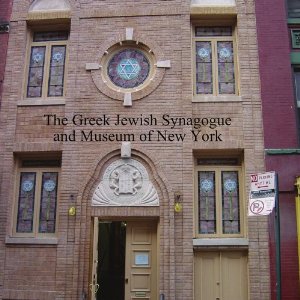
As documented in the book Jew Face, the nation of Holland had 75% of its Jewish population murdered by the Nazis during the Holocaust.  Another nation with one of the smaller Jewish populations which suffered similar devastation was the country of Greece.  Between 60,000-70,000 Greek Jews were murdered in the Holocaust, most of them in Auschwitz.  At the end of the war an estimated 8-10,000 survived.  Keeping alive the rich history and culture of Greek Judaism with such a small number remaining is a difficult task, one which my friend Richard Solomon has taken upon himself to do.  The following is a link where you can acquire a CD  of a discussion about Greek Jewish history and the Greek Jewish Synagogue and Museum of New York.Go to http://kkjsm.org/ and help keep alive the Greek Jewish history and culture.


Jew Face: An excerpt connecting then and now

What has always been the most remarkable thing about the book Jew Face, in my opinion at least, has nothing to do with how the book was written.  The most remarkable thing has always been that the story is true.   As a writer, I could ask for no greater gift than to have at my disposal a story that is so rich with almost every human emotion imaginable, and of a subject matter not only important in history, but in this particular instance,  inspiring and hopeful.  Whenever possible in this blog I will try to draw the story to a real connection, be it through the date or through people involved in the book and the people close to them.  The following excerpt involves the story of Sam Abram and his sister Nettie.  Sam was a very close friend of my father, and his daughter Chelly recently had her birthday and on Monday will commemorate, according to the Jewish calendar, the anniversary of her father’s passing 14 years ago.   With her permission I am making this mention and posting this excerpt from the book Jew Face.

Saving Nettie

 As the Germans were to come in on various occasions and raid neighborhoods, the Jewish community in Amsterdam became smaller and more dispersed. Those either not willing to accept the evidence or whose innate courage prevented them from leaving their home would ultimately find themselves shipped off to what we now know would ultimately be their cruel treatment in concentration camps, and in most cases, death.

 Throughout 1941, Seys-Innquart, Aus der Funten, and his other henchmen were in the process of determining a location to use as a deportation center for the Jews of Holland. The two most logical places were the Esnoga, the Great Spanish-Portuguese Synagogue, and the Hollandse Schouwburg, the great concert hall of Amsterdam. After reviewing it carefully, the Nazis felt that the Schouwburg was the more logical choice. Because of the large amount of Jewish patronage over the years, the proximity to the Jewish ghetto, and the purpose in which it was now going to be used, the Nazis changed its name to the Joodse Schouwburg and prepared it for use as a deportation center.

 The plan had in many ways already been put into action. The concentration camps of Westerbork and Vugt were set up in the north and south, respectively, and beginning in January of 1942, after mass roundups, Jews were no longer allowed to live anywhere in the Netherlands but Amsterdam or the two camps. When arriving in Amsterdam, these people would either live in the homes of others or would reside in public institutions such as schools or hospitals.

 The Schouwburg had been set up and was used for Straf Gevaals (“S Cases”) and for whatever group of random Jews the Nazis chose to keep there until deportation.

 Meanwhile, the death camps of Auschwitz and Sobibor were close to operating at full capacity. The Germans were taking the process of eliminating the Jewish population of Europe to a new level. Once they reached that stage, in July of 1942, the system in which they handled the Jews of Holland was cut and dry. Homes and institutions were raided, and if not emptied out in full, they were left devastated and in shambles. Most of the people picked up in these raids were brought to Westerbork, where they would stay for a short while, days at most, before being transported to the death camps. Those not sent to Westerbork went through Vugt. The majority of the remaining was first processed in the Schouwburg and then went through the same pattern of Auschwitz or Sobibor via Westerbork.

 Even before the mass deportations of July of 1942, the Grune Polizei (“Green Police”), the Nazi police force patrolling Amsterdam, would make regular raids and roundups in Jewish neighborhoods. Many of the Jews who had an understanding of what was taking place went into hiding before they were forced to leave their homes. For many, this was the reason they survived, although, as was the case with everyone who hid, some were more fortunate than others.

 The situation in Amsterdam was worsening from week to week. Thousands of people had already been taken from their homes, and it was becoming more and more clear that this was going to get a lot worse before it got better.

 Most of the people being seized from their homes at this point were individuals. Families and couples appeared to be spared for a large part, but it was a tenuous situation at best, and the future had a very ominous feel to it.

 One day early in 1942, Nardus was approached by one of his good friends, Sam Abram. Sam lived close to Nardus, and they had attended Yeshiva together, frequented the same gatherings, and knew and liked each other very much. Sam had a younger sister, Nettie, and he was concerned that this young, attractive, single woman would be in danger of being sent to one of the camps. And his fears were justified. Many of the women in the neighborhood had disappeared, and with the incidents of brutality leaking out, no one wanted to spend too much time imagining what this meant. They just knew that is wasn’t good. So Sam asked Nardus if he had a way to help Nettie stay out of the camps and remain in Amsterdam.

 There was really only one way Nardus could help her: He had toMore


The Holocaust made simple

Recently I’ve engaged in conversation with numerous people regarding the book Jew Face and in doing so something struck me as somewhat concerning.  I have found that there are many intelligent, moderately educated people who do not have a basic knowledge of what took place in Europe between 1933-1945 and the subsequent Holocaust that resulted in the death of 6 million Jews.  As a result I decided to put together this post as a quick guide for those I come across who wish to know more and for anyone else who wishes to use this as a reference for anyone they encounter with a similar need for basic information.

It starts with World War I.  The first Great War took place between 1914-1918.  Germany was one of the major aggressors in Europe, and by the time they were defeated by the Allied forces that consisted of Britain, France, and the United States, among others, the German army was brought to its knees and the country’s economy was left in shambles.  Recovery was slow and with the great worldwide depression of the 1930s, poverty and discontent was on the rise all over Europe.  Conditions were ideal for revolutions.  Spain and Italy both went the direction of fascist dictatorships, and in Germany, an Austrian born ex-Corporal in the German Army by the name of Adolph Hitler would seize the opportunity and rise to leadership.  He would rise to power as leader of the Nationalist Socialist party, better known as the Nazi party, which would become the ruling party of Germany in 1933.

Hitler would rule his nation as an absolute dictator and would be known as and referred to as “the Fuhrer”.  The German masses would follow him with a degree of commitment and hysteria unlike any seen in history.  Hitler felt that the Germans were a master race, and that any nation or people not of pure German blood would be an obstacle to his goal.  Germany’s Nazi party would invade and occupy much of Europe and would continue fighting on numerous fronts as it attempted to achieve worldwide domination and the formation of this master race.

http://youtu.be/2o4DXUxO_J8

At the time this was happening, the majority of the worldwide Jewish population was in Europe, primarily Poland, Russia, and Hungary.  Hitler would use the Jews as a rallying point around which he would motivate his people through hate, blaming them for the misfortunes of the German people and accusing International Jewry of being the force behind an imminent World War.  When Hitler invaded Poland in 1939, for all intents and purposes, not only did World War II begin, but what was to be known as The Holocaust would begin as well.  By 1941, with the implementation of what was to be known as the “Final Solution”, no Jew in Europe was safe.  Although anti-Semitism had been in full force for some time in Germany, once the Nazis invaded and occupied countries all over Europe, they would set out to capture, deport, and murder as many Jews as possible.  Death camps and Concentration camps were set up in various countries where Jewish people would be killed in Gas Chambers or shot en masse by firing squads.  The most infamous of all these camps was Auschwitz which was located in Poland.  The Nazis would not only kill these people, they would strip them of all their possessions, starve them, torture them, conduct medical experiments on them, rape them, and force them to do hard labor sometimes until they died in the process.  Hitler’s Nazi Germany was responsible for the death of millions of Russians, Poles, gypsies, and anyone else not considered by their standards to be a viable part of the future master race.  Nothing however represented the horrors and evil committed by Nazi Germany more than the fate of the Jewish people.  By the time it would be over in 1945, the Holocaust would result in the death of 6 million Jews.

There are a lot more details to the history, but for those who do not know what happened, it is my hope that this will provide you with a foundation on which to not only learn more but to identify the signs of evil rising up again.


Do we forgive Germany?

It goes without saying that there is no forgiving Hitler’s Nazi Germany for the atrocities they committed against mankind.  At one point in writing the book “Jew Face” I went to the library and took out 3 books about Auschwitz and other concentration and death camps.  I did this in order to get an even stronger awareness of what took place so that in my writing I would give the proper respect and attention to the Holocaust perpetuated on the Jewish people.  Even though the book does not focus on this aspect, I believe I accomplished that goal.

The question I present is this. Do we forgive Germany today?  Today’s modern Germany is progressive, tolerant, and in many ways more friendly with Israel and the Jewish people than many other nations.  I have not been there, but it has been told to me by many that this generation is not only accepting but apologetic and that they do not hide or avoid the truth.  Nevertheless, the horrors committed by this one nation were so great that an argument can be made that forgiveness is never in order.  I would love to know what you think, but for those who wish to respond without a comment I am adding a poll.


Remembering The Holocaust-A Personal Perspective

Being the child of Holocaust survivors I have been exposed to the reality of what took place from the time of my earliest memories.  Naturally my understanding of the events developed as I grew older, but from a young age the one thing I knew was that my parents went through something not everyone else’s parents went through.  I never knew my grandparents.  My mother’s mother passed away many years before the war, but her father and my father’s mother and father were all killed in Auschwitz.

As I grew up I went through this stage where I thought that my parents had a pretty easy go of it in the war.  After all, they didn’t have numbers on their arms and my mother was never even arrested by the Nazis.  How bad could it have been?  That stage did not last long as I soon began to gather a more educated understanding of my parents’ experience.

I believe it started with me trying to imagine the relatives I never knew.  I would think of my father’s parents.  Listening to the stories my father would tell, I would always feel a special connection to his father.  One I could not explain rationally or logically.  I just felt a somewhat mystical bond.  His mother would seem to me like a woman with a quiet demeanor but strong willed character.  My father would always speak with them with nothing but respect which inevitably would translate to how I and I presume the rest of my siblings would perceive them.

I would then try to imagine my mother’s father.  He always seemed like the man everyone wanted to meet at least once.  He was an athlete, outgoing, successful in business, while being somewhat mysterious.  At least that would be how it looked through my young eyes.  And then I would think of my mother’s brother and all I would see was a sweet, talented, and gentle young man who should have had a chance to live in an easier time.  I knew my mother loved them both deeply and that remembering them was more emotional than almost anything else.

I would imagine all of them and try to picture them.   How they lived, how they spoke, how they might have spoken to me.  At one point however I realized that when imagining them my imagination never left Amsterdam.  I could not imagine them being picked up in a raid and stuffed on a train to ultimately wind up in Auschwitz.  And I most certainly could not imagine them being killed in the gas chambers.  I could not imagine any of this.  It was just too difficult.  And I never even knew them.

It is hard to conceive the horrors experienced by the murdered victims of Nazi Germany.  Of the 6 million Jews who were murdered during this time, many were tortured, beaten, raped, used for experimentation, and made to suffer in ways that a normal mind cannot even begin to conceive.  And for those who experienced this level of suffering and survived, to make an attempt to comprehend what they felt would have to be impossible.

True, my parents did not have those specific experiences.  What they had to endure was running from an enemy that would certainly kill them, hiding in whatever location they could find regardless of the conditions, being so deprived of food that fresh bread and butter seemed like a luxury, and finding out that almost everyone they knew, loved, played with, studied with and laughed with, was gone.  Taken away forever.  Earlier today I closed my eyes and tried to imagine being in a New York where 75% of the Jewish community was gone and in a world where the majority of my family was suddenly dead.  I could not do it.  It was just too difficult emotionally.   For my parents and for so many like them, they did not have the luxury of opening their eyes and going back to a better reality.  The reality was brutal and would never ever be altered.  All it could be was remembered.

The Holocaust the Jewish people suffered through was of such an enormous magnitude that the people who went through these horrors on whatever level they did are called survivors, when in fact they too were victims.

There are various factors that have contributed to the survival of the Jewish people since the horrors of Nazi Germany.  A case can be made for any one of many reasons being most important.  Some would say it is the existence of the State of Israel, while others might say the commitment of the Ultra-Orthodox or the traditional Jew, while others may say it is the activist who will fight either physically or verbally in defense of the Jewish people.   One thing is certain.  It is not because of the person who does nothing.  Until recently I considered myself one who did nothing.  Although I have always been proud to be a Jew, I’ve never felt like I did enough.  On this eve of Yom HaShoah, I feel a responsibility like never before to be a voice that reminds people of what happened and to fight those with the gall to claim it never did.

It may be too painful for me to imagine, but it is even more painful to my soul to allow myself to ever forget.