
As many of you reading this already know, the
book Jew Face is the story of my parents
journeys and survival during the Nazi
occupation of Holland between 1940-1945.
There are many reasons this story is
important.  Some are general for a large
group of people, while others are more
pertinent to the individuals in the story.
The most significant being the impact it has
on all the family members involved and the
generations that have followed.

My parents, Nardus and Sipora Groen, started a
new world with the birth of their first son,
and my oldest brother Marcel.  He would be
followed by Leo, Ruben, my one sister Debby,
and then me.  Between the children my parents
would get 12 grandchildren, and as it stands now,
8 great grandchildren.  It should be noted that the 8 great grandchildren
come from only 3 of the grandchildren, the 3 oldest children of Marcel and
his wife Bernice, so there is still plenty of opportunity for the remaining
grandchildren to add to that number.  It is a story of survival in the
greatest sense.  A world almost destroyed now stands at over 30 people and
growing, and that is without counting extended family.

The reason for this post today is because some events and family
members represent the glory and greatness that is the survival of a
family.  This weekend my nephew Justin and his fiance Kim will be
married.  Justin, who is the youngest of Marcel and Bernice's children
is one of those people who is loved and respected by those who know him,
and has the great ability to show that love and respect in return on a
regular basis.  Nothing symbolizes it more than the relationship he had
with his "Opa" and still has with his "Oma".  Opa and Oma are the Dutch
words for grandfather and grandmother and in this case represent my
parents, Nardus and Sipora Groen.  I still remember when my father had
his heart attack about 15 years ago on the 7th day of Passover, and
walking up and finding Justin holding him in his arms in the back of a
police car right outside Beth Shalom synagogue in Elkins Park, Pa.
until the ambulance arrived.  Their relationship would always be
close and even though my father passed away close to 6 years ago,
Justin still wears the pin he gave him on the lapel of his suit in
synagogue and intends to use his Opa's Talit (prayer shawl) at his
upcoming wedding.   His relationship with his Oma may be even more
special.  This is a relationship of mutual affection and respect rarely
seen between 2 people separated by 58 years, be it relatives or not.
They not only love and respect each other but they enjoy each other's
company in a very special way, and as a son and a uncle it always warms
my heart to see.

As I write this piece, a few days prior to the wedding, the best news
of all may be that Justin is marrying a woman with the same wonderful
qualities he possesses and someone with the same values of goodness and
love for family and friends we wish everyone possessed.

As Kim joins the family this weekend the family grows and the
significance of what was saved so many years ago becomes even more
significant and beautiful.  It is said that when you save one person
you save an entire world.  As I write this I have joy in my heart for
the world of my parents that was saved, and the world that it has
become with the generations to follow.
Tag Archives: Nazi
Generations of Love and Family

Remembering a Friend
 The most important thing to me about the book “Jew Face” has always been the fact that it is about real people and real events. There are real friendships in the book and friendships that developed amongst the generations that followed those people spoken of in the book. Sadly, people pass on, and we only hope that the people they leave behind continue their life and legacy.
Today we mourn the loss of Ester Abram. Ester was the wife of Sam Abram, a childhood friend of my father. Following this post I will put up the excerpt from the book that speaks of the events that took place between my father, Sam, and Sam’s sister during the Nazi occupation of Holland. But first we remember Ester Abram, who together with her husband Sam would end up being a lifelong and cherished friend of both my father and mother. On behalf of my mother and our entire family we express our deepest sympathies on her loss and pray that she rests in peace.
Excerpt from Jew Face
Saving Nettie
As the Germans were to come in on various occasions and raid neighborhoods, the Jewish community in Amsterdam became smaller and more dispersed. Those either not willing to accept the evidence or whose innate courage prevented them from leaving their home would ultimately find themselves shipped off to what we now know would ultimately be their cruel treatment in concentration camps, and in most cases, death.
Throughout 1941, Seys-Innquart, Aus der Funten, and his other henchmen were in the process of determining a location to use as a deportation center for the Jews of Holland. The two most logical places were the Esnoga, the Great Spanish-Portuguese Synagogue, and the Hollandse Schouwburg, the great concert hall of Amsterdam. After reviewing it carefully, the Nazis felt that the Schouwburg was the more logical choice. Because of the large amount of Jewish patronage over the years, the proximity to the Jewish ghetto, and the purpose in which it was now going to be used, the Nazis changed its name to the Joodse Schouwburg and prepared it for use as a deportation center.
The plan had in many ways already been put into action. The concentration camps of Westerbork and Vugt were set up in the north and south, respectively, and beginning in January of 1942, after mass roundups, Jews were no longer allowed to live anywhere in the Netherlands but Amsterdam or the two camps. When arriving in Amsterdam, these people would either live in the homes of others or would reside in public institutions such as schools or hospitals.
The Schouwburg had been set up and was used for Straf Gevaals (“S Cases”) and for whatever group of random Jews the Nazis chose to keep there until deportation.
Meanwhile, the death camps of Auschwitz and Sobibor were close to operating at full capacity. The Germans were taking the process of eliminating the Jewish population of Europe to a new level. Once they reached that stage, in July of 1942, the system in which they handled the Jews of Holland was cut and dry. Homes and institutions were raided, and if not emptied out in full, they were left devastated and in shambles. Most of the people picked up in these raids were brought to Westerbork, where they would stay for a short while, days at most, before being transported to the death camps. Those not sent to Westerbork went through Vugt. The majority of the remaining was first processed in the Schouwburg and then went through the same pattern of Auschwitz or Sobibor via Westerbork.
Even before the mass deportations of July of 1942, the Grune Polizei (“Green Police”), the Nazi police force patrolling Amsterdam, would make regular raids and roundups in Jewish neighborhoods. Many of the Jews who had an understanding of what was taking place went into hiding before they were forced to leave their homes. For many, this was the reason they survived, although, as was the case with everyone who hid, some were more fortunate than others.
The situation in Amsterdam was worsening from week to week. Thousands of people had already been taken from their homes, and it was becoming more and more clear that this was going to get a lot worse before it got better. Most of the people being seized from their homes at this point were individuals. Families and couples appeared to be spared for a large part, but it was a tenuous situation at best, and the future had a very ominous feel to it.
One day early in 1942, Nardus was approached by one of his good friends, Sam Abram. Sam lived close to Nardus, and they had attended Yeshiva together, frequented the same gatherings, and knew and liked each other very much. Sam had a younger sister, Nettie, and he was concerned that this young, attractive, single woman would be in danger of being sent to one of the camps. And his fears were justified. Many of the women in the neighborhood had disappeared, and with the incidents of brutality leaking out, no one wanted to spend too much time imagining what this meant. They just knew that is wasn’t good. So Sam asked Nardus if he had a way to help Nettie stay out of the camps and remain in Amsterdam.
There was really only one way Nardus could help her: He had to marry her. In so doing, he would at least be able to delay her capture. So Nardus and Nettie Abram were married in an effort to save her life, and for now it appeared to be working. As a married woman, she was able to remain in Amsterdam long enough to allow her to find a family where she could hide. And once the Nazis started taking everyone away, married or not, Nettie would need that hiding place.
Nardus and Nettie remained married through the entire war. Any resolution to the situation would not be able to take place before the war would end. Nardus knew this but did not care. Marital status meant nothing right now. What mattered was saving as many lives as possible. Right now, he had the chance to save the sister of a good friend, and he would do so. What he did wasn’t much, and it gave no assurances for the future, but it gave her a chance. Nettie would be safe, at least for now.
Benjamin the Maccabee?
 When I read about things like the E1 corridor, and hear the debate about UN resolutions and acceptance of Palestinian statehood, I step back and try to understand what is really going on. I try to be objective and fair, fully knowing that my family history makes that close to impossible. Naturally I am impacted by my own family’s plight during the Nazi occupation of Holland and, knowing Jewish history, I see the numerous examples of persecution against the Jewish people.
It is very easy to jump on the bandwagon of compromise and talk about how Israel needs to make concessions and show tolerance to the Palestinians. Criticizing Benjamin Netanyahu is becoming more and more popular, not just amongst Israel’s enemies but amongst Israel’s friends and even Jews. But is his approach so inappropriate? If there is one major reason to elect an Israeli Prime Minister it is to protect the interests of Israel and the Jewish people worldwide. We are on the verge of celebrating the holiday of Hanukkah, the holiday that celebrates the victory of the Maccabees, possibly the most military aggressive group in Jewish history prior to 1948, and I ask myself this; would today’s world criticize Judah the Maccabee? Most likely yes.
The saying “hindsight is 20/20”, is poignant and applicable. As a Jew who never knew his grandparents, I know that the world is still a place filled with people who want to see to it that future generations suffer the same fate. Anti Jewish sentiment has never been based in logic or reason. It is not something that can be eliminated by negotiation or compromise. Nothing Israel has done in its history has ever shown evidence of a desire to pick war over peace. Are all the moves Israel makes politically expedient? Probably not. But does political expediency take precedent over survival? Definitely not. If you choose to make the argument that the Palestinians just want the right to an independent state, I would answer; all the Jewish state wants is to be recognized as having a right to exist. The Palestinians want land, Israel wants to live safely. To pretend Israel is asking more is nothing short of clever anti-Semitism. Benjamin Netanyahu has a reputation of being a difficult man. This may be true. But I ask you this. Knowing that your enemies still won’t even admit you have the right to survival, do you really want someone easy representing your best interests?
The basis for peace does not start with concessions from a nation surrounded by people wishing to destroy it. The basis for peace is the basic understanding by all parties that the other has a right to exist in peace. Menachem Begin came further from the right than Benjamin Netanyahu, and seeing a true opportunity for peace gave the Sinai to Egypt. The years of peace have proven it to be a solid move, even with the change going on in Egypt today. If the Palestinians want peace, not just land and Israel’s destruction, I believe the world would see a much less “difficult” Benjamin Netanyahu. But if Israel’s enemies continue to show its ultimate goal to be its destruction, expect a Maccabean type response. One that Jewish people should be grateful for, not critical of.
Yet Again, From the Ashes…..
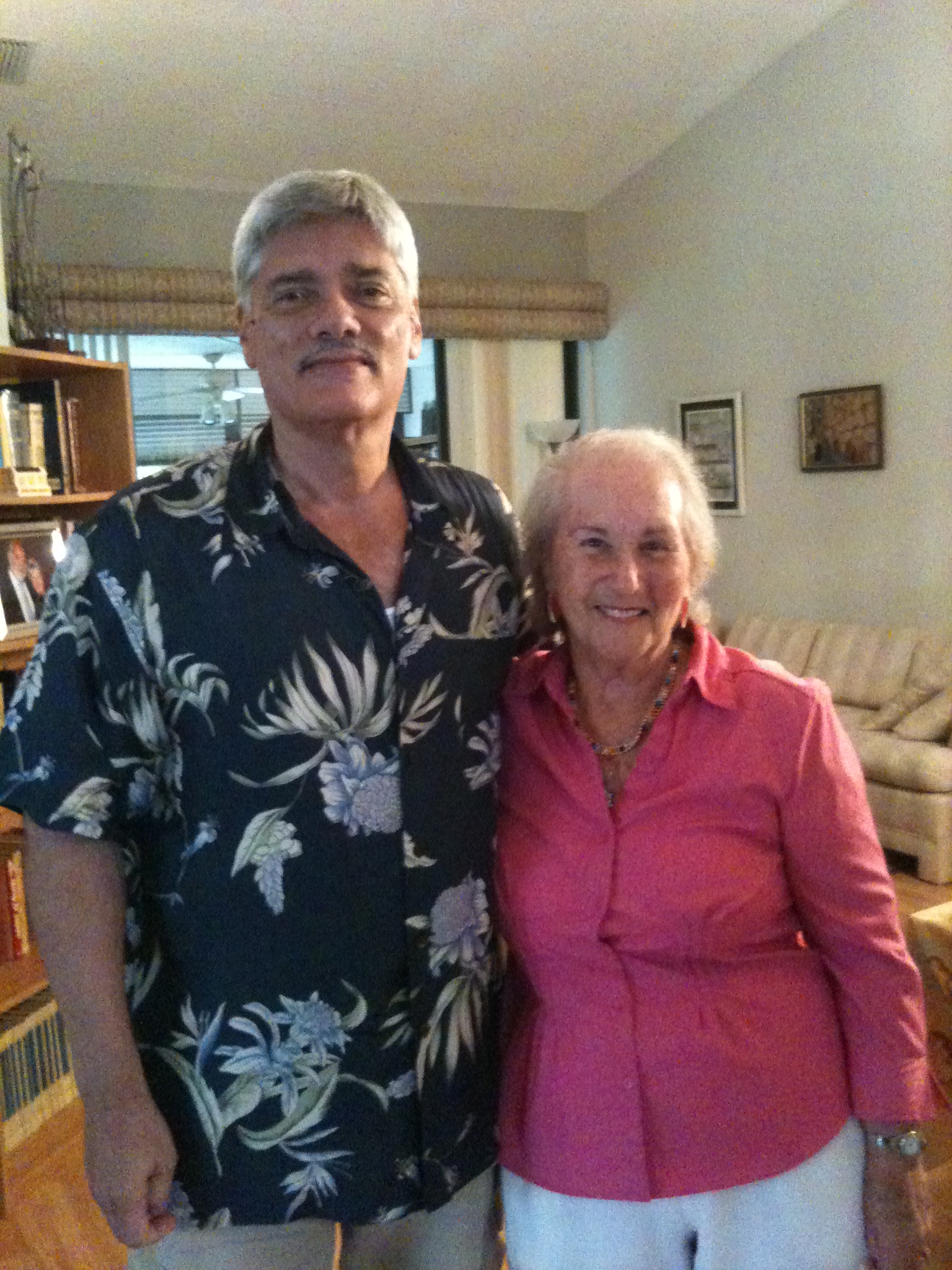
In a day and age where the most popular stories tend to involve scandal, hate, and violence, I am happy to offer a positive story of renewal, hope, and the re-connection of a family.
For those of you who have read the book Jew Face, you will know of the story of my mother’s favorite childhood cousin David van Hasselt. For those of you who have not yet read it, when my mother, born Sipora Rodrigues-Lopes was 13 years old, her mother passed away of natural causes. With a father who was a young man and somewhat lost with the premature loss of his wife, and a younger brother in need of guidance and love, much of the weight of the world fell into Sipora’s lap. The people who would provide love and support to the family would be critical to the household and in many ways would be the key to emotional survival. One of the main people to provide this support to Sipora would be an energetic and personable young man, her cousin David van Hasselt. It was during this important time in Sipora’s life that David would achieve that special status of favorite cousin.
With the brutal and vicious Nazi war machine occupying Holland in May of 1940, the future of the Jewish people quickly would become bleak. The method used to eliminate the Jewish population and to instill terror and establish control however was gradual and methodical. The first major activity against the Jewish people of Amsterdam would take place in February of 1941 when the shooting of a Nazi official was made to look like the act of a Jewish male and would subsequently lead to the arrest of anywhere from 300-500 young Jewish men. The men would all be deported to Mauthausen Concentration Camp in Austria where they would be murdered or made to work under the worst conditions until they died a horrific death. One of the men was my mother Sipora’s cousin, David van Hasselt. Although the memory of David would always live in Sipora’s heart, with his death and the subsequent Holocaust which took the lives of 104,000 Dutch Jews, an estimated 75% of the Dutch Jewish population, Sipora would be left with nothing but a memory of the cousin she loved so much.
Fast forward to April 2012 with the release of the book Jew Face, the book I had the great honor to write about my parents’ life primarily revolving around their experiences taking place from 1940-1945 in Nazi-occupied Holland. In the beginning of October I received an email from a man in Holland named Ron van Hasselt. Although in his own words there is some significant distance in the relationship to my mother and our family, he is nevertheless connected. Ron, also an author of a book relating to experiences of his family during the Nazi’s occupation, has been active in finding family, be it close or distant. His book, a Dutch language book entitled “De Oorlog Van Mijn Vader”, means “The war of my father”. His website is in Dutch but with the use of Google translate can be read in English and found by going to the link http://www.deoorlogvanmijnvader.nl/.
Ron, being the tremendous researcher that I have now begun to learn that he is, googled David van Hasselt, found my book Jew Face, and subsequently located both me and my mother. He went on to discover her close proximity to his relative Vincent and forwarded him the information. Who exactly is Vincent van Hasselt? Vincent is the son of Edward van Hasselt, who was David van Hasselt’s brother and another one of my mother’s cousins. All this leads us to the picture you see in this post. It is my mother Sipora Groen, standing next to Vincent, the nephew of her favorite childhood cousin David van Hasselt this past Sunday after they met each other for the very first time. Although the surviving family members lost contact after the war, through Ron van Hasselt’s successful efforts, and the writing of the book Jew Face, I am happy and proud to say that long-lost family members have begun what will hopefully be a meaningful and joyous reunion. Of all the possible achievements I hoped for in writing the book, none has been more special than this one. Not only has it bought joy to a family reunited, but it has helped keep alive the memory of my mother’s lost cousin.
Yet again, from the ashes, the family grows.
The following is an excerpt from the book Jew Face. It is titled “A lost cousin” and tells the story of David van Hasselt:
A Lost Cousin
After her mother died, five years prior to the occupation, Sipora would find solace in whatever support she could from close friends and family. Everyone meant well, and there were people who came by the house often, but between the tough economic times and the fact that people had their own families to attend to, it was difficult for most to come see her, her brother, and her father on any consistent basis.
Sipora was always well mannered and gracious and always showed the appropriate appreciation toward anyone who helped her or her family. Like anyone else, though, Sipora had her favorites. These were the people whose visits brought genuine joy. One such person was her cousin David van Hasselt.
David wore that special mantle of favorite cousin. He had been a regular visitor in their household for years and had every intention of coming at least as often, if not more, after the untimely passing of Sipora’s mother. Sipora loved his visits. He would make her laugh; he would talk with her about music, art, ice skating; and he would even help her with her schoolwork from time to time. Whenever he would visit, it would be the highlight of her day.
After her mother died, Sipora needed anything that made the day a little special. At the young age of thirteen, Sipora had household responsibilities thrust upon her most often given to women at least five years older. Her life at a young age was not easy. Her cousin David was a special friend.
David van Hasselt was a bright, funny, strong young man, who at the outbreak of war in Europe had made the decision to join the Dutch army. On May 15, five days after the Germans attacked,the war was over in Holland. With the Nazis steamrolling through Holland and Belgium and bearing down on France, the Allies planned a defensive assault on Dunkirk, France. If nothing else, it was an attempt to slow down, if not halt, the German juggernaut. So it was on May 24, 1940, fourteen days after the war had begun and nine days after the war was over in Holland, that David van Hasselt was amongst the Allied troops confronting the Nazis in what would be a failed attempt at any sort of conquest.
Although the mission at Dunkirk was a failure, a total disaster was averted when Nazi leadership chose to delay any counterattack for three days in an effort to maintain solid control of its forces. This gave most of the Allied forces time to regroup and evacuate to England.
David, however, chose to go back to his hometown of Amsterdam rather than follow the other soldiers to England. Having all his family and friends in Holland, David felt that the only correct choice for him would be to go back home and be with the people he cared about.
Meanwhile, the Nazi occupiers of Holland, who until now had taken no action against the Jewish population, were getting geared up to make their first raid against what they saw as this inferior race. They planned to hit in the heart of the Jewish community of Amsterdam, sending troops to Rapenburg Street in the center of the Jewish ghetto. Their orders were to pick up between 300 and 500 young, healthy Jewish men for deportation. They wanted to create immediate fear and doubt in those who were most able or likely to oppose them in future attacks, while fabricating a claim of an imposing threat.
David was not a resident of the Jewish ghetto, but a number of people that he was close to did indeed live there. One such person was his sweetheart, who he would visit on a regular basis. The past few weeks had been better times for David than any he had seen since before the war. He had enjoyed the time with his parents, caught up with his best friends, and now was on his way to Rapenburg Street to see his girl. They had been discussing their plans for the future, and although things were not looking very good for Europe as a whole, life had to go on, and being with her was the only way David wanted it to be at this time. They had considered going to England together in the assumption that things on the Continent were going to get worse before they would get better. They had discussed it many times and hoped that if it was necessary, they would be able to leave together.
On February 22, 1941, as David was walking on Rapenburg Street, he heard what sounded like screaming and fighting. When he turned the corner, he saw a mob of what looked like a thousand people; the majority was the Grune Polizei (Green Police). He knew he could do nothing and was considering turning around or hiding. But it was too late. They had already seen him.
Sipora’s favorite cousin was one of those taken away to Mauthausen in the raid of February 1941. David did not make it out, and would spend the next 7 months in the concentration camp before a report came back saying that he had died. When Sipora’s uncle learned of his son’s demise, he knew he needed to let his daughter know about her brother’s fate. However, being that his wife was no longer with him, he would have to tell her alone. This was something he could not do. He needed the help of someone close to him, and he needed it to be a woman. So he asked Sipora to help him. Sipora, at the age of nineteen, was already experiencing more death than most people would by that age. The lessons she learned at a young age would help see her through even more difficult times and teach her in many ways how to transfer that strength to the people close to her. However, as the war broke out, the first feeling for her, as it was for so many, was terrifying despair. And to have to break the news of the death of someone she loved so much to another relative she was so close with was in itself a horror she had not yet experienced. Especially considering the circumstances, or at least as much as she knew about the circumstances surrounding his death.
David van Hasselt: Murdered September 16, 1941, Mauthausen.
August 13, 1943
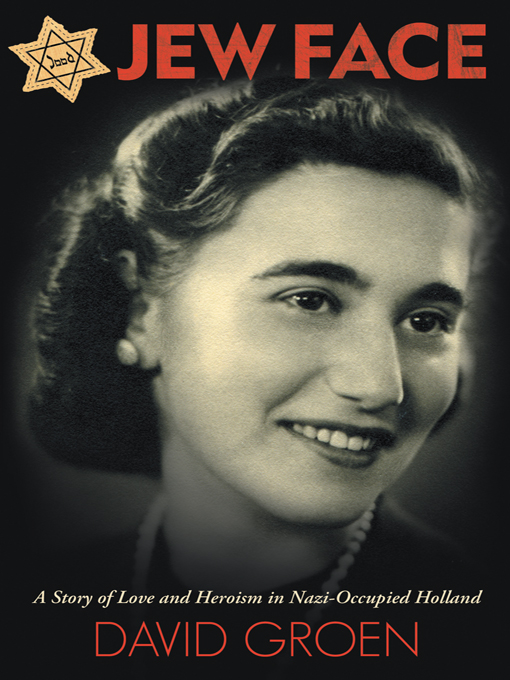 69 years ago today was Friday August 13, 1943. In Holland this was a time when as a Jew, if you were fortunate enough to still be alive, your life was in constant peril. If you did not look Jewish you still needed to have a false identity and what was perceived as a benefit or purpose to the Nazi occupiers. The Jewish institutions were being systematically depleted and destroyed with the ultimate goal of total extermination. The NIZ, the hospital where my mother lived and worked as a nurse, had reached that point where the final raid was upon them. As a young pretty woman who was clearly Jewish and one who had seen her whole world turned upside down, Sipora Rodrigues-Lopes was on the verge of giving up. She would find the strength and with the support of Nardus Groen would find her way out of the NIZ.
In many ways their story takes on its greatest significance on this day, August 13, 1943, a day when their connection became strong and their travels began. The following is the books Prologue and shows the events of this fateful day.
PROLOGUE
The date was Friday, August 13, 1943, and it felt like the worst moment of Sipora’s young life. She knew that the Germans were in the building and getting closer to finding her. She had already been through so much and she knew that the situation was going to get a lot worse before it got better. Her will to live was being taken over by despair. She was not the type of woman who would ever do anything to speed up her own death, but she also did not feel like running or fighting. So she decided that she would just wait on the third floor and when the Nazi soldiers located her,
she would willingly leave with the rest of the patients and hospital staff . At least then she felt as though she could do some good by making the sick and elderly patients a little more comfortable.
Nardus, however, had no intention of allowing this to happen. As had been the case since the beginning of the Nazi invasion of Amsterdam, he instinctively knew that whatever Jews were not murdered instantly would instead suffer greatly through torture, experimentation, rape, or brutal slave labor. Since he found Sipora before the soldiers did, he knew he had to get her out. And to a man like Nardus, it did not matter what Sipora thought of this idea. It was going to happen his way. And that was that.
When Sipora saw Nardus, she had already sunk so deep into
hopelessness she wasn’t even able to feel any sense of relief. And she was determined to let him know. “I am just going to wait here and let them take me too,” she told Nardus.
“They will need a nurse for the trip. If nothing else, I can make
them feel more comfortable.”
Some moments define an individual, and other moments can define a relationship between two individuals. In many ways, what was about to take place would define much of Nardus and Sipora’s relationship. True to his nature, Nardus was not suggesting or asking what would happen next. What he was doing was telling Sipora what would happen next.
“I’ll tell you what,” he said in his straight-to-the-point manner, “since you are going to your death anyway, and that is your plan, I will throw you out the window right now myself. At least then you will die quickly. Either way you will die.”
Sipora was crying now. “What’s the point?” she said. “There’s no hope. My family is gone; your family is gone. They’re even taking sick and old patients from here and transporting them out of the city.”
Knowing that he needed to remain calm and in control, Nardus made it very clear to Sipora what was to happen next.
“Get up and let’s get out of here. We will find a way to survive this. All you have to do is trust me and listen to what I tell you to do.”
Although what she was experiencing felt like hell, Sipora was at least able to move now. What made the difference was that someone else, someone she was growing to trust more and more by the day, was taking control and leading her in what at least felt like a better direction.
Neither Nardus nor Sipora had any idea what was to come next, but it did not matter. The only thing that mattered now was that Nardus would never allow either one of them to just sit and wait to be killed. At this moment, which signified all the drama, horror, and significance of the times they were living through, these two people were thrust together in a way that set the tone for all that was yet to come.
Tisha B’Av and an Olympic fiasco
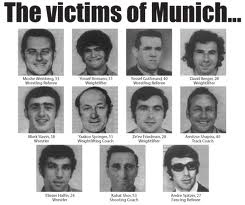 As the sun sets this Saturday, July 28, 2012, the we being the commemoration of the 9th day of the month of Av on the Jewish calendar. This day, known as Tisha B’Av, is the saddest day on the Jewish calendar. It commemorates the destruction of both Temples in Jerusalem and is widely recognized as the day used to remember those lost in the Holocaust when exact dates are not available. The sadness of the day is in line with the feelings of despair caused by the attempted annihilation of the Jewish people by Adolph Hitler’s Nazi Germany. This is going to be a short post designed to make a very powerful and important point. On the eve of Tisha B’Av 1941, the Nazi killing machine signed into effect the “Final Solution” against the Jews. On the eve of Tisha B’Av 1942, the Nazis ordered the beginning of deportations from the Warsaw Ghetto. And on the eve of Tisha B’Av 2012 the OIC (Olympic International Committee) will not sanction just 1 minute of silence at the opening ceremonies for 11 Jewish people murdered at one of its previous events, the Munich Olympics.
Let me make something very clear. I am by no means comparing the decision makers of the OIC to the evil murderous thugs of Nazi Germany. However, the message this sends to me is that 70 years later Jewish lives still do not hold value to many out there, and subsequently what I do on this site and what many reading do in their lives carries a great responsibility and importance to Jewish people worldwide. We must never forget, and in doing so do whatever possible to make sure the world never forgets.
Never Again!!
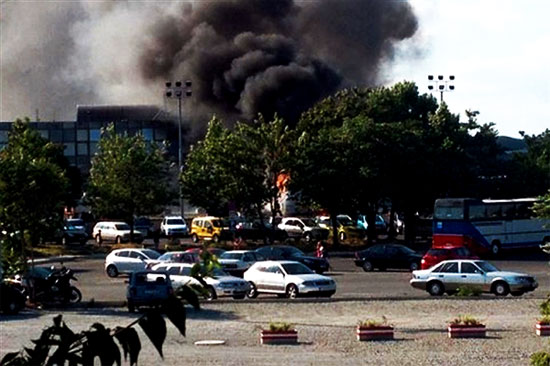 I admit I am trying to sell a book on this website, but in doing so I’ve become very aware of the need to make sure people never forget what the Jewish people went through under Nazi occupation. Today’s terror attack is a powerful and sad reminder of how important this mission has become. An attack most likely orchestrated by Iran, a nation whose president leads the world in Holocaust denial, today’s bus explosion in Bulgaria shows what people who have no value for human life, specifically Jewish life, are capable of doing. The same mentality that existed during Hitler’s Germany today exists in the radical Muslim world. Make no mistake. Today’s attack was not merely and anti-Zionist activity. It was an attack on Jews by people who want the same thing the Nazis wanted, the annihilation of the Jewish people worldwide. We must never forget, because in remembering we can clearly identify when we see it again, as we did today.
Europe 1940 to Euro 2012
 Whenever possible, Holland’s Heroes attempts to take current events and link it to the story in Jew Face. Sometimes it is an obvious connection, sometimes it is a stretch requiring imagination, and occasionally it is a connection that in its insignificance is mildly entertaining and sometimes even funny or ironic. This particular post falls into that last category.
Over the next 5 days the champion for Euro 2012 International Football(soccer) tournament will be crowned. The semifinal matches are as follows. Today, Spain against Portugal. Tomorrow, Germany against Italy.
The book Jew Face is the story of my parents Nardus and Sipora Groen, primarily surrounding the events taking place between 1940-1945. My mother’s maiden name was Rodrigues-Lopes. A Dutch Jew from Spanish-Portuguese descent, my mother spent 5 years either hiding or running from the Nazi killing machine with the help of my father Nardus Groen. This book chronicles the events that took place as they lived through the time when Germany occupied Holland. One of Germany’s allies during World War II; Italy.
I think the irony is obvious. The not so obvious question, seeing as these countries are very different countries today is, who would I like to see win this thing. I will keep that answer to myself. At least for today.
The love story in Jew Face
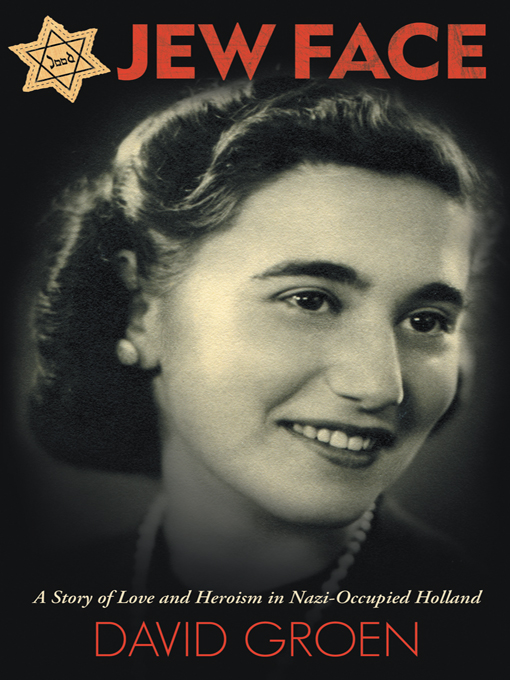 In a random conversation a few weeks back, after mentioning my book, I jokingly suggested to a young woman that I should promote Jew Face as the perfect book to read upon completing Fifty Shades of Grey. She grinned slightly and lifted up the book she was reading, Fifty Shades Darker, the second in the Fifty Shades trilogy. I proceeded to ask her what would cause her to be drawn to my book. She responded with the words, “if it was a love story”.
Well for those of you wondering, Jew Face is the story of a woman unable to move safely in her home town of Amsterdam due to what in those days in that city was her very Jewish face, and a Jewish man who looked like a regular Dutchman, who took it upon himself to see to her safety regardless of the danger involved. His emerging love for the woman and her initial trust and faith that steadily turned into a deep and long lasting love is the foundation of the entire story.
So for those looking for a love story, there is a reason the subtitle is ”A story of love and heroism in Nazi-occupied Holland.” This story revolves around so many different aspects, with love very much in the forefront.
Sports, destiny, and remembering a father
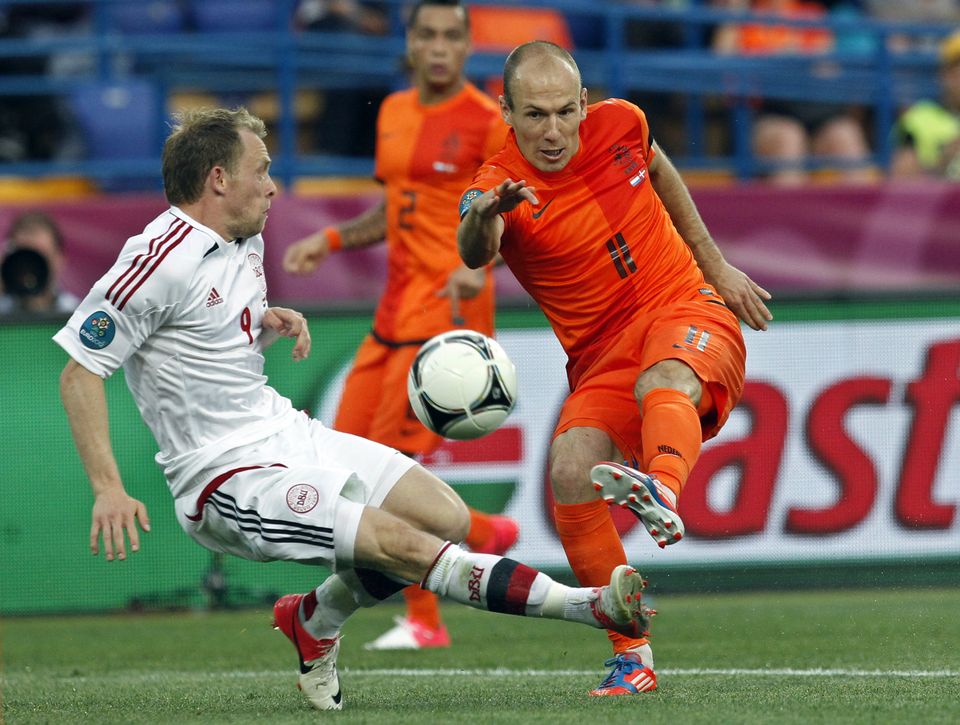 With today being 5 years since the passing of my father, Nardus Groen, in a blog that speaks of the book Jew Face and Nazi Germany’s occupation of Holland between 1940-45, you might ask yourself why this post talks about a Football (Soccer) game. Here’s why. I remember calling my parents in Holland during times when I was living either in America or Israel. My parents always warmly welcomed my call and had time to speak with me. With one exception. When there was a football match on my father was busy and would instruct me to call back at a later time. It didn’t have to be an international match between the Netherlands and a rival nation. If Ajax of Amsterdam was playing, or one of Europe’s elite teams were on the television, there was very little that would pry him away from the television. It was a passion of my father’s as it still is today for my mother. So with that in mind, on June 13, 2012, exactly 5 years after my father’s passing, it is impossible to ignore the fact that today, Holland must defeat Germany in order to have a reasonable shot at surviving the first round of Euro 2012 Football Championships. It’s exactly what my father would have wanted on a day like today. That and of course a Dutch victory over Germany. And maybe that will be what actually happens with the help of one special fan who is remembered with love and respect watching and cheering on from a very special place. Go Holland!
 Holland's Heroes