Monthly Archives: June 2012

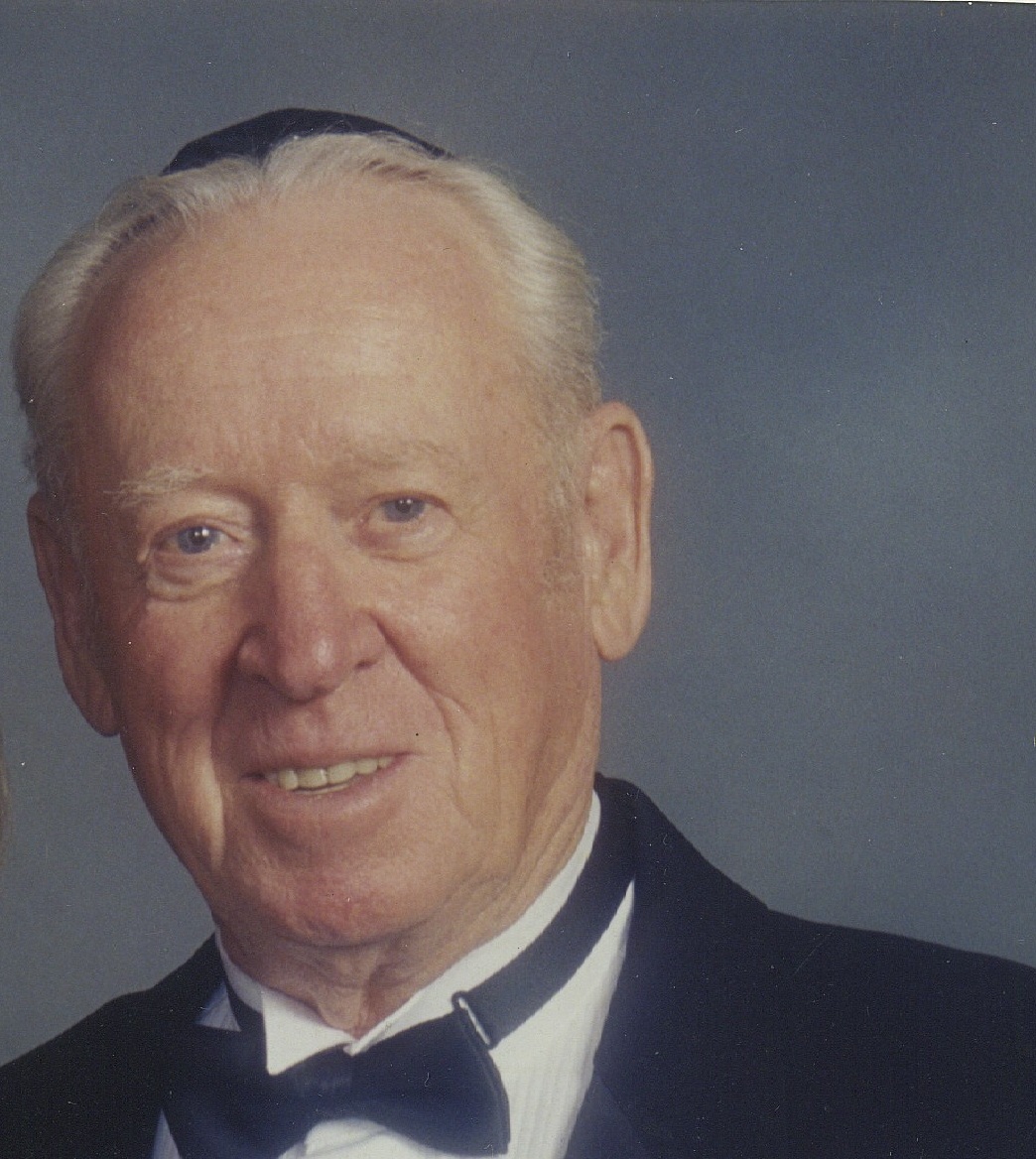
Who was this man and what made him great?

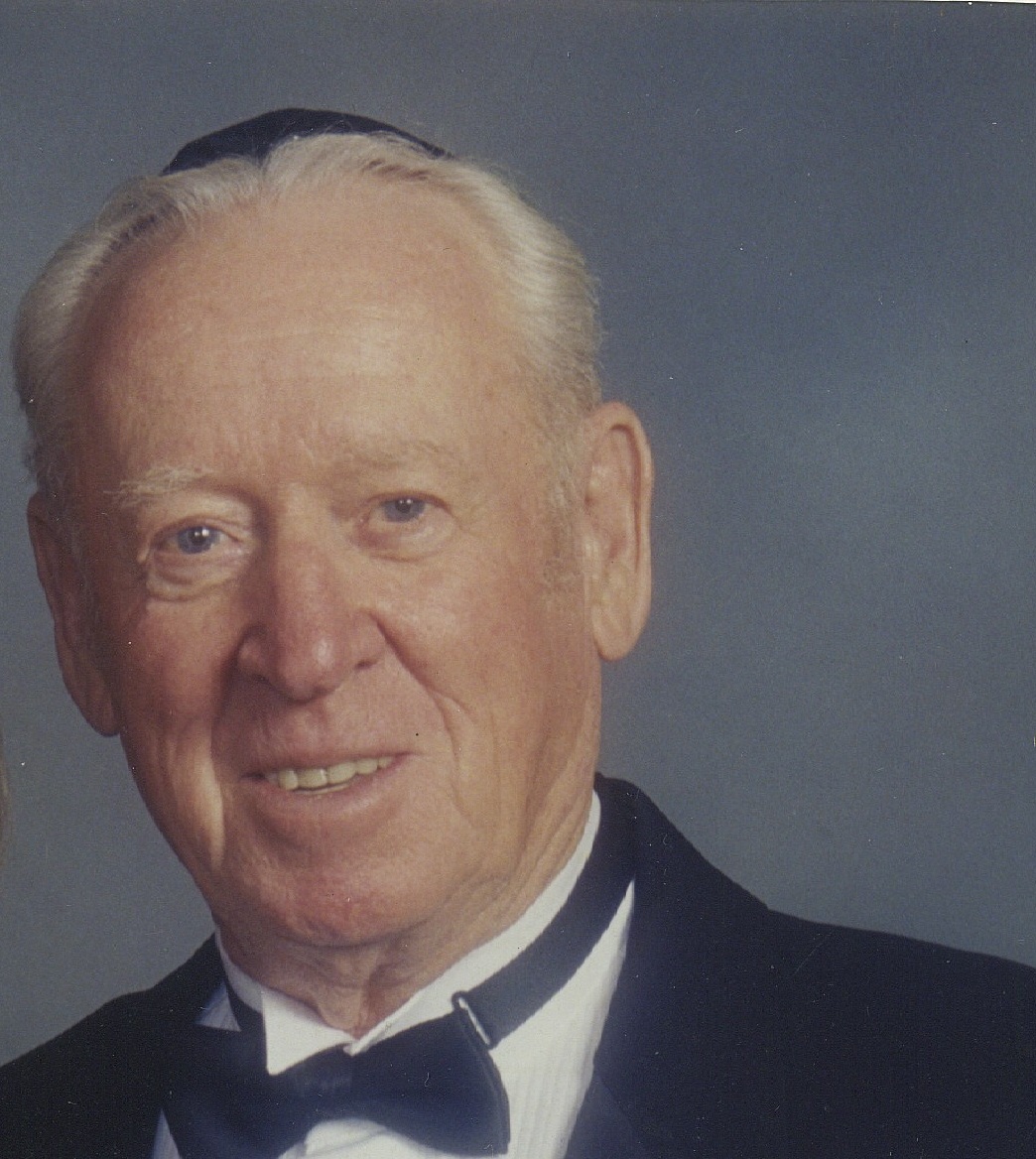
Completing the week of special remembrance for my father, Rabbi Nardus Groen, tonight and tomorrow is the Yahrzeit, Jewish calendar anniversary of his passing.  To honor his memory I am posting a slightly edited version of the eulogy I gave at his funeral.

Who was this man and what made him great?
He was a son
A brother
A student
A friend
A realist
A freedom fighter
A Hero
A Companion
A father
A soldier
A scholar
A father
A Rabbi
A father
A chief rabbi
A traveler
A Rabbi
A father
A salesman
A provider
A partner
A fighter

A son

Although I never had the good fortune of knowing any of my grandparents, I grew up my entire life hearing nothing but good words about my father’s mother and father. In the 65 years of his life that he lived without them, he gave them nothing but honor. He showed the example of how to honor your parents and passed it down.
A brother
He spoke with affection of his sister who was a victim of the holocaust along with his parents. He raised us knowing our uncles and aunts and he especially had a close relationship with his brother David who was taken from his life at a much too early time.
A student
As a child he was such a tremendous student that he practically knew the entire Siddur by heart at the time of his Bar mitzvah as well as having a similar mastery of the torah by the age of 18. His photographic memory coupled with his love of Jewish studies made this a labor of love throughout his life.
A friend
He made special friends. Friends that lasted a lifetime. Once you became my father’s friend you were a friend to the end and treated with unparelled warmth, respect and loyalty. From his early years till his passing, one of the hardest things for my father was watching all his friends pass on before him. The reunion taking place at this time must be one of glorious majesty.
A realist
He knew that when his neighborhood was being cleared out by the Germans that it was a sign of something horrible taking place. He left everything he knew behind and understood that to survive he needed to take on a new identity. He knew the benefit of approaching things as they were, not as he hoped they would be.
A freedom fighter
Most of us here today will never know what it was like to live through the horrible times of Nazi occupation. So many people were taken and those who survived did so only by the grace of God. One of my father’s favorites sayings was, Hakol Talooy B’Mazal, Everything depends on luck or fortune. Although to survive that horrible time one did need the fortune of God’s mercy, my father took on himself to battle, to fight. Not just for his survival, but for the survival of anyone else he could help.
A hero
He saved countless lives during those years. His pragmatic nature allowed him to see past what he wanted to see and understand what was truly happening. He escaped 4 times from makeshift Nazi prisons and even once from a concentration camp. But his most heroic feat may have been saving his future bride, my mother from certain death. Not once, but many times over.
A companion
In doing this so began a companionship of 2 people unlike anything anyone you will ever find. Little did they know at the time, but the relationship that began at that time with my parents, began with the birth of their firstborn son, and now stands at 23 offspring alone. Although one portion of his life was at its end, and riddled with tragedy, a new portion of his life was beginning, and his strength, his courage, and love of life was the driving force to what would turn into a familial kingdom.
A father
When you are the youngest child you tend to see it all from a different perspective. And I saw the love and pride my father had for my 3 brothers and my sister. You will hear this over and over, but nothing was more important to him than his wife and children. He had tremendous passions and many interests, but the greatest joy he could have would be to sit around a table with his family, and a bowl of my mother’s heavenly chicken soup and just talk. With the birth of his first son a glorious saga began, and throughout my life I saw the joy and pride his oldest son gave him, and I saw him develop into a man willing to allow this son to show the honor he felt for his father by letting him do for him in the way he knew how..
A soldier
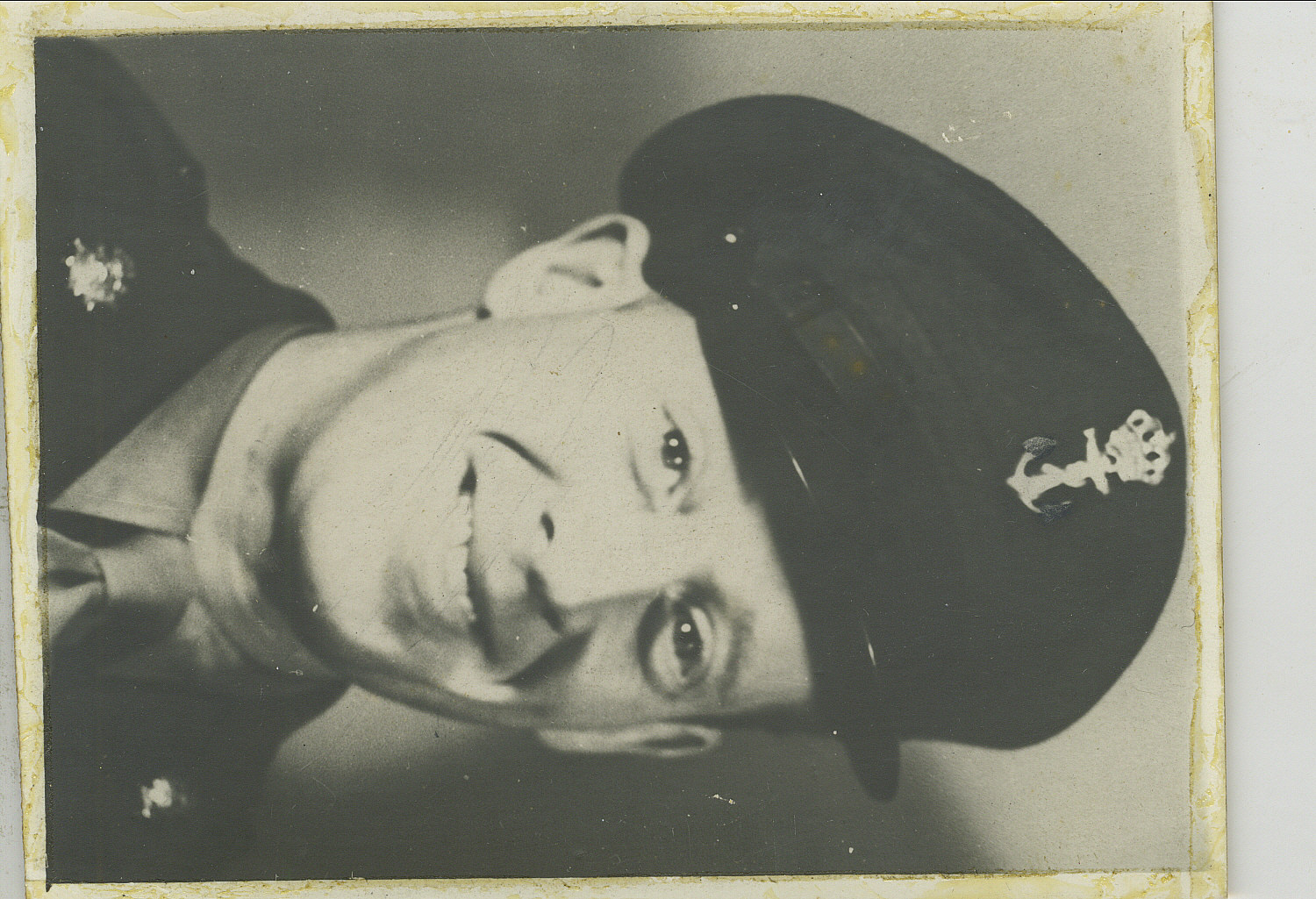
He was a Dutch marine, attached to the US Marine Corp only because once Nazi occupation ended my father wanted to continue to fight for what was right. He had tremendous pride in his time in the military and it was only his family values, the values that drove him most, that stopped him from a life as a career soldier.
A father
Once again becoming a father with the birth of his second son, I saw something very special in the relationship he had with someone with such similar personality traits. The same fighting spirit and love of family caused these 2 to have a relationship that was very special and needless to say, never dull.
A Rabbi
After the war he became a Rabbi and had various pulpits in different parts of the world. To my father though, being a Rabbi was not something that depended on having a congregation. It was something you lived. And whether he was the chief Rabbi in Surinam or at a point in his life where he chose not to practice, he was always a Rabbi.
After starting a family with 2 sons, behold they saw a 3rd son. It took 3 tries, but he then had a son who physically looked liked him. He admired this son’s mind and pragmatism and guided and taught him in the ways of the world as he had begun to with his first 2 sons
He was a great scholar.
He learned regularly with a Rabbi who was known worldwide as one of, if not the greatest scholar of that era. My father’s knowledge of Jewish law was as great as anyone I ever knew and if there was a question to be asked, he knew the answer. Most impressively however, he loved the opportunity to give it.
A father again when he and my mother finally made a daughter, and gave her the combined name of both her mother and his, my sister was always his little girl. The protective man he always was had him looking out for her at every opportunity. Their relationship was by her own words private, but clear to everyone, it was special.
He was a provider for his family.
We always had a warm home and a full refrigerator and as children never knew the difference between the good financial times and the ones not as good. He was proud when it came to these matters and would never allow it to even be a discussion, and since I never felt like I ever missed any essentials it was just fine by me.

He was a grandfather.
His love for his grandchildren manifested itself in many ways similar to his love of his children. He advised them, he talked with them, he taught them, and bragged about them. I never knew how painful it could be to a lose a grandparent till I saw it this weekend in the eyes of so many of my nephews and nieces. The loss for them was as profound as the blessing of having him was in their lives.

He was a partner with my mother, always making the decisions that needed to be made, even if it meant that sometimes those decisions were difficult or unpopular.
He was not known for romantic words or sentimental actions, but his love for her was as strong as a love could be. As his son I saw this most clearly at times when she became ill. For this was the only time when I saw a chink in an otherwise impenetrable armor.
He had charm, wit, strength, passion, and love.
He was a man, who sometimes said after the fact that he my have been wrong about something, but whenever he made a decision, he always made it because he felt it was right. For if he did not feel that something was right, he was unable to do it.
And another one of his favorite sayings was Savlanoot oo’ beetechone, which in Hebrew means, Patience and Faith. For he know that with those 2 qualities man could overcome almost any obstacle.
And of all the things spoken of my father and of all the great qualities he had, the one spoken of less often may be the one that was the strongest. What made him strongest was his heart. It was what made him generous, loving, caring, and a fighter till the very end. Literally till the very last breath.

I have told you all many of the things that made this man great, but there was one I have not yet mentioned. And I personally saved it for last.
Hakohl kohl Yakov, Vehayadayim Yeday Esav-(the voice is the voice of Jacob, but the hands are the hands of Esau). This passage from the Torah talks about how Jacobs voice was deceptive to Isaac and not the true voice it was trying to be. One time in my life when there were things going on in my life that were not as I wanted them to be, my father wrote this to me in a letter to make me aware that he knew I was in distress, and although I do not even remember what the problem was, I remember that my father’s awareness of it, was what made it ultimately go away.

There are so many different things that made this man who he was and made him great. But what made him great to me was that he was my teacher, my guide, my friend, but most of all my father. I can smile and be happy for the wonderful relationship I had with my father. As I spoke with he and my father almost every day, even if it was only for one minute, to utter the Dutch words, Velte Rusten (Rest Well) and Gezond Veerop( Arise in health). As I say goodbye to you, the father I am so tremendously grateful for having for 45 years of my life, it is with all my love that I say Velte Rusten, and this time I say in Dutch, slaap met de goede engletjes (sleep with the good angels).

What is Yahrzeit?

When remembering our loved ones who have passed on, we tend to be somber and sad.  Having lost my father 5 years ago it is something I understand very well.  However, in Judaism, the Yahrzeit (pronounced Yart-site) the Jewish calendar anniversary of someone’s death, in some ways is a special time and one to be celebrated.  Yahrzeit means “a year’s time” and represents the ascent of the Neshama (soul) to a higher level each year.  It is believed that by our good deeds and prayers we help that Neshama reach that higher level and that we look positively and happily at that event as we remember the ones we lost. As with all Jewish calendar days, the Yahrzeit begins at sundown.  This Saturday night and Sunday we celebrate the 5th Yahrzeit of my father Rabbi Nardus Groen.  His story, together with that of my mother Sipora Groen, can be found in the book Jew Face.  It is my hope that in the way I portrayed him in the book and let people know of his greatness, that I have done something to help his soul reach higher levels.  My hope and prayer is that we give love and respect to all those most important to us in our lives and do not wait till they have passed on to do so.


The life that was not lived

The following is the Foreword of the book Jew Face.  It is written by my father Rabbi Nardus Groen.

Foreword

by Rabbi Nardus Groen, of blessed memory

The life that was not lived:

This is the story of two people whose experiences cannot be seen as separated from one another. At the same time, it includes a multitude of people whose story will never be told. We therefore consider it a privilege as well as a duty to share with you some of the 4,380 days of our being on this earth.

Existence is more or less a state of exposure. Life, on the other hand, is a matter of faith. If there was such a thing, my choice would be for something in between. Some attributes may be applied to it, and others may not fit the shoe.

We may in the course of it meet people who, for whatever it’s worth, may be portrayed as heroes, while others are cowards, pacifists, or activists. They are all the products of mankind. For them, there will always be a place under the sun (with the exception of the traitor). But being as we are a homogenous society, no one can ever be left out. And as it is by the very inclination of the human race, the dark shadow of the wicked will play an overpowering role in leaving behind the marks in the way of scars brought upon them by society.

If the worst could ever be turned into good, the only lesson to be learned of that is, never ever forget. For in the past lay the present, and in the present the future. Without that, we will be repeating our mistakes and shortcomings, and as a result the world will not be the place it was created to be.

In order to live, you still have to be able to somehow believe in the goodness of mankind. In that light, we will start with our first words to describe that which has been and never should have been.


Sports, destiny, and remembering a father

With today being 5 years since the passing of my father, Nardus Groen, in a blog that speaks of the book Jew Face and Nazi Germany’s occupation of Holland between 1940-45, you might ask yourself why this post talks about a Football (Soccer) game. Here’s why.  I remember calling my parents in Holland during times when I was living either in America or Israel.  My parents always warmly welcomed my call and had time to speak with me.  With one exception.  When there was a football match on my father was busy and would instruct me to call back at a later time.  It didn’t  have to be an international match between the Netherlands and a rival nation.  If Ajax of Amsterdam was playing, or one of Europe’s elite teams were on the television, there was very little that would pry him away from the television.  It was a passion of my father’s as it still is today for my mother.  So with that in mind, on June 13, 2012, exactly 5 years after my father’s passing, it is impossible to ignore the fact that today, Holland must defeat Germany in order to have a reasonable shot at surviving the first round of Euro 2012 Football Championships.  It’s exactly what my father would have wanted on a day like today.  That and of course a Dutch victory over Germany. And maybe that will be what actually happens with the help of one special fan who is remembered with love and respect watching and cheering on from a very special place. Go Holland!


Congressional Tribute to Nardus Groen


[Congressional Record Volume 153, Number 112 
(Friday, July 13, 2007)]
[Extensions of Remarks]
[Page E1512]
From the Congressional Record Online through the 
Government Printing Office [www.gpo.gov]

                     TRIBUTE TO 
                 RABBI NARDUS GROEN

                      ______

                            HON. JOE SESTAK

                            of pennsylvania

                    in the house of representatives

                        Thursday, July 12, 2007

  Mr. SESTAK. Madam Speaker, I rise today to recognize and honor the 
life of a husband, father, grandfather, great grandfather, brother, 
son, veteran, and community leader--Rabbi Nardus Groen, who passed away 
on Wednesday, June 13 after living a full life of community service.
  Rabbi Nardus Groen was born in Rotterdam, the Netherlands, on 
December 18, 1919 and grew to become a hero and a family man. As a 
member of the Dutch Underground during World War II, Rabbi Groen was 
captured by German soldiers multiple times and heroically managed to 
escape each time. One particular act of heroism occurred in 1940 when 
Groen was guarding a Jewish hospital in the Netherlands during its 
evacuation. Although the patients had escaped, Groen was protecting a 
group of Jewish nurses as the Nazis approached. Selflessly, he slipped 
on a Red Cross arm band and escorted the nurses into a room. When the 
Nazis asked who was in the room, Groen explained that he was caring for 
patients with Scarlet Fever. Fearing the illness, the Nazis spared the 
Jewish nurses, including Groen's future wife, the former Sipora 
Rodriguez-Lopes.
  After World War II, Rabbi Nardus Groen served at Camp Lejeune, North 
Carolina under the American Marine Corps. Following his stint with the 
Marines, Groen worked as a psychologist at a Jewish orphanage for 
Holocaust survivors. He helped countless youths cope with one of the 
greatest tragedies in human history. Two years later, he began to serve 
as a rabbi at the oldest congregation in the Western Hemisphere in 
Surinam. Groen led a mixed Sephardic Ashkenazic congregation in Surinam 
until 1952 when he served as a rabbi in Einhoven, the Netherlands. He 
became one of the foremost leaders of his community, uniting two 
different cultures in one synagogue.
  Nardus Groen moved to Lansdale, PA as a renowned rabbi in 1963 where 
he served as Beth Israel Synagogue's rabbi for 13 years. He provided 
guidance and spiritual leadership to Beth Israel's community, helping 
his community grow to the vibrant Jewish center it is today. Groen 
moved back to Europe and retired in 1986 as the chief rabbi for the 
eastern six provinces of the Netherlands. He lived what he preached and 
will be remembered across the Netherlands.
  After his retirement, Rabbi Groen and his loving wife Sipora lived in 
the Netherlands and Delray Beach, Florida after his retirement before 
permanently settling in Florida in 2005. Rabbi Groen spent his last 
years as a loving father to Marcel Groen, Leo Groen, Ruben Groen, David 
Groen, and Debra Groen; a loving brother to Meyers Groen and Sophia 
Groen; a loving grandfather and great grandfather to twelve 
grandchildren and six great grandchildren; and a loving husband to 
Sipora Groen.
  Madam Speaker, I ask you to join me in honoring and remembering Rabbi 
Nardus Groen. Through his hard work, Rabbi Groen has spread hope across 
three continents and will be remembered as a strong leader, a caring 
mentor, and a true mensch.

Post #100-In loving memory

Weeks ago when I saw I was approaching 100 posts, I started to mull over what would be the perfect way to celebrate the blogosphere milestone.  Little did I know at the time that fate would lend a hand.  On June 13, 2007, my father Rabbi Nardus Groen, passed on from this world.  The English date coincides with the Hebrew date which falls next Saturday night and Sunday.  Being that this blog is set up to introduce the book Jew Face, any milestone relevant to the book is appropriate blogging material.  It is with that in mind I had determined a  long time ago that this week I would be focusing my efforts on here towards honoring my father.  This blog is called Holland’s Heroes because of the heroic behavior of the people in the book.  Jew and non-Jew, relative or not,  whose behavior during the worst of times in Holland, showed unimaginable bravery.  The book speaks of many, but it is primarily the story of my parents, Nardus and Sipora Groen.  With that premise I make this post, post number 100, an introduction to a week where I will be honoring and remembering my father.  If anyone has a story they wish to share it will be very welcomed.   I would love to post it in here or leave it as a comment.  And if you choose to buy the book this week in his memory let me know and I will be glad to post it.  Thanks to all of you.


What a mess!!!

So I am sitting enjoying the company of my 90 year old mother, yes, the same woman on the cover of Jew Face, and she insists that we watch the World News.  Despite the fact that I generally prefer to get my news online, since I am sitting with my mother anyway, and she wished to watch, I decided to sit and watch our world’s impending doom unfold in front of my eyes.

It starts with Spain requesting bailout money. Reinforced by the fact that similar crises have hit Ireland, Greece, and Portugal, I am listening to how Europe is collapsing.  Great news, especially since both World Wars started in Europe and the Jews are still in finance.  Needles to say I am being sarcastic.

The next story is how a massive investigation has been launched to discover the source of national security  leaks coming from the White House.  Republicans are accusing the White House of leaking the successes on purpose for political gain.  So this means that either the opponents of the president have sunk to the lowest level, or the current administration has.  Either way, the end result is the international community having another excuse why they should not trust America.  Did I mention that any criticism of the United States tends to be wrapped together with criticism of Israel and the Jews?  More good news.  Thanks Mom.

The next story was a little lighter.  All this was about was a potentially new E-Coli outbreak.   No worries.  I’ve lost my appetite anyway.  Now I really encourage you to buy the book Jew Face.  At least you can read a story about how things can work out well for people even after the worst things happen.   Anyway, this article is done.  Time to have dinner and hope it doesn’t kill me.

Stay tuned for a special post. Post number 100 is next!


Auschwitz Forgotten Evidence 1 of 5 (Aerial Photos)

http://youtu.be/gmwcjzNu9nk


Definitions of anti-Semitism


Even though Semites were originally more than just Jews, the term anti-Semite is now one reserved just for the hatred of the Jewish people.  With this in mind I decided to take a look at different definitions of the term in order to see how it is perceived  and to help people honestly identify it when exposed to it.  The definition in the Urban Dictionary, in my opinion at least, covers the most ground, including the connection to the anti-Israel sentiment.


Wikipedia

Antisemitism (also spelled anti-semitism or anti-Semitism) is suspicion of, hatred toward, or discrimination against Jews for reasons connected to their Jewish heritage. In a 2005 U.S. governmental report, antisemitism is defined as “hatred toward Jews—individually and as a group—that can be attributed to the Jewish religion and/or ethnicity.”[1] A person who holds such views is called an “antisemite”. Antisemitism may be manifested in many ways, ranging from expressions of hatred of or discrimination against individual Jews to organized violent attacks by mobs, state police, or even military attacks on entire Jewish communities. Extreme instances of persecution include the pogroms which preceded the First Crusade in 1096, the expulsion from England in 1290, the massacres of Spanish Jews in 1391, the persecutions of the Spanish Inquisition, theexpulsion from Spain in 1492, the expulsion from Portugal in 1497, various Russianpogroms, the Dreyfus Affair, and the Final Solution by Hitler’s Germany and official Sovietanti-Jewish policies.

While the term’s etymology might suggest that antisemitism is directed against all Semitic peoples, the term was coined in the late 19th century in Germany as a more scientific-sounding term for Judenhass (“Jew-hatred”),[2] and that has been its normal use since then.


Merriam-Webster

Definition of ANTI-SEMITISM

Dictionary.com

an·ti-Sem·i·tism   [an-tee-sem-i-tiz-uhm, an-tahy-] Show IPA       noun

Urban Dictionary
1. Anti-Semite 428 up, 143 down
 
2. Anti-Semite 425 up, 148 down
 
3. Anti-Semite 350 up, 121 down
 
• An Anti- Semite may make mendacious, dehumanizing, demonizing, or stereotypical allegations about Jews as such or the power of Jews as collective – such as, especially but not exclusively, the myth about a world Jewish conspiracy or of Jews controlling the media, economy, government or other societal institutions. 
• An Anti-Semite may accuse Jews as a people of being responsible for real or imagined wrongdoing committed by a single Jewish person or group, or even for acts committed by non­Jews. 
• An Anti-Semite may deny the fact, scope, mechanisms (e.g. gas chambers) or intentionality of the genocide of the Jewish people at the hands of National Socialist Germany and its supporters and accomplices during World War II (the Holocaust). 
•An Anti-Semite may accuse the Jews as a people, or Israel as a state, of inventing or exaggerating the Holocaust. 
•An Anti-Semite may accuse Jewish citizens of being more loyal to Israel, or to the alleged priorities of Jews worldwide, than to the interests of their own nations. 
•An Anti-Semite may use the symbols and images associated with classic antisemitism (e.g., claims of Jews killing Jesus or blood libel) to characterize Israel or Israelis. 
•An Anti-Semite may hold Jews collectively responsible for actions of the state of Israel.

IKEA Youth

It seems that often when I step into many of my friends and families homes I can’t resist the urge to tell them that I see a piece of furniture that I like. The answer I often get, “I bought it at IKEA”. They then usually turn to me and tell me how much they love IKEA and how their entire home is filled with IKEA items. This is usually the time when I tell them that I won’t buy from IKEA. And here’s why.

Between 1933-1945 Germany was ruled by one of the most brutal, murderous, sadistic governments this planet has ever seen. The rule of the Nazi party in Germany took the world down a path that led to the death of over 60 million people. Millions were murdered in genocidal fashion by the Nazis lead by their leader Adolph Hitler, including 6 million Jews from all over Europe. While this was taking place, many turned a blind eye. Even leaders that history has declared to be great men, such as FDR and Winston Churchill, may have known to a certain degree what was taking place but took no action. We may never know for sure what they did and did not know until the Nazi party was defeated in 1945. At that point in time however we do know that the word got out of what had taken place. The death camps, the gas chambers, the torture, the medical experiments, this all began to come out and become public knowledge in 1945. It was at this time that Ingvar Kamprad, the founder and owner of IKEA decided to begin attending pro Nazi meetings in his hometown in Sweden. Yes Sweden. Not Germany, not Austria, Sweden. Since the time I was old enough to understand the history, I have been clear on the difference between the German who was a nominal member of the Nazi party, and the German who was an active member of the Nazi party. I still think it speaks volumes that the United Nations chose, as one of its Secretary Generals, Kurt Waldheim, a man who not only should never have been head of a worldwide organization, but more than likely history would show as more likely to be a candidate for prosecution based on war crimes. He was not only an active member of the Nazi party, but an officer as well.

Nominal membership was all over Germany during the Nazi reign. A tide swept the nation and many became members out of fear or just the understanding that they had to fit in. There were the heroic few, such as former German Chancellor Willy Brandt, who actively resisted being part of the Nazi party because they understood what it stood for and had the bravery to stand against it. So had Ingvar Kamprad been from Germany, I might have looked at it differently. But, no, IKEA’s honorable owner is from Sweden. And in Sweden, to be a member of the Nazi party you had to look for it. You didn’t have to resist it, you didn’t have to fight it, you had to search it out. And to add fuel to this fire, this all took place between 1945-1948. 3 years after the atrocities began to become public. Mr. Kamprad refers to this as “the biggest mistake of my life”. Well a mistake that last 3 years is a long mistake. And although I see no evidence of him having done anything that requires prosecution, I for one, a son of Jewish Dutch holocaust survivors refuse to give him my money. For those of you who feel otherwise, it is not my place to make a judgment and I have no desire to do so. Just ask yourself if this is the kind of man that deserves to be made even wealthier from your hard earned money.