Tag Archives: Jew Face

The President, My Brother, and The Book Jew Face

marcelObI sometimes think, if only my book would get into the hands of someone important, someone with some influence.  The benefit it would have to its exposure would potentially be tremendous.  How about……the President of the United State of America?

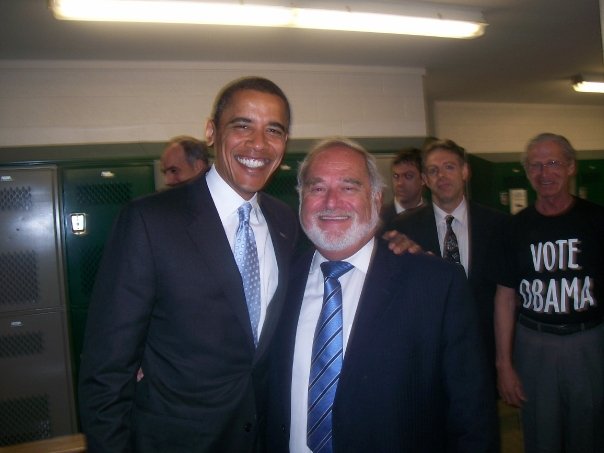
Thanks to my brother Marcel, President Barack Obama now owns a copy of Jew Face.  Marcel is the Chairman of the Democratic Party in Montgomery County, Pennsylvania and a member of the Democratic National Committee.  With Pittsburgh  traditionally voting Republican, and Philadelphia traditionally voting Democrat, Montgomery County, the third largest county in the state usually determines which candidate carries the state.  Having once again been instrumental in carrying Montgomery County for the Democratic Party, Marcel has met the President a number of times and this past Friday had the privilege of a personal meeting.  During this meeting he gave a copy of the book Jew Face to the president.  What happens now?  I certainly don’t know, but I do feel honored that the president now owns a copy of something I have written and a tremendous gratitude to my oldest brother for respecting and appreciating my work to the extent that he was comfortable giving a copy to the leader of the free world.

This is not a political post.  I am hopeful that no one reading this chooses to turn it into one.  And if you want to own a copy of the book that is now owned by the President of the United States, please CLICK HERE.  And to show my gratitude I present you with an excerpt from the book that speaks of the birth of my brother, Marcel Lubertus Groen.

00000016

Excerpt from Jew Face:

 After the birth of her son, the miracle that so often looked like it would never ever happen, Sipora gave the little baby two names: Marcel, after her father, the man to give her life, and Lubertus, after Bertus te Kiefte, who, other than Nardus, was the man most instrumental in helping her to keep that life.  Marcel Lubertus had been created by Sipora and the man who empowered her, saved her from death’s grasp, and loved her even through times when love was so overshadowed by death and evil.

 The circumstances were less than ideal, and their lives were filled with questions yet to be answered, but as Sipora lay there with Marcel in her arms, it almost felt like God was making a statement, a statement that even with the forces of evil at their most powerful, good will survive, love will prevail, and life would go on.

When Thea had been born to David and Martha Groen, it was a symbol of life in the midst of horror and devastation; the symbol held a beauty and power that made it unique. When Marcel came into the world, he would be a symbol of even greater significance.  What was once the bright light of a great world of Dutch and European Jewry had been diminished to a mere glimmer, and a strong powerful fire of life had been reduced in so many places to mere ashes. And now despite all of that, there remained hope. The flickering light of what remained in Nardus Groen and Sipora Rodrigues’s life had now turned into this bright, new, and strong flame. The light that was their son Marcel.

 This significance would carry a burden, but it would carry an even greater importance and virtue. It would take an almost extinguished light, an almost destroyed world, and turn it into a strong flame, building not one but many new worlds in the years to come.  On this day, as Sipora looked at her son, it did not matter that Nardus was not here. It would not have even mattered anymore if she had been here. What only mattered today was that this baby was here. And whether she was right or wrong for feeling this way, Sipora felt like this was the reason she had survived, and this would now be her reason for wanting to survive.


Another Storm, Another Delay, and Pei-Sze Cheng

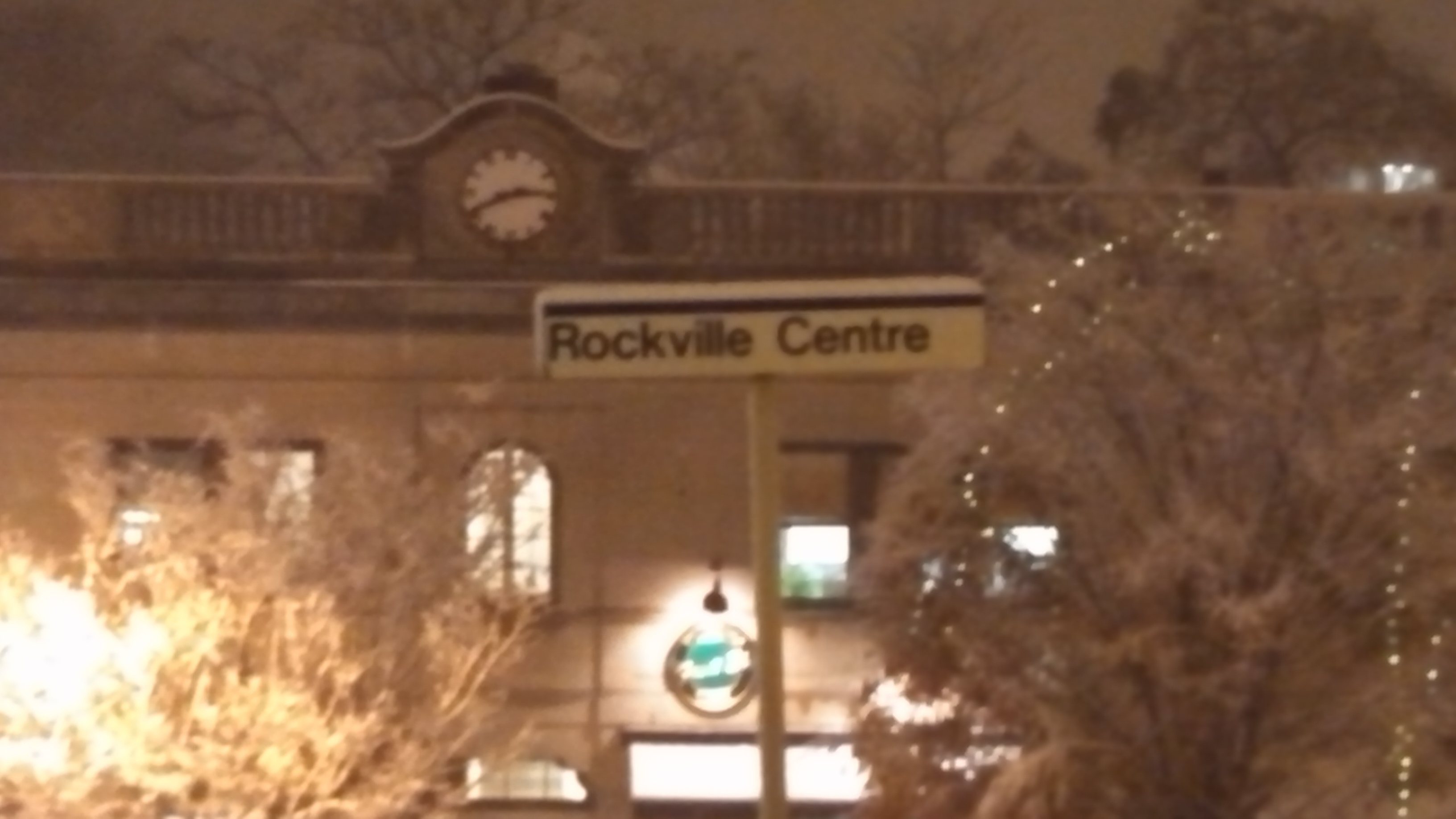
More fun travelling through storms yesterday.  I got on the Long Island Railroad (LIRR)train at Rockville Centre just as the Nor’Easter Athena(apparently they name them now as well) was in full force.  The train which was already 10 minutes late, did not leave the station right away.  As I moved to a seat closer to the front of the train, pausing near the open doors, a woman in a seat nearby commented on the train’s status.  Realizing this could end up being a long and boring trip, I sat in a seat nearby and continued our conversation.

The woman was reading updates on her phone and was kind enough to share them with me.  What she was reading was that the LIRR was temporarily suspended due to overcrowding at Penn Station.  When we began to move, and the conductor came by to collect our tickets, she asked him if this train would be remaining in service.  He jokingly replied, “when I told them you were on the train they had no choice but to continue the service”.  At first I thought the conductor was just being flirtatious, the woman was definitely flirt-worthy, but then he asked me if I knew who the woman was.  He told me she was a reporter for NBC 4  in New York, at which point she introduced herself to me as Pei-Sze Cheng.  I shamefully confessed that I do not generally watch NBC which caused her to inquisitively ask me why.  A word of advice.  If you ever meet a reporter, don’t tell them you don’t watch their station.  There really is no good answer.

Although nothing she told me was particularly private, I will still give her that basic respect and not recount everything that she did tell me.  I will say that I was somewhat taken aback by how down to earth and pleasant this woman was.  We spoke of the storm, some of the issues facing the city, and debated as to what was the best way to make into Manhattan.  At this point nothing was certain because we were stuck outside Jamaica station for a solid 15 minutes and still seeing reports of system-wide suspensions.  When I commented on how we are the lucky ones, she smiled sincerely and said something along the lines of how we certainly need to constantly remind ourselves of that fact no matter how frustrating or inconvenient things become.

After 2 1/2 hours in transit I finally made it home.  My encounter with a local celebrity just another result of one of the strangest times I’ve experienced during my time in New York.  This would almost be fun if not for the fact that for so many people yesterday’s storm was a lot more than a delay on a train.  For so many others it provided the challenge of finding enough food and shelter to survive another day.

I could not have written the book Jew Face without a basic appreciation and empathy for what my parents’ experienced between 1940 and 1945.  These past few weeks in New York put things in an even clearer perspective.  Imagine a 5 year period of, at best, uncertainty.  Imagine not knowing where you are going to sleep, if you are going to eat, and what natural elements will cause you even greater obstacles to finding life’s most basic needs.  And oh yes, add to this the fact that your life is constantly threatened by the most hostile enemy imaginable, and  you have their life over those 5 years.

I want to thank Pei-Sze Cheng for the short and pleasant company and acknowledge her wonderful perspective on the situation.  More importantly, I know we all hope that those suffering today get relief soon and have the opportunity to rebuild their lives with safety, dignity and a secure future.


And the Winner is…..You

Those of you who know me somewhat well, most likely know who I intend to vote for tomorrow.   It is however, of no significance to this particular post.  In fact, this post can very likely be described as being apolitical.   I will not be making an argument for one candidate or another tonight.  This does not mean I am not taking a stand or that I am ashamed of my vote.  My reasons for making this, what I hope is a very noncontroversial post, are not important.  What is important in my opinion is that we understand truly how fortunate we are to live in a country where we have a genuine opportunity to choose our leaders, where we can verbally attack our leaders if we so desire, and where we can battle those who hold different opinions from what we believe.

I started this website to promote the book Jew Face.  Tonight, although I am not writing about the subject matter in the book, I find it very easy to draw a connection between Election Day and the events in Europe between 1933 and 1945.

I have watched over these past months as the attacks on ideologies and candidates has become more and more intense and less and less subtle.  The people with the loudest voices on social media certainly do not fall into the “Undecided” category.  They make their points unapologetically, they often hold nothing back, and if you choose to challenge them, you better be prepared to take what they throw at you.  Let me make two enormously important points.  First of all, these people are on both sides of the political aisle.  I am by no means implying one side is less passionate than the other.  The second point, but probably the more important one, is that the intensity and passion these people feel for their viewpoint is by no means a bad thing.  If these people are good or bad people, it is not for me to judge, but I will say that I do not believe that judgment should be made by whether or not they vote for Obama or Romney.

These people I am referring to are Americans.  I am an American.  I am proud of being an American.  I am proud of all that I am. I am so very proud of being Jewish and I am very proud of my Dutch background.  But tomorrow, all that matters is that I am an American.  And when I look at what my parents and all of Europe went through under Hitler’s dictatorship and we hear the stories today of what still takes place in countries run by people who would crush those who passionately disagree, dare I say even hate their leaders or candidates, I am so tremendously proud and grateful to be an American.

Our leaders will always make mistakes.  I guarantee you that whoever wins tomorrow, over the next 4 years he will make some mistakes.  But what I also know is that, not even based on the morals of the individuals but on the strength in the system, if you speak to a crowd or post all over Facebook that you hate your president, your basic human rights will not be taken from you.  I know that the extremely passionate amongst you might say, “that might not stay the same if the wrong guy wins”.  The great thing  is that you have the right to say that and no one can ever take that right away from you.  And no country in history has defended that right like the United States of America.

So when you get up tomorrow, and hopefully cast your vote, be thankful that you live in a country where you not only do not need to hide who you are voting for, but even if you wish you had a better choice, you still do have a choice.  And the best part is, that in this country you are the only one who needs to feel it is the right choice.


Yet Again, From the Ashes…..

In a day and age where the most popular stories tend to involve scandal, hate, and violence, I am happy to offer a positive story of renewal, hope, and the re-connection of a family.

For those of you who have read the book Jew Face, you will know of the story of my mother’s favorite childhood cousin David van Hasselt.  For those of you who have not yet read it,  when my mother, born Sipora Rodrigues-Lopes was 13 years old, her mother passed away of natural causes. With a father who was a young man and somewhat lost with the premature loss of his wife, and a younger brother in need of guidance and love, much of the weight of the world fell into Sipora’s lap.  The people who would provide love and support to the family would be critical to the household and in many ways would be the key to emotional survival.  One of the main people to provide this support to Sipora would be an energetic and personable young man, her cousin David van Hasselt.  It was during this important time in Sipora’s life that David would achieve that special status of favorite cousin.

With the brutal and vicious Nazi war machine occupying Holland in May of 1940, the future of the Jewish people quickly would become bleak.  The method used to eliminate the Jewish population and to instill terror and establish control however was gradual and methodical.  The first major activity against the Jewish people of Amsterdam would take place in February of 1941 when  the shooting of a Nazi official was made to look like the act of a Jewish male and would subsequently lead to the arrest of anywhere from 300-500 young Jewish men.  The men would all be deported to Mauthausen Concentration Camp in Austria where they would be murdered or made to work under the worst conditions until they died a horrific death.  One of the men was my mother Sipora’s cousin, David van Hasselt.  Although the memory of David would always live in Sipora’s heart, with his death and the subsequent Holocaust which took the lives of 104,000 Dutch Jews, an estimated 75% of the Dutch Jewish population, Sipora would be left with nothing but a memory of the cousin she loved so much.

Fast forward to April 2012 with the release of the book Jew Face, the book I had the great honor to write about my parents’ life primarily revolving around their experiences taking place from 1940-1945 in Nazi-occupied Holland.  In the beginning of October I received an email from a man in Holland named Ron van Hasselt.  Although in his own words there is some significant distance in the relationship to my mother and our family, he is nevertheless connected.   Ron, also an author of a book relating to experiences of his family during the Nazi’s occupation, has been active in finding family, be it close or distant.  His book, a Dutch language book entitled “De Oorlog Van Mijn Vader”, means “The war of my father”.  His website is in Dutch but with the use of Google translate can be read in English and found by going to the link http://www.deoorlogvanmijnvader.nl/.

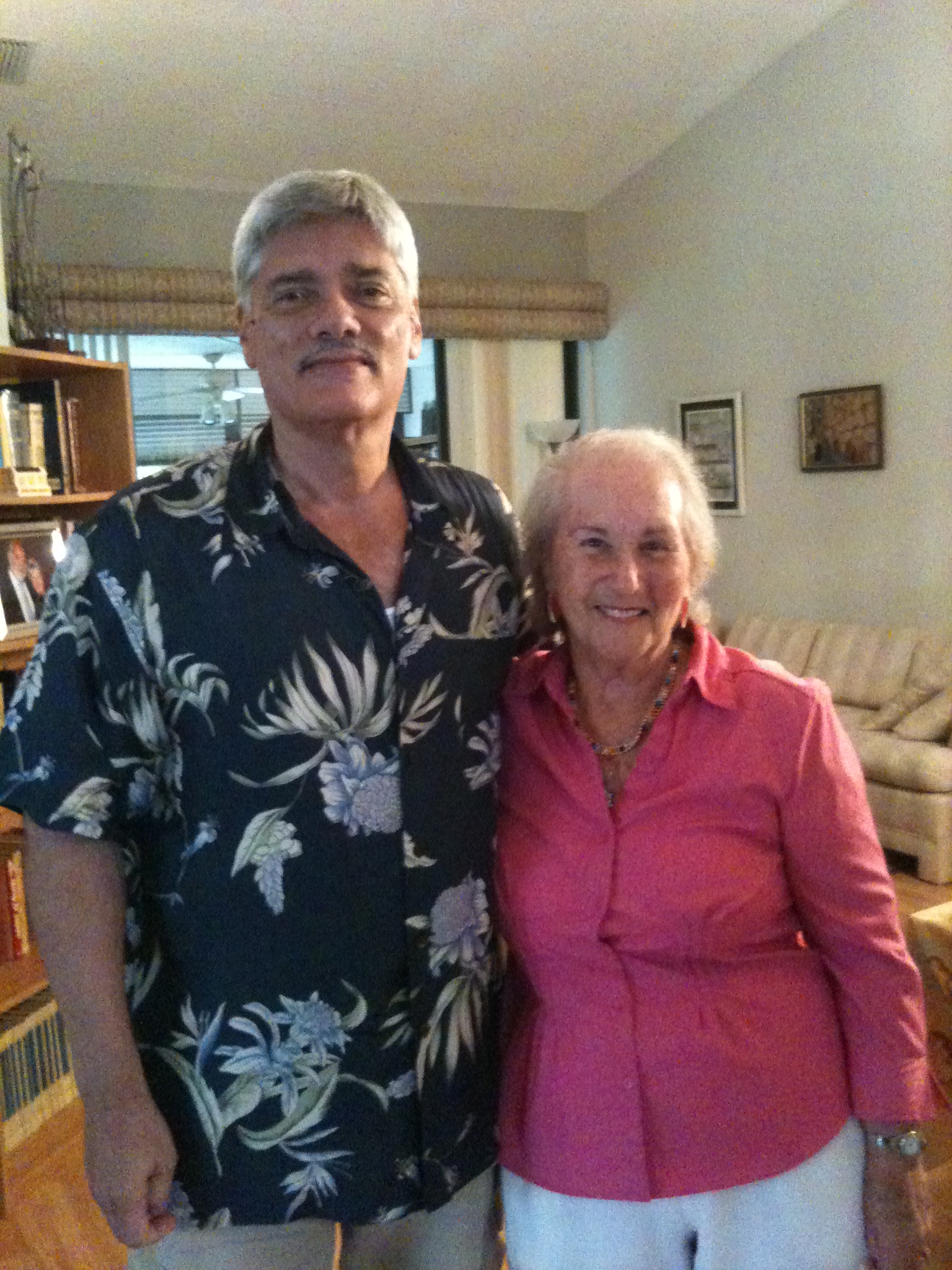
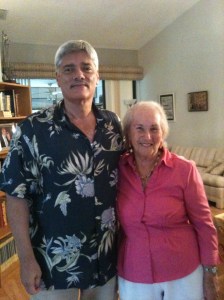
Ron, being the tremendous researcher that I have now begun to learn that he is, googled David van Hasselt, found my book Jew Face, and subsequently located both me and my mother.  He went on to discover her close proximity to his relative Vincent and forwarded him the information.  Who exactly is Vincent van Hasselt?  Vincent is the son of Edward van Hasselt, who was David van Hasselt’s brother and another one of my mother’s cousins.  All this leads us to the picture you see in this post.  It is my mother Sipora Groen, standing next to Vincent, the nephew of her favorite childhood cousin David van Hasselt this past Sunday after they met each other for the very first time.  Although the surviving family members lost contact after the war, through Ron van Hasselt’s successful efforts, and the writing of the book Jew Face, I am happy and proud to say that long-lost family members have begun what will hopefully be a meaningful and joyous reunion.  Of all the possible achievements I hoped for in writing the book, none has been more special than this one.   Not only has it bought joy to a family reunited, but it has helped keep alive the memory of my mother’s lost cousin.

Yet again, from the ashes, the family grows.


The following is an excerpt from the book Jew Face.  It is titled “A lost cousin” and tells the story of David van Hasselt:

A Lost Cousin

 After her mother died, five years prior to the occupation, Sipora would find solace in whatever support she could from close friends and family. Everyone meant well, and there were people who came by the house often, but between the tough economic times and the fact that people had their own families to attend to, it was difficult for most to come see her, her brother, and her father on any consistent basis.

Sipora was always well mannered and gracious and always showed the appropriate appreciation toward anyone who helped her or her family. Like anyone else, though, Sipora had her favorites. These were the people whose visits brought genuine joy. One such person was her cousin David van Hasselt.

David wore that special mantle of favorite cousin. He had been a regular visitor in their household for years and had every intention of coming at least as often, if not more, after the untimely passing of Sipora’s mother. Sipora loved his visits. He would make her laugh; he would talk with her about music, art, ice skating; and he would even help her with her schoolwork from time to time. Whenever he would visit, it would be the highlight of her day.

After her mother died, Sipora needed anything that made the day a little special. At the young age of thirteen, Sipora had household responsibilities thrust upon her most often given to women at least five years older. Her life at a young age was not easy. Her cousin David was a special friend.

David van Hasselt was a bright, funny, strong young man, who at the outbreak of war in Europe had made the decision to join the Dutch army. On May 15, five days after the Germans attacked,the war was over in Holland. With the Nazis steamrolling through Holland and Belgium and bearing down on France, the Allies planned a defensive assault on Dunkirk, France. If nothing else, it was an attempt to slow down, if not halt, the German juggernaut. So it was on May 24, 1940, fourteen days after the war had begun and nine days after the war was over in Holland, that David van Hasselt was amongst the Allied troops confronting the Nazis in what would be a failed attempt at any sort of conquest.

Although the mission at Dunkirk was a failure, a total disaster was averted when Nazi leadership chose to delay any counterattack for three days in an effort to maintain solid control of its forces. This gave most of the Allied forces time to regroup and evacuate to England.

David, however, chose to go back to his hometown of Amsterdam rather than follow the other soldiers to England. Having all his family and friends in Holland, David felt that the only correct choice for him would be to go back home and be with the people he cared about.

Meanwhile, the Nazi occupiers of Holland, who until now had taken no action against the Jewish population, were getting geared up to make their first raid against what they saw as this inferior race. They planned to hit in the heart of the Jewish community of Amsterdam, sending troops to Rapenburg Street in the center of the Jewish ghetto. Their orders were to pick up between 300 and 500 young, healthy Jewish men for deportation. They wanted to create immediate fear and doubt in those who were most able or likely to oppose them in future attacks, while fabricating a claim of an imposing threat.

David was not a resident of the Jewish ghetto, but a number of people that he was close to did indeed live there. One such person was his sweetheart, who he would visit on a regular basis. The past few weeks had been better times for David than any he had seen since before the war. He had enjoyed the time with his parents, caught up with his best friends, and now was on his way to Rapenburg Street to see his girl. They had been discussing their plans for the future, and although things were not looking very good for Europe as a whole, life had to go on, and being with her was the only way David wanted it to be at this time. They had considered going to England together in the assumption that things on the Continent were going to get worse before they would get better. They had discussed it many times and hoped that if it was necessary, they would be able to leave together.

On February 22, 1941, as David was walking on Rapenburg Street, he heard what sounded like screaming and fighting. When he turned the corner, he saw a mob of what looked like a thousand people; the majority was the Grune Polizei (Green Police). He knew he could do nothing and was considering turning around or hiding. But it was too late. They had already seen him.

Sipora’s favorite cousin was one of those taken away to Mauthausen in the raid of February 1941. David did not make it out, and would spend the next 7 months in the concentration camp before a report came back saying that he had died. When Sipora’s uncle learned of his son’s demise, he knew he needed to let his daughter know about her brother’s fate. However, being that his wife was no longer with him, he would have to tell her alone. This was something he could not do. He needed the help of someone close to him, and he needed it to be a woman. So he asked Sipora to help him. Sipora, at the age of nineteen, was already experiencing more death than most people would by that age. The lessons she learned at a young age would help see her through even more difficult times and teach her in many ways how to transfer that strength to the people close to her. However, as the war broke out, the first feeling for her, as it was for so many, was terrifying despair. And to have to break the news of the death of someone she loved so much to another relative she was so close with was in itself a horror she had not yet experienced. Especially considering the circumstances, or at least as much as she knew about the circumstances surrounding his death.

David van Hasselt: Murdered September 16, 1941, Mauthausen.


Remembering an Uncle

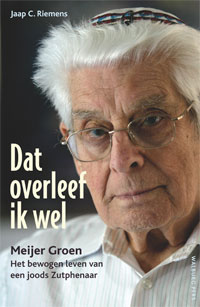
If you have read the book Jew Face or know of my family, you know that my father was one of five children.  His oldest brother was Meijer (pronounced Meyer), he had an older brother David, an older sister Sofia, and a younger sister Elizabeth (aka Belia).  Elizabeth was murdered by the Nazis, David died in a car accident in the mid 70s, and Sofia died of natural causes less than a year ago.  The only one who was left was Meijer, until a few days ago.  It is for this reason that I write this post.

My Uncle Meijer, my father’s oldest brother, passed away this week.  With people living in different parts of the world, I cannot say that I knew my uncle well in my adult life.  What I do know is the significance of his passing and my childhood memories.

To the best of my knowledge my uncle never spoke much English.  As a child however there was one sentence I do remember him knowing, and as he has passed on, and I look back at my childhood,  I would be remiss if I would not make mention of it.  He would call me over, look straight at me with a smile and say, “We are friends for…” at which point I would reply “ever”.  This was a well know interaction in the family and always gave me a wonderful feeling as a child towards my uncle.  As a 50 year old man today, I still look back at it and smile.

The significance of the passing of my father’s brother Meijer is that it is the end of an era in many ways.  The last of my father’s immediate family, Meijer Groen’s passing creates one more gap between our world today and the world of those who went through the Nazi occupation, persecution, and murder of the European Jewish community, specifically that of Holland.

As the son of Nardus Groen, it makes me feel like an entire chapter of my family’s heritage and history has closed or maybe more appropriately, been altered.  If you do not believe that souls pass on to a different world when their bodies die here on earth I ask you to indulge me as you read this.  I sit here and pray that in that world my father and brother have met once again, that they both have peace, and reach the high levels God can provide to both of them.

This is my wish and my prayer.  Not just for today, but for…..ever.

The following is an excerpt from Jew Face: A story of love and heroism in Nazi-occupied Holland.  It takes place soon after the end of the war

Suddenly, a motorbike pulled up to the house. On the bike were two young men. The man in front had a familiar look about him, but Sipora couldn’t place why right away. The man on the back of the bike spoke first.

 “Are you Sipora Rodrigues?” he asked in a friendly tone, accompanied by a smile.

 Sipora was somewhat startled but felt at ease with the man’s approach and confirmed with no reluctance that she was.

 “I have a message for you from Nardus,” continued the man. “He said he got your letter and that you will be hearing from him again very soon.”

 Sipora felt a warm feeling come over her. It would have been easy for Nardus to avoid the whole situation if he had so desired. In these postwar times, with thousands of miles separating them, even with a child on the way, it would have taken very little effort on Nardus’s part to have no involvement whatsoever with her or the child. She was not surprised, because everything he had done till now showed that the kind of man he was made this reaction more likely, but still, this extra effort meant a lot to her. She was curious about these men now.

 “So I know Nardus told you how to find me,” said Sipora, “but may I ask, who are you?”

 “I’m Meyer Groen,” said the man riding the bike. “Nardus’s older brother.”

 Then the man on the back of the bike spoke again.

 “I’m their brother-in-law,” he said, motioning to Meyer. “My name is Jacques Baruch. It was good to meet you.”

 Somewhat in shock over having met two people so significant in Nardus’s life, Sipora just stood there, smiling.

 Jacques got back on the bike, and after the two bid farewell to Sipora, she heard him say to Meyer, “Nardus did pretty well for himself.”

 Sipora watched as the two rode away. In a world where so little good was happening, this was a day when she could at least smile and feel a little less alone. 


Blind Faith

Since this website is not a forum for political endorsement I will not declare my personal allegiance in the upcoming presidential election.  Ask me in another forum and I will have no shame in stating my preference and speak with me one on one and I will gladly debate you, but unless I feel something is unquestionably relevant to the survival or history of the Jewish people, I will do my best to stay on point.  This website, one that was set up to promote the book Jew Face, is being used to bring to light holocaust denial, holocaust mentality, anti-Semitism, and historically relevant facts as they pertain to the Holocaust and my parents’ experiences.

So today I will speak of the upcoming election, but in a way I have not seen anywhere else till now.   When 6 million people get murdered by a force as strong as the Nazis were between 1933 and 1945, there is very little criticism given to the victims.  And rightly so.  The innocent victims, people who were merely guilty of being born Jewish, did nothing to deserve their horrible fate.  The brutality of the Nazis is well documented and needs to be continually documented so that it will never be forgotten.  There is however one criticism often given to the victims as a group.  This criticism is that they listened blindly and followed like sheep.  Now I do not have the arrogance to make this criticism because none of us know what we would have done in this situation.  However, this argument may be backed up by looking at those who did stand up and fight, or recognized what was going on and did not follow blindly.  My father, Nardus Groen, was one of those people, and although he was the first to credit it to good fortune and God’s blessing, it is hard not to make an argument that his behavior lead to his survival, my mother’s survival, and the existence of their entire offspring, yours truly included.

So heading into the November election, whether you are Conservative or Liberal, love or hate President Obama, Republican or Democrat, I have one strong request from you.  Use your mind.  Don’t blindly follow anything.  If you hate Obama, I guarantee you that some of the criticisms of your sources are either spun or fabricated, and if you love Obama I guarantee the same.  Do not follow anyone like sheep.  Even those you consider to be like minded.  Be fair, be thoughtful, and be aware.  For when you follow like sheep, you are often being lead to slaughter.  And if anything can be learned from the past, it’s that independent thought is a much better road to survival than blind trust.


Radio Interview with the Author of Jew Face

The following is a radio interview I recently recorded discussing the book Jew Face. The interview will be broadcasted on August 4, 2012 on 88.1 FM WCWP and tcbradio.com. But why wait? You can hear it now by clicking the following link. Thanks to Richard Solomon for making this happen and to him and his brother Paul for a great hour plus of discussion about my parents and the book.

CLICK HERE TO LISTEN TO INTERVIEW


Radio Interview with Author

The following is a radio interview I recently recorded discussing the book Jew Face. The interview will be broadcasted on August 4, 2012 on 88.1 FM WCWP and tcbradio.com. But why wait? You can hear it now by clicking the following link. Thanks to Richard Solomon for making this happen and to him and his brother Paul for a great hour plus of discussion about my parents and the book.

CLICK HERE TO LISTEN TO INTERVIEW


In Support of Greek Jewry

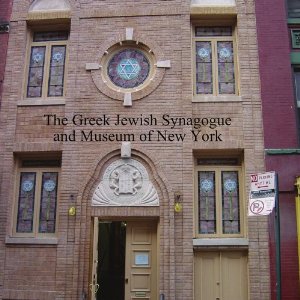
As documented in the book Jew Face, the nation of Holland had 75% of its Jewish population murdered by the Nazis during the Holocaust.  Another nation with one of the smaller Jewish populations which suffered similar devastation was the country of Greece.  Between 60,000-70,000 Greek Jews were murdered in the Holocaust, most of them in Auschwitz.  At the end of the war an estimated 8-10,000 survived.  Keeping alive the rich history and culture of Greek Judaism with such a small number remaining is a difficult task, one which my friend Richard Solomon has taken upon himself to do.  The following is a link where you can acquire a CD  of a discussion about Greek Jewish history and the Greek Jewish Synagogue and Museum of New York.Go to http://kkjsm.org/ and help keep alive the Greek Jewish history and culture.


Europe 1940 to Euro 2012

Whenever possible, Holland’s Heroes attempts to take current events and link it to the story in Jew Face.  Sometimes it is an obvious connection, sometimes it is a stretch requiring imagination, and occasionally it is a connection that in its insignificance is mildly entertaining and sometimes even funny or ironic.  This particular post falls into that last category.

Over the next 5 days the champion for Euro 2012 International Football(soccer) tournament will be crowned.  The semifinal matches are as follows.  Today, Spain against Portugal.  Tomorrow, Germany against Italy.

The book Jew Face is the story of my parents Nardus and Sipora Groen, primarily surrounding the events taking place between 1940-1945.  My mother’s maiden name was Rodrigues-Lopes.  A Dutch Jew from Spanish-Portuguese descent, my mother spent 5 years either hiding or running from the Nazi killing machine with the help of my father Nardus Groen.  This book chronicles the events that took place as they lived through the time when Germany occupied Holland.  One of Germany’s allies during World War II; Italy.

I think the irony is obvious.  The not so obvious question, seeing as these countries are very different countries today is, who would I like to see win this thing.  I will keep that answer to myself.  At least for today.