Tag Archives: Holland

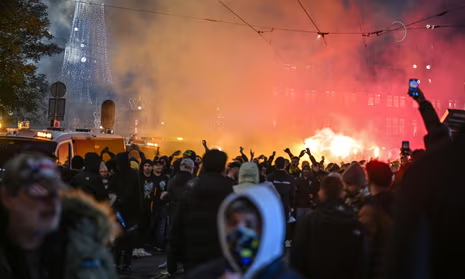
Wake up Holland

After yesterday’s events in Amsterdam, telling Holland to wake up is a natural and understandable reaction. But I could just as easily said, “Wake up world”, for what we saw take place in the city where my parents grew up, is going to happen everywhere in Europe, and beyond, including eventually America, if this problem isn’t addressed. While I like to believe the majority of Muslims are not a problem, let’s call this what it is, a Muslim problem. Maybe more importantly, we should learn from history and identify the parallels of what we are seeing in Europe today to what we saw in Europe in the 1930s.

While we might be inclined to say that this is different because it is not government sanctioned, that is not entirely accurate. After the Islamic revolution of 1979 in Iran, it was made very clear that the goal was to make the entire world Muslim. Much of Holland’s Muslim population is of Moroccan descent, an important point to make when addressing the issue. Morocco traditionally has been a country welcoming to Jews. When Jews left Morocco for Israel in the first large migration of Jews from North Africa, the Royal family practically begged them to stay. But with the tentacles of Iran spreading everywhere, and using the Palestinian issue as there moral high ground, they have spread their evil rhetoric worldwide. That coupled with the funding of Qatar and others has fueled this rise in Muslim fundamentalism, And of course, just as was the case with Nazi Germany, while there ultimate goal is world domination, their favorite target is the Jews.

For those who throw around the terms “Nazis” and “fascists”, if you truly want to see an example of that today, just YouTube yesterday’s events in Amsterdam, events eerily reminiscent of Kristallnacht, which took place 86 years ago tomorrow. My fellow Jews need to call to task all of those who stay quiet when the Jewish people, .02% of the world’s population, are treated as though they are the problem and are targeted and attacked just because they are Jewish. We must not remain silent and we must not be afraid to speak the truth, regardless of who it offends or angers.

As for not only Holland, the country not just of my ancestors but my immediate family, but the rest of Europe and countries beyond, if you do not wake up, your governments will ultimately fall and you will enter an age of terror not seen since the 1940s. I like to believe that it is not too late, and in all honesty I just don’t know, but what I do know is that the only chance we have is in identifying and dealing with the real threat, not whatever scapegoat is easier to target and makes us feel better about ourselves.

Wake up Holland, before it is too late.

Am Yisrael Chai

Never Again is Now!

Like what you see? Feel free to share!

Learn more at http://bramsviolin.com


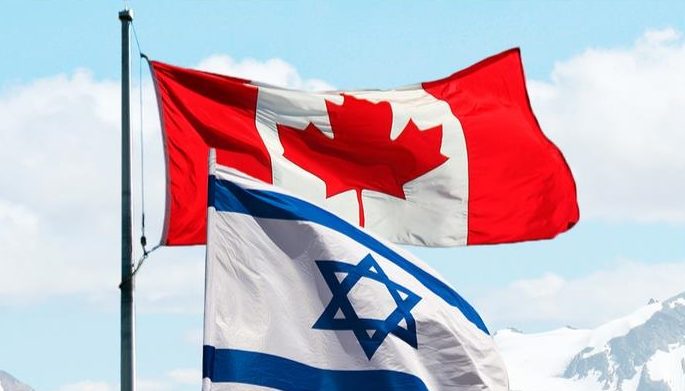
Open Letter to Canadian PM Justin Trudeau: Allow me to speak to your parliament

Dear Mr. Trudeau,

My name is David Groen.  Please allow me to tell you a little bit about myself.  I am the son of Holocaust survivors from Holland.  As I am sure you know, Canada and Holland were strong allies in World War II.  In fact, my father, who was an active member of the Dutch resistance, rode into the town where my mother was hiding when the Canadian military liberated it from Nazi occupation.  The most important thing I want you to know about me is that I never knew my grandparents, one uncle, one aunt, and countless cousins, since the Nazis decimated the Dutch Jewish community, murdering 75% of the Jews living in Holland between 1940 and 1945.

So yes, I take what recently happened in your country’s parliament very personally.  As an author and public speaker passionate about making the world aware of the atrocities that took place and keeping alive the memory of what happened under Hitler’s barbaric reign, my reasons for reaching out to you, as important as they may be, are not politically motivated.  In fact, I am reaching out to you specifically to avoid being political, as the more political move would be to reach out to the leader of the opposition.  However, my motivation is not to impact Canadian politics, it is to address and help fight a growing global crisis.  I do not know you, so I am unable to comment on whether you are a good man or a bad man.  I do know that certain Canadian officials, up to the very top, have pleaded ignorance regarding the history of Yaroslav Hunka, the Nazi living in your midst.  I choose to believe that plea as being an honest one.  Nevertheless, that does not make it an acceptable one.  The only thing that will truly make it acceptable is a response in your parliament, preferably from someone who will tell a story of exactly why it is so important that this high level of ignorance be combatted.  The speaker should not be a mere talking head, but someone whose family was impacted by the evils committed by the Nazis.

My public speaking revolves around the story of my uncle, Bram Rodrigues-Lopes.  The younger and only sibling of my late mother, Bram was a violin player and band member when the Nazis invaded Holland.  Through my book and website, Bram’s violin made it back to me and my family a little over 4 years ago.  What makes Bram’s story so powerful and so relevant is the fact that he was murdered by the Nazis just 3 weeks shy of his 19th birthday.  He never had a chance to build a life and leave behind a legacy.  His story speaks to the reality and to the heart of what the Nazis did to those they wanted to exterminate, the Jewish people being priority number one.  The story also speaks of the decency and bravery of the friend that safeguarded his violin, as well as his son who made the effort to find me. 

Should you choose to bring me to Canada to address your parliament I will provide a powerful message emphasizing the dangers of forgetting the atrocities of the past together with the hope provided by the decency of others.  What took place in your parliament this past week only magnifies the importance of keeping the story alive.  My presentation will not be political as not only have I made a conscious decision to leave politics to those more qualified, but I also feel I have a different mission on this earth besides moving any country’s political needle.  Since I see this as being an apolitical topic, and one of critical importance, I will leave everyone in the room with a message they will carry in their hearts and minds for years to come.

Many of us in the Jewish community use the line, “Never Again”. To work towards that, it is critical for it never to be forgotten.  I believe certain people in Canada need a reminder, and I offer myself as the person to provide that reminder to your parliament.

Sincerely,

David Groen

Like what you see? Feel free to share!

Learn more at http://bramsviolin.com


Why the attack on Bradley Cooper is unfair and not at all about him

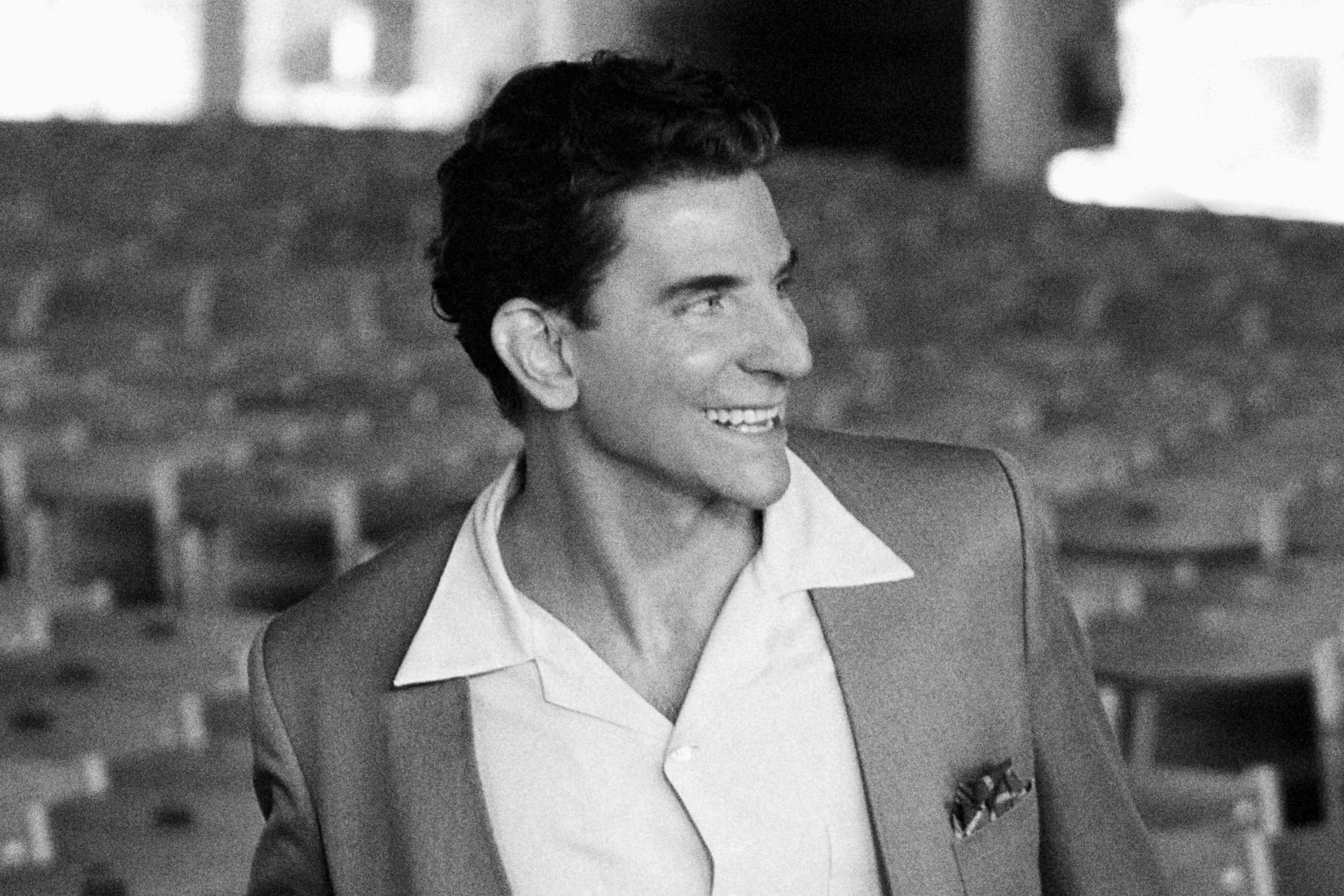
Maestro. (L to R) Carey Mulligan as Felicia Montealegre and Bradley Cooper as Leonard Bernstein (Director/Writer) in Maestro. Cr. Jason McDonald/Netflix © 2023.

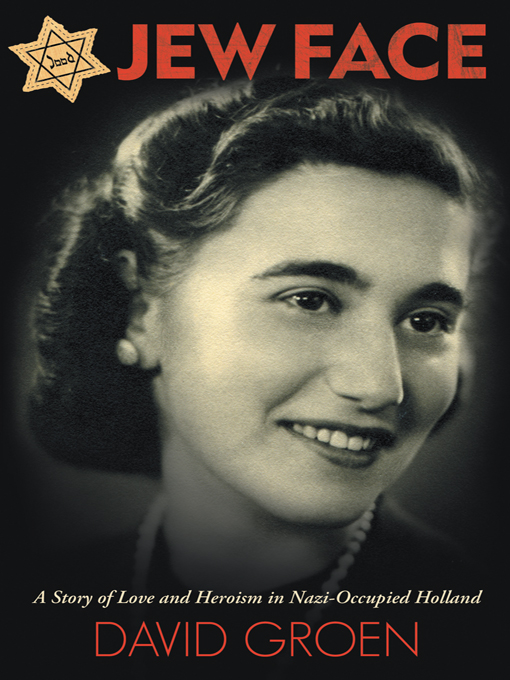
As a proud Jew and vocal Zionist, I find the recent backlash against Bradley Cooper to be beyond ridiculous. Before anyone chooses to criticize the choice of how best to look like Leonard Bernstein, one needs to start by doing one thing. Look at a picture of Leonard Bernstein. The man had a pronounced nose. But as someone who has a stake in this conversation, I believe this whole discussion needs to go much deeper. What is my personal stake you ask? It is a simple answer. I am the author of a book titled , “Jew Face: A story of love and heroism in Nazi-occupied Holland.”

I have so many problems with this discussion that I almost don’t know where to start. I will start by saying that if you are someone who sees depicting an immensely talented Jew in a different manner than he actually looked, your attempts to avoid prejudice indicate either an ignorance as to to what it means to be a Jew, or a leaning toward such prejudice. Whether or not this movie is prejudiced against Jewish people will be indicated in the plot and dialogue, not in the attempt for the lead actor to look like the person he is playing. On the surface, I am not concerned. Leonard Bernstein was a brilliant conductor. This is why this movie is being made. Other aspects of the movie, be they favorable or not, will only indicate prejudice if they are incorrect or used to push an agenda against Jews. If for no other reason, this alone would be enough for me to tell people to get a grip.

What also bothers me is something that has bothered me for quite some time, albeit a wonderful opportunity for self-promotion. The word Jew is not a bad word. The context in which any word is used when describing a person or group will often determine how good or bad a word is. One of the main reasons I called my book “Jew Face” is because when you looked like my mother in 1940 Amsterdam, there was no questioning the fact that you were Jewish. But funny enough, not because she had a pronounced nose, which she somewhat did when she was younger. Rather because of the fact that she had dark hair, and a darker complexion than the typical Dutch person, and being from Spanish-Portuguese descent, even darker than many Jews. One of them being my fair skinned, redheaded (at the time), father. I guess that would mean, by 1940’s Dutch standards, if you got someone with dark hair and even slightly dark skin to portray my mother, that would be seen as Jew Face as a negative term. So this speaks to how perception is what creates this problem, not fact. The fact is, that if you depict a Jewish man or woman accurately, you are being a responsible reporter or filmmaker. If you break away from the truth to depict a hateful stereotype, THEN you should be seen as a problem. It should not be based on how accurately you attempt to make the person’s facial features look.

Going back to how the word Jew is not a bad word, I will reflect on a story regarding my late mother Sipora Groen, the woman on the cover of “Jew Face”. When speaking to a group of people and telling her story with the help of my book, someone confronted her saying, “Jew Face is an ugly title”. My mother responded immediately saying, “it was an ugly time”. If your focus is on the fact that the way something sounds offends you, rather than the importance of its content, you become part of the problem.

Which brings me to my next point. If you are up in arms about a prosthetic nose, used to depict a Jewish legend with a large nose, I must ask you where you were in the past? Where were you when Ilhan Omar said, “it’s all about the Benjamins”, when criticizing Jewish influence? Or when Marjorie Taylor Greene said that there are “Jewish space lasers” trying to shoot down Santa Claus. Or when Bryan Adams distorted facts about Gaza while never criticizing Palestinian terrorists targeting Jewish civilians. Have you paid to hear Roger Waters lately? The man who repeatedly calls Israel an Apartheid State? Or are you just concerned about a high profile nose, because it suits your agenda or speaks to your ignorance?

Bradley Cooper has never exhibited any public prejudice towards anyone. For all I know, and I won’t research it because I don’t care, he isn’t even the one who decided on the nose. If you want to fight for Jewish causes, how about taking on the difficult fights. Not the one that brings attention to a silly stereotype that only means anything if you associate it with something negative. All this is to me is another example of virtue signaling. For those who don’t know what virtue signaling is, it is when you express a strong opinion because you want to show how good you are, not because you really care. Before you say another word about Bradley Cooper and a prosthetic nose, look into your heart and figure out how much you really care.

Like what you see? Feel free to share!

Also learn more at

 http://bramsviolin.com


The shooting in Jerusalem on International Holocaust Remembrance Day reminds us that the fight never ends

It is International Holocaust Remembrance Day and there are still those who will murder us just for being Jews. The shooting today in Jerusalem is evidence of this sad fact. At last count 7 people were killed, likely on their way home to Friday night dinner after Shabbat prayers.

We can never completely rest. I wish it were otherwise, but this is a fight that never ends. I will continue to do my part in telling the story of my family to bring to life the reality of the murder of 6 million Jews. As the son of Holocaust survivors from Holland, when I read how one quarter of Dutch youth believe the Holocaust was a myth, I realize why we are so far from the peace we so dearly cherish. https://m.jpost.com/diaspora/antisemitism/article-729462 Not knowing what happened opens the possibility of it happening again, and we can never accept that possibility. When Jews get murdered outside of a synagogue just for being Jews, whether it is in Jerusalem or Pittsburgh, we need to realize that whatever we can do to combat this evil we must take upon ourselves to do.

I will honor those lost by continuing to fight in the way that I know how, which is to educate people about what really happened, and to make the point that ignorance is rarely replaced by good, far more often with evil.

Never Again!

Like what you see? Feel free to share!

Also learn more at

 http://bramsviolin.com

and

 http://kennethsarch.com


The life, times, and dreams of a World Cup fan

Let me tell you about the life of a World Cup fan. 30 hours from the time I finish writing this I will either be happy, ecstatic, or miserable. The World Cup has captured the attention of people everywhere. While countries with teams in the tournament have the most at stake when following the results, there are those among us with split loyalties. It so happens that I am one of those people, as my loyalties coming in were not only split, they were split 3 ways.

In a tournament that is played every day, situations with various teams are always changing. If I had written this 7 days ago, all my favorite countries would still be playing. 30 hours from now, all three may have been eliminated. Be that as it may, I am going to share which teams I support, and why, as well as tell you what would be not only my dream final-if it is even possible in the brackets-and why I rank my teams as I do.

I was born in the United States to Dutch parents. My first soccer memory, while faint, is of Holland losing in the final of the World Cup to Germany in 1974 by a score of 2-1. When I was 14 I started 4 years of High School in London. I was once married to an Argentinian, and Argentina was the second team to beat Holland in a World Cup final in 1978, in a game I felt Argentina manipulated unfairly. While some people think my desire to beat the Argentinians is connected to having an ex wife from there, that is not the case. It doesn’t help their cause, but it is more about 1978. If you want to know more about that game I suggest that you go on You Tube.

While I was berated by some, lovingly of course, for wanting the Netherlands to defeat the U.S. last week, Holland is my number one team. It’s not about loyalty or patriotism, it’s about emotional investment. However, I do admit that if the U.S. had won, while I would not have been as happy as I am, I would still have been happy. And last weeks victory for Holland set up what will be a very intense, potentially remarkable next 30 hours. In one hour Holland will play Argentina in the quarterfinal, 24 hours before England will play France. What makes this next day or so potentially even more speoial, is that should Holland and England win, and then go one to win one more game each, they would face each other in the World Cup final, an event that would be my personal ultimate in sports joy.

There is one final twist to all of this wonderful drama. My father, who passed away 15 1/2 years ago at the age of 87, was an enormous fan. Back in the day when it was not easy to call overseas, if you would call my father in the middle of a game he would immediately say, “Call me back. I am watching football”. Naturally, as a man born and raised in Holland, his favorite team was the Dutch national team. Because of the fact that this World Cup is being played in Qatar, for the first time ever the final is not taking place in the summer. If Holland is to win their first ever World Cup, it will happen on December 18th. A day that also happens to have been my father’s birthday.

The stars are all aligned for the perfect ending. Of course 3 1/2 hours from now that dream might be over, but whatever happens, the great thing about sports is that it is wonderful to dream.

Hup Holland! (You understand that if you are Dutch or a fan).

Like what you see? Feel free to share!

Also learn more at

 http://bramsviolin.com

and

 http://kennethsarch.com


Remembering an Angel at 100

The day after my mother passed I wrote a piece entitled, “An Angels departs”. Today as a special milestone approaches I offer you this piece, entitled, Remembering an Angel.

Sixty years ago this Saturday, January 1st, my mother and father were celebrating my mother’s 40th birthday together with friends in Cincinnati, Ohio. During a game of Canasta, my then very pregnant mother started laughing so hard she went into labor 2 weeks early and I was born the very next day.  While I embrace my upcoming birthday with gratitude, it is somewhat bittersweet, because I know I will not be alone in remembering and missing my mother on what would have been her 100th birthday.

When I saw the upcoming date, 1/1/22, I couldn’t help feel like it looked familiar to me.  It was then that I remembered how much my mother embraced the uniqueness of the numbers representing the day of her birth, and how these numbers signified this very special day approaching.  There are so many things to say about my mother, Sipora Groen, born Sipora Catharina Rodrigues-Lopes.  The thing I say to people most often, partially because it sums her up so well, but also because I know she would have liked it, is if you didn’t like my mother, you didn’t like anyone. She was warm, loving, jovial, and as social as anyone you will ever meet.  But what very possibly made her so special, was that she was so very much more than that.  Some of her greatest attributes were so understated that they could easily be missed by the casual observer. This was very simply because she was never who she was for show, she just was who she was, and was blessed with qualities most never acquire.

Some of the strongest and most intelligent people we meet or know of, show off these qualities on full display for all to witness and acknowledge.  I do not say this disparagingly, since these qualities are meaningful and positive, I merely state this to emphasize one of the most remarkable things about my mother.  When it came to her strength and intelligence, she was one of the most non self-promoting people you could ever meet.  Highly intelligent, she had no trouble sitting in a room of people and allow them to take center stage.  Whether it was wisdom or natural inclination, she understood that her intelligence was just another tool she could use to improve her life and the life of those she cared about, not something to show off to others. 

Her strength was not something she ever used to achieve a dominance over others, rather a means of helping other and dealing with experiences that might have crushed the spirit of people with lesser means of coping. 

My mother was just 13 years old when her mother passed away of natural causes.  Left with a brother almost 3 years younger and a father struggling emotionally from the loss of his young wife, my mother had to deal with hardships most 13 year olds do not have to face.  When the Nazis invaded Holland 5 years later she would have to face a different level of hardship, one almost impossible for most people to even comprehend.  She went into the war with a fiancé who would subsequently be one of the 75% of Dutch Jewry murdered by the Nazis. Her father and brother would be taken to Auschwitz and murdered as well.  Many friends and family perished in this time, and had in not been for my father, Rabbi Nardus Groen, my mother would have very likely met the same fate.  She came out of the war with her newborn son Marcel as the one thing she had to live for, and had to spend many of those early months quarantined away from him due to illness.  Eventually my father would return from military service and begin to build a family together with her.

My parents would be together till the death of my father on June 13, 2007.  I always say that there was only one thing my father feared, and that was being without my mother.  While in many ways my father was the strongest man I’ve ever known, I am not so sure he would have been able to live 10 years without my mother with as much fulfillment as my mother did without him for her last 10 years.  My mother loved and respected my father dearly, and I truly believe the one thing she missed in her last ten years on earth was her husband of over 60 years.  Even so, her incredible wisdom and inner strength drove her to rebuild those last years and recreate her life in a truly remarkable way.  About a year after my father’s passing, give or take, one day she turned to Marcel and said, “he’s not coming back.”  From this point on she rebuilt her last years into one final chapter of an extraordinary life, spreading joy, love and strength to whoever was open to receiving it from her.  She was “Oma” (Dutch for grandmother) to so many, and made the term one of endearment to so many who had never even heard it before.

As I sit here, nearing what would have been her 100th birthday, there is still something I find thoroughly amazing.  My mother was a short, gentle, physically unassuming woman.  She sometimes looked at life with a simplicity that made her appear to be a young soul, for those of us who believe in such a thing.  Yet more than 4 ½ year after her body left this earth, her presence, her very soul still guides me and supports me in a way I could have never dreamed possible, and I know from others who knew her that I have not been alone in feeling this way. 

So while I am not alone in wishing my mother was here on earth celebrating her 100th birthday with those she loved and who loved her, I know that her birthday was, and still is a cause for tremendous celebration, something I will do with the joy I know she would have wanted from all of us.

Happy Birthday Mom.


Open Letter to Desean Jackson in response to his anti-Semitic comments

DJDear Desean,

As a son of Holocaust survivors and a defender of the Jewish people I feel it is my obligation to address your recent comments. The initial quote, which you were happy to credit to Adolf Hitler, read as follows:

“(They) will extort America,” the quote read, “(and) their plan for world domination won’t work if the Negroes know who they were.”

You went on to indicate that you have great admiration for the Reverend Louis Farrakhan. Louis Farrakhan, the man who has referred to Judaism as “a deceptive lie and theological error”. To be frank, those are some of the nicest things he has said about my people. In a response to be called out for his anti-Semitism he replied, “When they talk about Farrakhan, call me a hater, you know how they do – call me an anti-Semite. Stop it, I’m anti-termite!”  He also once said, “I don’t care what they put on me. The government is my enemy, the powerful Jews are my enemy.”  And while I can go on for many pages, I leave you with one more.“Do you know that in Europe in every nation where they were, they led an industry in commerce in trade in banking? And the gentiles were angry with them because everywhere they went, they ruled. So the gentiles rose up against the Jews and persecuted them in Europe.” 

This is the man you said you have great admiration for, right around the same time that you made your initial anti-Semitic statement.  It has been suggested to me that your statement is based on nothing more than stupidity. In order to determine whether or not I believed that to be the case I decided to read some of your additional Twitter comments.  What I found were highly intelligent, often self-promoting comments from someone who clearly is very aware of what he is saying. I believe your statements to neither be ambiguous nor reticent.  On the contrary, you know how you feel and you are very comfortable sharing it with others, as is your right in the United States of America,  However, I too have a right to tell you how I feel, and therefore I ask you.  If you were in my position would you be satisfied merely because you apologized?

I do not remember a time in my life when I did not know about what the Jewish people went through during the reign of Hitler.  More specifically, I always knew what happened to my family, and as I got older I learned what my parents dealt with when they were at the same age as you were when you were catching footballs and living a great lifestyle with the money paid to you by none other than yes, your Jewish employer.  For 5 years  the Nazis occupied my parents native Holland. My father worked with the resistance but had to flee his neighborhood to survive, always on the run and never certain if he would live to see another day. My mother had to move from hiding place to hiding place knowing that if she were ever to be caught by the Germans, death would be welcome after what they would likely do to her.  She would sleep underground in what she said felt like a coffin for 16 months.  When the war ended my father would learn that his mother, father, sister and brother-in law were murdered by the Nazis and my mother would learn of the same fate befalling her father and brother.  Not to mention the additional relatives and friends they would never see again.  6 million Jews were murdered by the Nazis.  There were countless accounts of torture, medical experimentation, rape and beatings. And Desean, this goes back a mere 75 years. So I ask you again, would you be OK with what you said if you were in my shoes? Would you be so quick to accept an apology?

Let me offer a quote to you, from none other than the great poet and civil rights icon Maya Angelou.

When someone show you who they are, believe them the first time.

I do not accept your apology, nor will I till I hear you denounce the anti-Semitic comments made by the man you admire so much, Louis Farrakhan. When you do that, I will be willing to accept that you are truly sorry for your comments. Until that time I will see your apology as just a way to make sure you continue getting a very nice paycheck, signed by none other than the Jewish owner of the team you play for.

Sincerely,

David Groen

LIKE THIS POST? SHARE IT ON FACEBOOK OR TWITTER

BRAM’S VIOLIN

HOW TO BUY THE BOOK

JOIN “THE GLOBAL COALITION FOR ISRAEL” ON FACEBOOK

IN CONJUNCTION WITH GLOBAL COALITION FOR ISRAEL


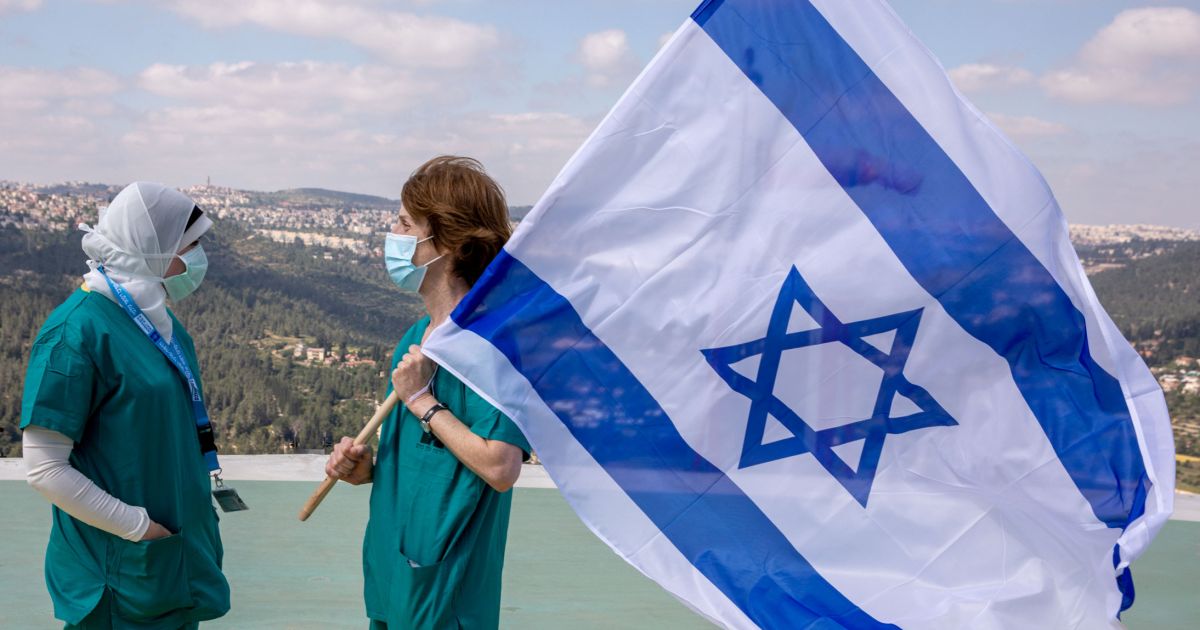
Reopening society may require us to follow Israel’s example

israelreopens

It’s important that I start this piece by making it very clear that I am an American who loves his country.  The opinion I am about to share should be seen more as a call to arms and encouragement than a criticism or indictment.  Who knows? If properly heeded it might just save some lives.

The other day a friend of mine from my grammar school days in London posted statistics showing how, to date, of all developed countries none had done better in keeping down the Coronavirus death toll than Israel.  The friend I speak of, Alison Fisch-Katz, is a brilliant writer, not swayed by political bias, and honest in her assessments. In her post Alison said the following:

Corona deaths per 100,000 in developed countries from highest: Belgium (7,924 deaths), Spain (25,428 deaths), Italy (29,079 deaths), UK (28,734 deaths), France (25,201 deaths), Holland (5,102 deaths), Sweden (2,321 deaths), US (69,121 deaths – NY 18,000)…. Israel is No. 24 out of 30 on the graph with 230 fatalities out of a population of 9 million (similar populations to New York and Sweden). Israel’s stringent measures have saved thousands of lives.
The economy is now being re-opened with caution. If the curve doesn’t spike, the expectation is that by month’s end we will be allowed to congregate freely with no restrictions. Red lights that will return the country to isolation are: 1. If the rate of infection rises again to 100 cases per day. 2. If rate multiplies by 30 every 10 days. 3. If hard cases rise to 250.
KEEP WEARING YOUR MASK!!😷

The numbers she presented are quite real. When I read her post, coupled with a previous article I had read in Times of Israel by founding editor and part of that same group of friends,  David Horovitz,  it seemed to consolidate some feelings I had felt for some time.  The ultimate management of the current situation ultimately lies more in the hands of the people than their respective governments.

The Times of Israel article entitled “It’s not over, and uncertainty abounds, but Israel’s COVID-19 stats are stunning”  is striking because in its description of everything Israel has done, from mitigation strategies to the timeline, it doesn’t differ much from actions taken here in America.  The population of Israel is approximately 8.6 million.  The population of New York City is approximately 8.4 million.  While at the time that I write this the death toll in Israel is less than 300, by startling contrast the death toll in New York City is over 18,000. I have maintained from the start that public transportation, particularly the New York City subway system has played a significant role in the spread.  I also have witnessed a New York City mayor performing less than adequately.  Yet as easy and popular as it is to point the finger at our elected leaders and politicians, sometimes accurately, often partisan based, I believe that the greatest responsibility of slowing the spread and minimizing the loss of life lies in the hands of us, the people.

For 3 1/2 years between 1980 and 1985 I lived in Jerusalem, Israel.  When I read Alison’s post I shared a thought with her and followed it with a question. My thought was as follows. During my time in Israel, when riding the bus I was often confronted by rude people who had no qualms in pushing and shoving me or anyone else out of their way.  Israeli’s riding a bus back then were not the most patient or polite of people. In fairness, packed buses have never been known to bring out the best in anyone.  But when I looked at the people pushing me I also realized that more than likely, every single one of them would have given their life to protect mine and would have done so without a moment’s hesitation.  In western culture, today’s definition of civilized is far too often based on packaging and presentation, while lacking in action and sacrifice. Of course the healthcare workers are a huge exception as their actions and sacrifices are unmatched and a blessing to us all.  I continued by telling Alison that it was that mentality of caring for another person’s life as though it was their very own that has always been my fondest memory of Israel. I went on to ask her if I would be correct to think the mentality I remember so well has impacted the slow spread of COVID-19 cases and most importantly the significantly lower death toll in the country?  She answered me as follows.

Unlike other countries that have pursued herd immunization (example, Sweden & UK – at the beginning) followed a policy of survival of the fittest and essentially sacrificed the older generation. Israel, on the other hand, cares about its parents and everyone complied with love.

While Alison’s response might be perceived by some as indictment on these nation’s citizens and their love for their elderly friends and relatives, it actually speaks more to Israel’s inherent value system.  While everyone’s intentions were the same, have as few deaths as possible, why are the results so different? As a nation threatened by neighboring enemies since it declared independence some 72 years ago, the mentality has always been one critical to its survival.  That mentality, a value for human life that takes precedent over everything else and a sense of responsibility for the safety and well-being of others, is a basic instinct of the populous, one that makes up the very core of what has helped the country survive. To put it simply, since Israel is far more used to having the lives of its citizens threatened than other developed countries, the people were more prepared.  While the majority of Israel’s adults either still are in, or have spent time in the military training to defend their country, the majority of adults in New York City have never dealt with that level of collective responsibility.  So although the leadership in Israel needed to initially enforce the policy as other nations and localities did, once the people understood the critical nature of that responsibility, the people, as Alison put it, complied with love.

While that same love exists in the places suffering significantly higher death tolls, we need to consider the possibility that the preparation and sense of responsibility does not exist on an equal level. While our essential workers keep our lives moving and our healthcare professionals give their hearts and souls to saving lives, the rest of us need to step up to the plate and meet our responsibilities.  The current schism developing within American society of staying at home or reopening, one like so many others becoming a political one, does actually have a middle of the road.  Like so many things it’s a simple concept with a more difficult practical implementation.  Reopen while simultaneously going out of your way to keep those at high risk as safe as possible.  The hard part is to make people understand their individual responsibility.  As much as some people prefer to bloviate on social media rather than saying or doing something constructive, government can’t really make this work by itself. The people need to do their part for it to be even partially successful.

In essence this means finding those people who are high risk, the elderly or those with preexisting medical conditions and doing what we can to help them. Run errands that make it possible for them to stay at home.  Call them to see how they’re doing? Show them that they are not alone.  Sometimes all they need is a friend.  Let them know that if they need anything you will take extra time and get it for them. And most importantly,  do everything in your personal power to not put them at risk.  Keep a safe distance and wear a mask whenever you are in their vicinity. By looking after their best interests as though they were your own, which is indeed the reality, we can make a big difference.  Want your life to get back as much as possible to what you remember as being normal?  It comes with a cost, and that cost is caring about someone other than yourself.  It worked in Israel, theoretically there is no reason it can work everywhere else.  Ultimately the cost of not doing it is a far greater one.

LIKE THIS POST? SHARE IT ON FACEBOOK OR TWITTER

BRAM’S VIOLIN

HOW TO BUY THE BOOK

JOIN “THE GLOBAL COALITION FOR ISRAEL” ON FACEBOOK

IN CONJUNCTION WITH GLOBAL COALITION FOR ISRAEL

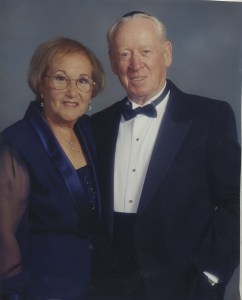
During the Coronavirus crisis, the lives of Holocaust survivors can offer us some much needed perspective

benchdg2

Make no mistake.  The Coronavirus is a serious problem and one that the larger percentage of people recognize as being something that needs to be taken seriously.  Everyone reacts to things differently and everyone is frightened by different things.  Some more than others.  Fear or lack thereof in a situation such as this one is not what distinguishes cowards from heroes. It is the actions in light of those fears that speaks more to a person’s character.  Part of my reason for saying that is because despite my relative lack of concern for my own well-being, my behaviors are more out of a communal sense of responsibility and decency towards others, I say without any degree of false modesty that I am no hero.  But my lack of panic or fear has made me ask why I feel this way.  Although there are many others who share my approach for different reasons, I believe mine comes from an education I received at home from a young age from my parents.

There is a difference between scaring people and giving them perspective.  I attempt to do the latter.  To consciously try to sensationalize and scare people at a time like this is not only destructive, it is unethical.  So the lessons I learned I pass on in the hope that it helps people deal better with this situation moving forward.

As someone who has studied and written about what my parents experienced in Holland between 1940-1945, I’ve learned to look at things more as they are than how I think they could be or how I would like them to be.  Yes, it is great to dream.  The best line from the movie Flashdance, in my opinion, was the line, “if you lose your dreams, you die”.  That being said, looking at things as they truly are and understanding the reality, is critical at a time like this.  So first I look at the aspect of isolation and the true extent of the discomfort or inconvenience that it causes.  Once when I was about 16 years old, I found myself depressed over the silly nonsense that is likely to depress someone of that age.  And back then, as someone who was living in London away from my parents who were in Holland, much of my communication with my parents was through written letters.  In one letter my father wrote to me one of the most poignant and helpful things he would ever share with me.  He told me that even though I may see my problems as not that large compared to “real” problems, since they were my problems they were the most serious to me.  I share that because that comfort and understanding given to me by my father, someone who had survived the Holocaust, needs to be understood by those who might say to you, relax, it could be worse.  Whatever it is you are going through today, and I hope and pray it stops short of health issues for you or your loved ones, it is your most serious problem.  But that still doesn’t have to stop any of us from using the experiences of previous generations as a perspective check, one that might just make it easier for us to handle during these difficult time.

I live alone.  I am not saying that out of self-pity or in search of attention.  I say that because I consider myself fortunate.  I have electricity, heat, running water, enough food, contact with the outside world, and as long as my actions do not put others in jeopardy,  freedom of movement.  I also say that because the isolation people are asked to apply to their lives, is, assuming people respect it and with God’s help, a relatively temporary measure.  So I look to a 16 month period of my mother’s life for perspective.  The last 16 months in Holland, at the end of World War II. During this time my mother slept every night in a small room underground and probably in a space no bigger than many  people’s bathrooms.  She had a candle and a bucket, and when the weather turned bad, rising water that she had to walk through and a damp unpleasant room that she slept in.  Every night, Lubertus te Kiefte, the righteous man who together with his wonderful and equally righteous wife Geeske, gave my mother a relatively safe environment and food to survive, would take my mother to the back of his workplace where he had built her this room.  Once she was in the underground, he would put sandbags on top of the entrance to hide the room’s existence.  This was necessary because on any given day the possibility existed that the Nazis would raid people’s homes.

We all would love to go to work, go to gatherings, eat at restaurants, go to school or pray in our houses of worship. I get it. But perspective helps.  And considering what my mother dealt with for 16 months in cold, dark and unhealthy conditions, conditions that when relieved were replaced with the constant fear of being caught by the Nazis, maybe those us who need a perspective check and are miserable over having to stay home in conditions that offer us most of our basic needs over a time period that has not even hit 16 days, need to consider what my mother experienced during that time.  But maybe most importantly we all need to know that, even with the losses she suffered and the pain she experienced, she went on to live to be 95, build a family, and other than missing her husband, my father, died a happy woman.

The uncertainty we feel, the feeling we feel is so devastating, I put into perspective by understanding, to the best of my limited abilities, my father’s 5 years in Nazi-occupied Holland.  Before the war my father was on track to live a life as a Judaic scholar. His knowledge of Judaism and his involvement in the community were the core of his upbringing. Then came the war, and a 5 year period in which he was an active member of the Dutch resistance and someone constantly on the move, living through that time with a false identity, and, for lack of any other way of saying it, putting his Jewish life on complete hold.  For 5 years. Let’s use that as a perspective check before we panic about having to put our lives on hold for 5 weeks or even 5 months.  Why? Because when the war was over, my father married my mother, became a Rabbi and went on to live a rich and fulfilling life.

Everyone has their stories.  Some worse than others, some better.  This is not a competition.  This post is not designed to belittle anyone’s pain or fear.  What it is meant to do is offer some added perspective. Not just as to how much worse things can get in life, but more importantly as to how we can not only move on, but if we are fortunate enough and resilient enough, maybe even restart the lives that we have.

I have often said that the basis for my personal happiness is the teaching from Pirkei Avot, Ethics of our Fathers, about who is a happy person.  It is someone who is happy with their portion.  That lesson has never been a more important one than it is today.  When things are going the way you would like them to go it is easy to be happy with what you have.  But during times of struggle and hardship, that teaching becomes even more important.  Look to what you have in life and be grateful for it.  Let it make you happy.  If that doesn’t work, than hopefully some of these lessons on perspective will.  The reality is what the reality is.  Your way of looking at it is entirely up to you.

LIKE THIS POST? SHARE IT ON FACEBOOK OR TWITTER

BRAM’S VIOLIN

HOW TO BUY THE BOOK

JOIN “THE GLOBAL COALITION FOR ISRAEL” ON FACEBOOK

IN CONJUNCTION WITH GLOBAL COALITION FOR ISRAEL

What it means to me to be the child of Holocaust Survivors

00000007

Not too long ago, a millennial of Asian descent asked me what it was like to be raised by Holocaust survivors.  The importance of indicating his background is to highlight the difference of his life from the life he was asking me about.  Although I think human beings are inherently the same when you break through all the superfluous crap, I recognize the impact environment and circumstance has on molding an individual.  So the question made me think about this topic more deeply than I had in quite some time, and in light of the events that have taken place in my life over the past 6 months I decided to share, in the hope that I help address issues of concern not just to people that fall into the same category that I do, but for people looking for answers about who they are and where they are going.

Since I am very aware that we live in a world where people often find sport in attacking the words that others share, let me make a few things very clear before you read on.  The information you are hopefully going to go on to read is not based on historically verified facts or scientific studies.  This is based entirely on my personal feelings and interpretations.  If your reaction is, “why should I care how he feels?”, that is fine with me.  Just like that same person can’t tell me I am right or wrong for how I feel, I can’t tell that same person what to care about.  But hopefully it is understood that at least part of my motivation is to help people that struggle with feelings they do not understand or even worse, understand but can’t deal with.

My initial response to the question was probably the most honest response I had ever given to any question regarding my parents and what it was like to be raised by people who lived through Nazi-occupation.  I called it 2 sides of the same coin.  On one side I recognized that there is an inevitable dysfunction to being raised by people who went through what my parents went through. On the other side of the coin, even before without addressing the special qualities my parents exhibited in their lifetime, being raised by Holocaust survivors almost forces you into seeing things that are more important than what is relatively superficial nonsense.

Coming out of the ashes of the war in 1945, it needs to be understood that not all Holocaust survivors had the same or even similar experience.  There seems to be a universal understanding among all decent people, whether they have a direct connection to Holocaust survivors or not, that degree of suffering is not a contest.  No one ever says to a Holocaust survivor that was not in a concentration camp that they were lucky in comparison to someone who survived the camps.  And while it is clear that had my father not helped my mother find places of refuge and do so much to keep her from being captured by the Nazis that she would have likely suffered horrors unimaginable likely followed by death, who is anyone to measure the devastation of seeing your world be decimated and the feelings associated with running for or fearing for your life for close to 5 years?  And who can understand seeing everything you know and believe in be wiped out as though it was a disease?  As soon as I was old enough to understand with some maturity what my parents went through, my value system was impacted by how I interpreted their life experiences.

I never felt guilt.  I was not made to feel that way.  Mostly because for as long as I can remember it was made very clear to me who the guilty parties were.  Nazi and Nazi collaborators were the mass murderers that murdered my ancestors, and living my life in a good and happy way would be more of a slap in the face to their efforts than it would be a disregard for what the Jewish people suffered through in my parents’ native Holland and the rest of Europe.  I have however always felt a responsibility.  It would probably take extensive therapy for me to understand to what extent I try to do good things and to what extents I follow Judaism based on the responsibility I feel, but I am honest enough to admit that it is certainly part of the equation.  I know that although in today’s very partisan political climate we can debate what is anti-Jewish sentiment or action, I do know that I have zero tolerance for those things I consider to fall into those categories.  This is about how I feel when I recognize that taking place in society or my environment.   I know that nothing feels more important to me than the survival of the Jewish people, but I also know I reconcile ethically by having the same intolerance for attacks on the survival of others, again, when I see it as taking place. This same factor explains why Israel is important to me.  Israel not only represents a safe haven for the Jewish people escaping persecution, but it also highlights the thoughts and ideas of those who have a disdain for the Jewish people.  That is not to say that any opposition to the positions of the Israeli government is anti-Jewish, but it does alert any honest individual to the fact that being anti-Israel is more often than not a code word for anti-Semitism.

So all of these viewpoints and philosophies are at least somewhat a result of being raised by Holocaust survivors.  But it would be hard to refute the idea that some of my flaws are not a result of that as well.  To know that for sure would be to know what degree of the imperfections of my parents were passed on to me are a result of their experience during the war was passed on to me.  I maintain that it may be close to impossible to identify that with any accuracy and I loved and respect my parents and their memory too much to pick apart whatever flaws they may have had, but I will offer up one fear I believe I inherited from my upbringing.  A fear, that to be brutally honest is very likely a contributing factor behind the time I have put into writing this piece and much of the other things I write.  It is the fear of not making a difference.  For my grandparents, my father’s parents who refused baptismal papers because they would only die the way they were born, as Jews, for my ancestors who were killed in the concentration camps, for the 6 million, and for my parents who felt the pain of that time until the day they died, I feel that I have a responsibility to do something that matters.  There is a fine line however between feeling a sense of responsibility and feeling a burden, and although I was not made to feel guilt, whenever that sense of responsibility has felt like a burden, a feeling of guilt sets in, because I know, that my “burden” is nothing compared to those that suffered during that time.  Nevertheless, it is a reality that sits with me and one I need to address from time to time.

I do leave you with two very important points.  First one being that one of the reasons I am writing this piece is to hopefully help any other children of Holocaust survivors with unresolved feelings they may have difficulty dealing with, and the second one is to accentuate the most important factor in this entire discussion.  The Holocaust was a reality.  The enormity of it was so significant that it not only resulted in the murder of 6 million Jews but it still impacts the world and generations in so many ways.  The specifics being a discussion for another time.  Reality, good or bad, does not disappear just because you want it to.  It does not disappear because of perverse and distorted ideologies.  It needs to be confronted, something I will continue to do that for as long as I am able.  Sometimes it is my burden, but I am thankful to God for the fact that usually it is my responsibility.  One I accept without issue.

LIKE THIS POST? SHARE IT ON FACEBOOK OR TWITTER

HOW TO BUY THE BOOK

JOIN “THE GLOBAL COALITION FOR ISRAEL” ON FACEBOOK

IN CONJUNCTION WITH GLOBAL COALITION FOR ISRAEL