Tag Archives: Amsterdam

Jew Face: An excerpt connecting then and now

What has always been the most remarkable thing about the book Jew Face, in my opinion at least, has nothing to do with how the book was written.  The most remarkable thing has always been that the story is true.   As a writer, I could ask for no greater gift than to have at my disposal a story that is so rich with almost every human emotion imaginable, and of a subject matter not only important in history, but in this particular instance,  inspiring and hopeful.  Whenever possible in this blog I will try to draw the story to a real connection, be it through the date or through people involved in the book and the people close to them.  The following excerpt involves the story of Sam Abram and his sister Nettie.  Sam was a very close friend of my father, and his daughter Chelly recently had her birthday and on Monday will commemorate, according to the Jewish calendar, the anniversary of her father’s passing 14 years ago.   With her permission I am making this mention and posting this excerpt from the book Jew Face.

Saving Nettie

 As the Germans were to come in on various occasions and raid neighborhoods, the Jewish community in Amsterdam became smaller and more dispersed. Those either not willing to accept the evidence or whose innate courage prevented them from leaving their home would ultimately find themselves shipped off to what we now know would ultimately be their cruel treatment in concentration camps, and in most cases, death.

 Throughout 1941, Seys-Innquart, Aus der Funten, and his other henchmen were in the process of determining a location to use as a deportation center for the Jews of Holland. The two most logical places were the Esnoga, the Great Spanish-Portuguese Synagogue, and the Hollandse Schouwburg, the great concert hall of Amsterdam. After reviewing it carefully, the Nazis felt that the Schouwburg was the more logical choice. Because of the large amount of Jewish patronage over the years, the proximity to the Jewish ghetto, and the purpose in which it was now going to be used, the Nazis changed its name to the Joodse Schouwburg and prepared it for use as a deportation center.

 The plan had in many ways already been put into action. The concentration camps of Westerbork and Vugt were set up in the north and south, respectively, and beginning in January of 1942, after mass roundups, Jews were no longer allowed to live anywhere in the Netherlands but Amsterdam or the two camps. When arriving in Amsterdam, these people would either live in the homes of others or would reside in public institutions such as schools or hospitals.

 The Schouwburg had been set up and was used for Straf Gevaals (“S Cases”) and for whatever group of random Jews the Nazis chose to keep there until deportation.

 Meanwhile, the death camps of Auschwitz and Sobibor were close to operating at full capacity. The Germans were taking the process of eliminating the Jewish population of Europe to a new level. Once they reached that stage, in July of 1942, the system in which they handled the Jews of Holland was cut and dry. Homes and institutions were raided, and if not emptied out in full, they were left devastated and in shambles. Most of the people picked up in these raids were brought to Westerbork, where they would stay for a short while, days at most, before being transported to the death camps. Those not sent to Westerbork went through Vugt. The majority of the remaining was first processed in the Schouwburg and then went through the same pattern of Auschwitz or Sobibor via Westerbork.

 Even before the mass deportations of July of 1942, the Grune Polizei (“Green Police”), the Nazi police force patrolling Amsterdam, would make regular raids and roundups in Jewish neighborhoods. Many of the Jews who had an understanding of what was taking place went into hiding before they were forced to leave their homes. For many, this was the reason they survived, although, as was the case with everyone who hid, some were more fortunate than others.

 The situation in Amsterdam was worsening from week to week. Thousands of people had already been taken from their homes, and it was becoming more and more clear that this was going to get a lot worse before it got better.

 Most of the people being seized from their homes at this point were individuals. Families and couples appeared to be spared for a large part, but it was a tenuous situation at best, and the future had a very ominous feel to it.

 One day early in 1942, Nardus was approached by one of his good friends, Sam Abram. Sam lived close to Nardus, and they had attended Yeshiva together, frequented the same gatherings, and knew and liked each other very much. Sam had a younger sister, Nettie, and he was concerned that this young, attractive, single woman would be in danger of being sent to one of the camps. And his fears were justified. Many of the women in the neighborhood had disappeared, and with the incidents of brutality leaking out, no one wanted to spend too much time imagining what this meant. They just knew that is wasn’t good. So Sam asked Nardus if he had a way to help Nettie stay out of the camps and remain in Amsterdam.

 There was really only one way Nardus could help her: He had toMore


The love story in Jew Face

In a random conversation earlier today, after mentioning my book, I jokingly suggested to a young woman that I should promote Jew Face as the perfect book to read upon completing Fifty Shades of Grey.  She grinned slightly and lifted up the book she was reading, Fifty Shades Darker, the second in the Fifty Shades trilogy.  I proceeded to ask her what would cause her to be drawn to my book.  She responded with the words, “if it was a love story”.

Well for those of you wondering, Jew Face is the story of a woman unable to move safely in her home town of Amsterdam due to what in those days in that city was her very Jewish face, and a Jewish man who looked like a regular Dutchman, who took it upon himself to see to her safety regardless of the danger involved.  His emerging love for the woman and her initial trust and faith that steadily turned into a deep and long lasting love is the foundation of the entire story.

So for those looking for a love story, there is a reason the subtitle is  “A story of love and heroism in Nazi-occupied Holland.”  This story revolves around so many different aspects, with love very much in the forefront.


Response to article criticizing Holland


Thank you to one of my Facebook friends for posting this article about Holland in ynetnews.com.  It tackles the issue of Holocaust denial and in some of its categorizations of the Dutch made me feel compelled to respond.  I hope my response gets posted, but just in case, here is a link to the original post, followed by my response.

http://www.ynetnews.com/articles/0,7340,L-4226056,00.html

This article was of great interest to me, particularly since on Wednesday it will be 4 weeks since the release of my book, “Jew Face: A story of love and heroism in Nazi-0ccupied Holland.”

There is no condoning the activities Dr. Gerstenfeld spoke of in Vorden and Amsterdam, but I would like to offer a slightly broader perspective.  Holland is a nation of close to 17 million people, of which the majority is Catholic and Protestant.  There is a growing Muslim population and an almost non-existent Jewish population.  There is anti-Semitism taking place regularly in almost every nation on the planet.  The problem that exists in Holland is that in an attempt to be super liberal, some Dutch citizens may show a lapse in judgment and sensitivity.

I do not believe that labeling Holland as a nation that stands out in attempting to brush away the memory of the Holocaust is a fair categorization.  I also feel that some credit needs to be given to the Dutch for their overall treatment of the Jewish people.   The only time in modern history where living as a Jew was uncomfortable in Holland was when the nation was under Nazi occupation.  The righteousness of much of the non-Jewish Dutch population during World War II made it possible for many to survive that otherwise might not have.  I also speak of this in my book and it is the reason that the website I created to discuss issues surrounding the book is called Holland’s heroes https://hollandsheroes.com/.  So although I respect Dr. Gerstenfeld’s opinion and realize that he and I are likely on the same side as far as our ultimate concerns and goals, I differ strongly in his assessment of Holland.


Bevrijdingsdag-Dutch Liberation Day:The Liberation of Amsterdam and a personal Thanks

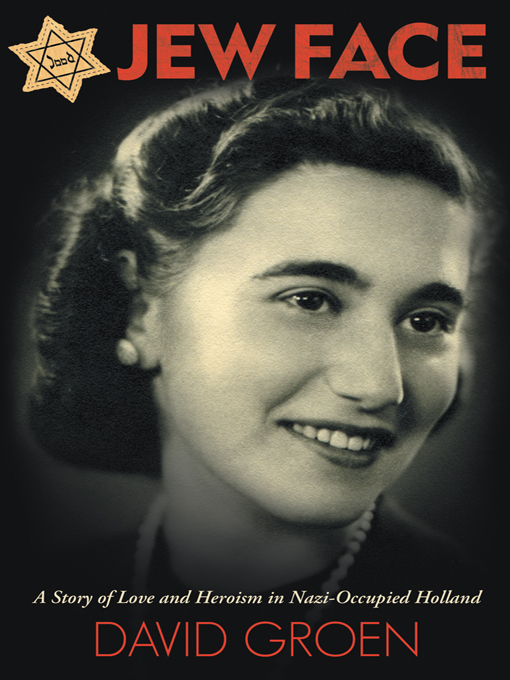
In what would seem to be the most appropriate post to end the weekend tribute to Bevrijdinsdag, Dutch Liberation Day, I offer this video of the Liberation of Amsterdam.  Although the harsh realities of what took place during these 5 years of Nazi occupation would soon come to light for those who had survived, on this day the good people of Holland had every right to celebrate.  And that they did.  As the Jews of Holland would learn of the devastation that had struck their world, those left in Holland, such as Sipora Groen, my mother and the woman on the cover of the book Jew Face, would at least be able to try to rebuild in what was now a free and always had been a friendly Holland.  It is for this reason I take this opportunity to say on a personal note that although I am very proud of my Jewish roots, I am also very proud of my Dutch ones.  Thank you Holland and thank you to all of the Dutch people for doing whatever you could to turn tragedy into hope.  No nation deserved freedom more on that day and it has been my honor to celebrate it.

http://youtu.be/wkPhWJ_xlKk


Holland’s Experience:Test your knowledge

In a continuous effort to increase Holocaust awareness, I have put together a series of questions regarding what the Dutch community went through during the Nazi-occupation.  The answers are at the bottom of the page.  Comments are welcome and well be posted after moderation.

1-What percentage of Amsterdam was Jewish in 1940?

2-How many Dutch Jews were murdered in the Death camps?

3-What was the name of the concentration camp in Holland set up to accommodate German refugees in the 1930s and later used as a transit center?

4-What was the name of the Death camp where an estimated 34,000 Dutch Jews were murdered?

5-In what concentration camp did Anne Frank die?

These are just 5 questions but they will give an indication of what you know about what Holland experienced during this time.  The more we know, the more we can increase awareness and fight those who try to claim it never happened.  Again, your feedback is welcome.


Answers-10% 2-104,000 3-Westerbork 4-Sobibor 5-Bergen-Belsen


Remembering The Holocaust-A Personal Perspective

Being the child of Holocaust survivors I have been exposed to the reality of what took place from the time of my earliest memories.  Naturally my understanding of the events developed as I grew older, but from a young age the one thing I knew was that my parents went through something not everyone else’s parents went through.  I never knew my grandparents.  My mother’s mother passed away many years before the war, but her father and my father’s mother and father were all killed in Auschwitz.

As I grew up I went through this stage where I thought that my parents had a pretty easy go of it in the war.  After all, they didn’t have numbers on their arms and my mother was never even arrested by the Nazis.  How bad could it have been?  That stage did not last long as I soon began to gather a more educated understanding of my parents’ experience.

I believe it started with me trying to imagine the relatives I never knew.  I would think of my father’s parents.  Listening to the stories my father would tell, I would always feel a special connection to his father.  One I could not explain rationally or logically.  I just felt a somewhat mystical bond.  His mother would seem to me like a woman with a quiet demeanor but strong willed character.  My father would always speak with them with nothing but respect which inevitably would translate to how I and I presume the rest of my siblings would perceive them.

I would then try to imagine my mother’s father.  He always seemed like the man everyone wanted to meet at least once.  He was an athlete, outgoing, successful in business, while being somewhat mysterious.  At least that would be how it looked through my young eyes.  And then I would think of my mother’s brother and all I would see was a sweet, talented, and gentle young man who should have had a chance to live in an easier time.  I knew my mother loved them both deeply and that remembering them was more emotional than almost anything else.

I would imagine all of them and try to picture them.   How they lived, how they spoke, how they might have spoken to me.  At one point however I realized that when imagining them my imagination never left Amsterdam.  I could not imagine them being picked up in a raid and stuffed on a train to ultimately wind up in Auschwitz.  And I most certainly could not imagine them being killed in the gas chambers.  I could not imagine any of this.  It was just too difficult.  And I never even knew them.

It is hard to conceive the horrors experienced by the murdered victims of Nazi Germany.  Of the 6 million Jews who were murdered during this time, many were tortured, beaten, raped, used for experimentation, and made to suffer in ways that a normal mind cannot even begin to conceive.  And for those who experienced this level of suffering and survived, to make an attempt to comprehend what they felt would have to be impossible.

True, my parents did not have those specific experiences.  What they had to endure was running from an enemy that would certainly kill them, hiding in whatever location they could find regardless of the conditions, being so deprived of food that fresh bread and butter seemed like a luxury, and finding out that almost everyone they knew, loved, played with, studied with and laughed with, was gone.  Taken away forever.  Earlier today I closed my eyes and tried to imagine being in a New York where 75% of the Jewish community was gone and in a world where the majority of my family was suddenly dead.  I could not do it.  It was just too difficult emotionally.   For my parents and for so many like them, they did not have the luxury of opening their eyes and going back to a better reality.  The reality was brutal and would never ever be altered.  All it could be was remembered.

The Holocaust the Jewish people suffered through was of such an enormous magnitude that the people who went through these horrors on whatever level they did are called survivors, when in fact they too were victims.

There are various factors that have contributed to the survival of the Jewish people since the horrors of Nazi Germany.  A case can be made for any one of many reasons being most important.  Some would say it is the existence of the State of Israel, while others might say the commitment of the Ultra-Orthodox or the traditional Jew, while others may say it is the activist who will fight either physically or verbally in defense of the Jewish people.   One thing is certain.  It is not because of the person who does nothing.  Until recently I considered myself one who did nothing.  Although I have always been proud to be a Jew, I’ve never felt like I did enough.  On this eve of Yom HaShoah, I feel a responsibility like never before to be a voice that reminds people of what happened and to fight those with the gall to claim it never did.

It may be too painful for me to imagine, but it is even more painful to my soul to allow myself to ever forget.


More Tastes Of The Book

With the release of the book “Jew Face: A story of love and heroism in Nazi occupied Holland” imminent, I will be putting up photographs daily that pertain to important events and stories from the book. The book is the story  of my parents, Nardus and Sipora Groen mainly during the period between 1940-1945. Today’s pictures are of Nardus Groen in 1945 as a Dutch Marine attached to the US Marines in Camp Lejeune and then Sipora Rodrigues Lopes in 1943 when working as a nurse in Amsterdam.


ANOTHER TASTE OF THE BOOK

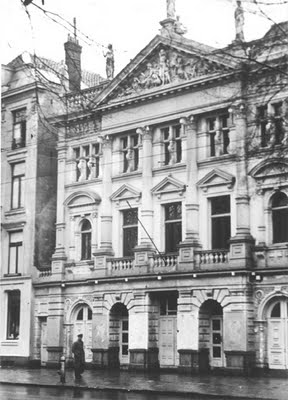
With the release of the book “Jew Face: A story of love and heroism in Nazi occupied Holland” scheduled for April 13, 2012, I will be putting up photographs daily that pertain to important events and stories from the book. The book is the story of my parents, Nardus and Sipora Groen mainly during the period between 1940-1945. Today’s picture is of the Hollandse Schouwburg, the main Concert Hall of Amsterdam that would be turned into a detention and transit center by the Nazis. Besides being a symbol of the devastation that befell the Jewish community at the hands of the German occupiers, one of the most defining moments in the book also takes place in the Hollandse Schouwburg.


Esnoga-Portuguese Synagogue of Amsterdam

The Esnoga, the famous Portuguese Synagogue of Amsterdam, holding a service for survivors of the Holocaust on May 9, 1945.


February 1941

The significance of this picture is that it directly and indirectly represents the 3 major aspects prevalent during the Nazi occupation of Holland in regard to the Jewish community.  Firstly it shows Nazi soldiers and the fear they instilled in the community even before their intentions were revealed.  Secondly it shows Jewish victims, in this case young men, one of which was my mother’s cousin David Van Hasselt, lined up before being transported to their death merely for being Jewish.  And lastly, as a result of this raid that was widely recognized throughout Jewish and Non-Jewish Amsterdam as being retaliation for something not done by a Jew, Dutch leftists  organized “the February strike” (” De februaristaking”) , showing early on that the average Dutchman would not support Nazi persecution.