
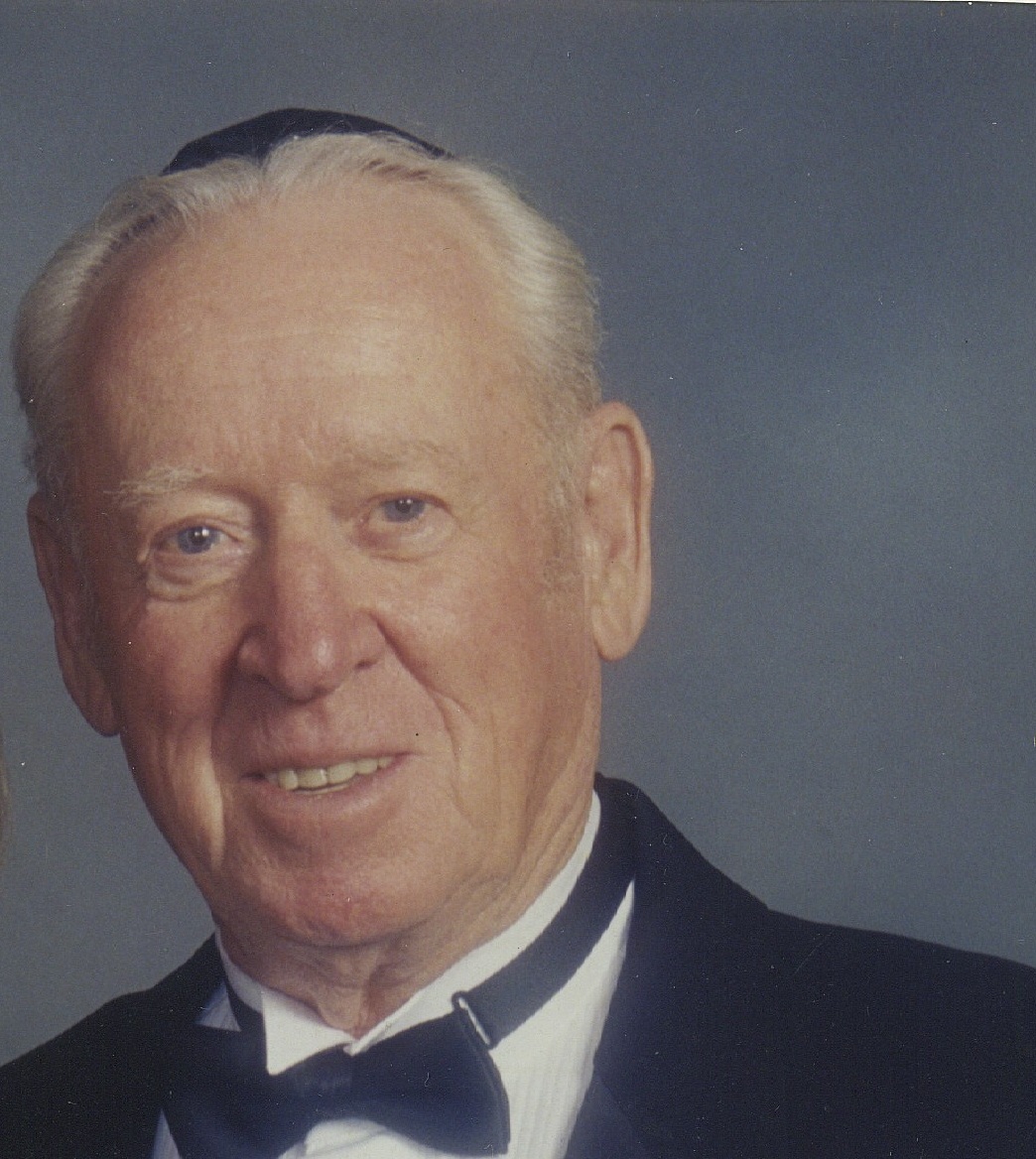
The following is a Congressional tribute to my father less than 1 month after his death by then Congressman Joe Sestak of Pennsylvania.[Congressional Record Volume 153, Number 112 (Friday, July 13, 2007)] [Extensions of Remarks] [Page E1512] From the Congressional Record Online through the Government Printing Office [www.gpo.gov] TRIBUTE TO RABBI NARDUS GROEN ______ HON. JOE SESTAK of pennsylvania in the house of representatives Thursday, July 12, 2007 Mr. SESTAK. Madam Speaker, I rise today to recognize and honor the life of a husband, father, grandfather, great grandfather, brother, son, veteran, and community leader--Rabbi Nardus Groen, who passed away on Wednesday, June 13 after living a full life of community service. Rabbi Nardus Groen was born in Rotterdam, the Netherlands, on December 18, 1919 and grew to become a hero and a family man. As a member of the Dutch Underground during World War II, Rabbi Groen was captured by German soldiers multiple times and heroically managed to escape each time. One particular act of heroism occurred in 1940 when Groen was guarding a Jewish hospital in the Netherlands during its evacuation. Although the patients had escaped, Groen was protecting a group of Jewish nurses as the Nazis approached. Selflessly, he slipped on a Red Cross arm band and escorted the nurses into a room. When the Nazis asked who was in the room, Groen explained that he was caring for patients with Scarlet Fever. Fearing the illness, the Nazis spared the Jewish nurses, including Groen's future wife, the former Sipora Rodriguez-Lopes. After World War II, Rabbi Nardus Groen served at Camp Lejeune, North Carolina under the American Marine Corps. Following his stint with the Marines, Groen worked as a psychologist at a Jewish orphanage for Holocaust survivors. He helped countless youths cope with one of the greatest tragedies in human history. Two years later, he began to serve as a rabbi at the oldest congregation in the Western Hemisphere in Surinam. Groen led a mixed Sephardic Ashkenazic congregation in Surinam until 1952 when he served as a rabbi in Einhoven, the Netherlands. He became one of the foremost leaders of his community, uniting two different cultures in one synagogue. Nardus Groen moved to Lansdale, PA as a renowned rabbi in 1963 where he served as Beth Israel Synagogue's rabbi for 13 years. He provided guidance and spiritual leadership to Beth Israel's community, helping his community grow to the vibrant Jewish center it is today. Groen moved back to Europe and retired in 1986 as the chief rabbi for the eastern six provinces of the Netherlands. He lived what he preached and will be remembered across the Netherlands. After his retirement, Rabbi Groen and his loving wife Sipora lived in the Netherlands and Delray Beach, Florida after his retirement before permanently settling in Florida in 2005. Rabbi Groen spent his last years as a loving father to Marcel Groen, Leo Groen, Ruben Groen, David Groen, and Debra Groen; a loving brother to Meyers Groen and Sophia Groen; a loving grandfather and great grandfather to twelve grandchildren and six great grandchildren; and a loving husband to Sipora Groen. Madam Speaker, I ask you to join me in honoring and remembering Rabbi Nardus Groen. Through his hard work, Rabbi Groen has spread hope across three continents and will be remembered as a strong leader, a caring mentor, and a true mensch.
Author Archives: davidgroen1
Congressional tribute to Rabbi Nardus Groen
Concentration Camp Theresienstadt
Theresienstadt plays an important role in a chapter in the book. I had family members who did spend time there and there is a story surrounding them that needed to be told.
The reason behind the title “Jew Face”
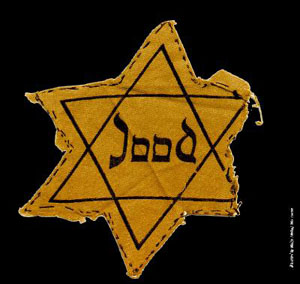
When the Nazis occupied Holland in 1940, 10% of Amsterdam’s population was Jewish. In those days, Amsterdam was not as it is today, a city with various minorities making it far more difficult to identify with certainty a person’s religion or ethnicity. In 1940, a person with a dark complexion and dark hair in Amsterdam was assumed to be Jewish. To the German’s, the ‘Joden Kop’ was a way of harshly identifying that they recognized the face of a Jew. Sipora Groen, my mother, was seen as having one of those identifiable faces. Hence the title of the book “Jew Face”, the story of my parent’s life, taking place primarily during the time of the occupation between 1940-45 and revolving around their journeys and experiences during those years not only of horror and sadness, but also courage and strength.
Esnoga-Portuguese Synagogue of Amsterdam

The Esnoga, the famous Portuguese Synagogue of Amsterdam, holding a service for survivors of the Holocaust on May 9, 1945.
Hollandse Schouwburg

The Hollandse Schouwburg was Amsterdam’s premier venue for concerts and shows before the Nazis occupied Holland in 1940. By 1942 it was turned into a detention and deportation center for Amsterdam’s Jews. Most who went through the Schouwburg would end being transported to Auschwitz and Sobibor.
The Righteous Among the Dutch
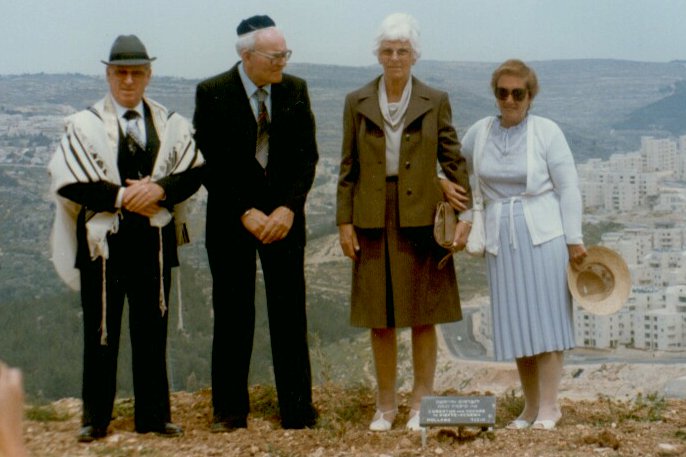
(from left to right: Nardus Groen, Bertus te Kiefte, Geeske te Kiefte, Sipora Groen)
This photograph is taken at Yad Vashem, the Holocaust Memorial Museum in Jerusalem in 1984. It was taken on the day that a tree was planted to honor the heroic actions of Lubertus and Geeske te Kiefte. Their heroic actions are documented in the upcoming book Jew Face.
Westerbork Concentration Camp

Many of the German Jews who fled to Holland when the Nazi persecution began to reach high levels found refuge in Westerbork. A refugee camp set up by the Dutch government and largely financed by the Jewish community to provide what was meant to be comfortable living conditions, Westerbork was to become a weapon of the Nazi terror machine after the occupation of Holland. After 1940 it was turned into a Concentration Camp and Transit Center. Most of the estimated 104,000 Dutch Jewish victims of the Holocaust would either pass through or perish in Westerbork.
February 1941

The significance of this picture is that it directly and indirectly represents the 3 major aspects prevalent during the Nazi occupation of Holland in regard to the Jewish community. Firstly it shows Nazi soldiers and the fear they instilled in the community even before their intentions were revealed. Secondly it shows Jewish victims, in this case young men, one of which was my mother’s cousin David Van Hasselt, lined up before being transported to their death merely for being Jewish. And lastly, as a result of this raid that was widely recognized throughout Jewish and Non-Jewish Amsterdam as being retaliation for something not done by a Jew, Dutch leftists organized “the February strike” (” De februaristaking”) , showing early on that the average Dutchman would not support Nazi persecution.
To Remember…

This is the plaque given by Nardus & Sipora Groen to Lubertus & Geeske te Kiefte at the end of World War II in gratitude for their remarkable and selfless sacrifice.
It is from Psalm 31, Verse 9 and translates as follows:
“You will not abandon me into enemy hands,
but will set my feet in a free and open space.”

