Tag Archives: Nardus Groen

Remembering an Uncle

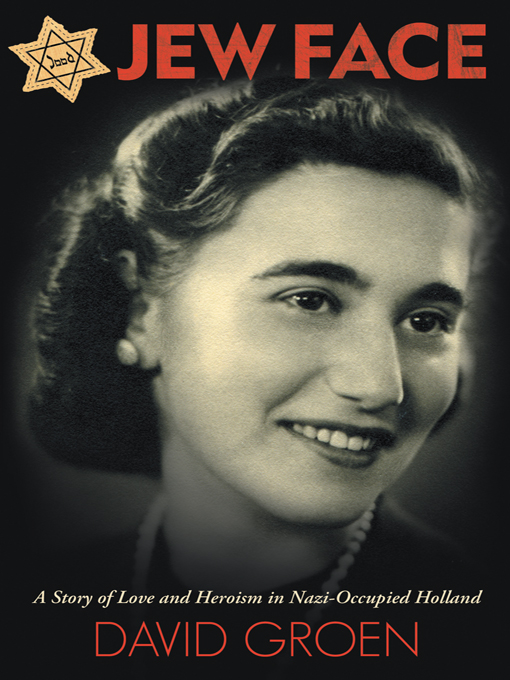
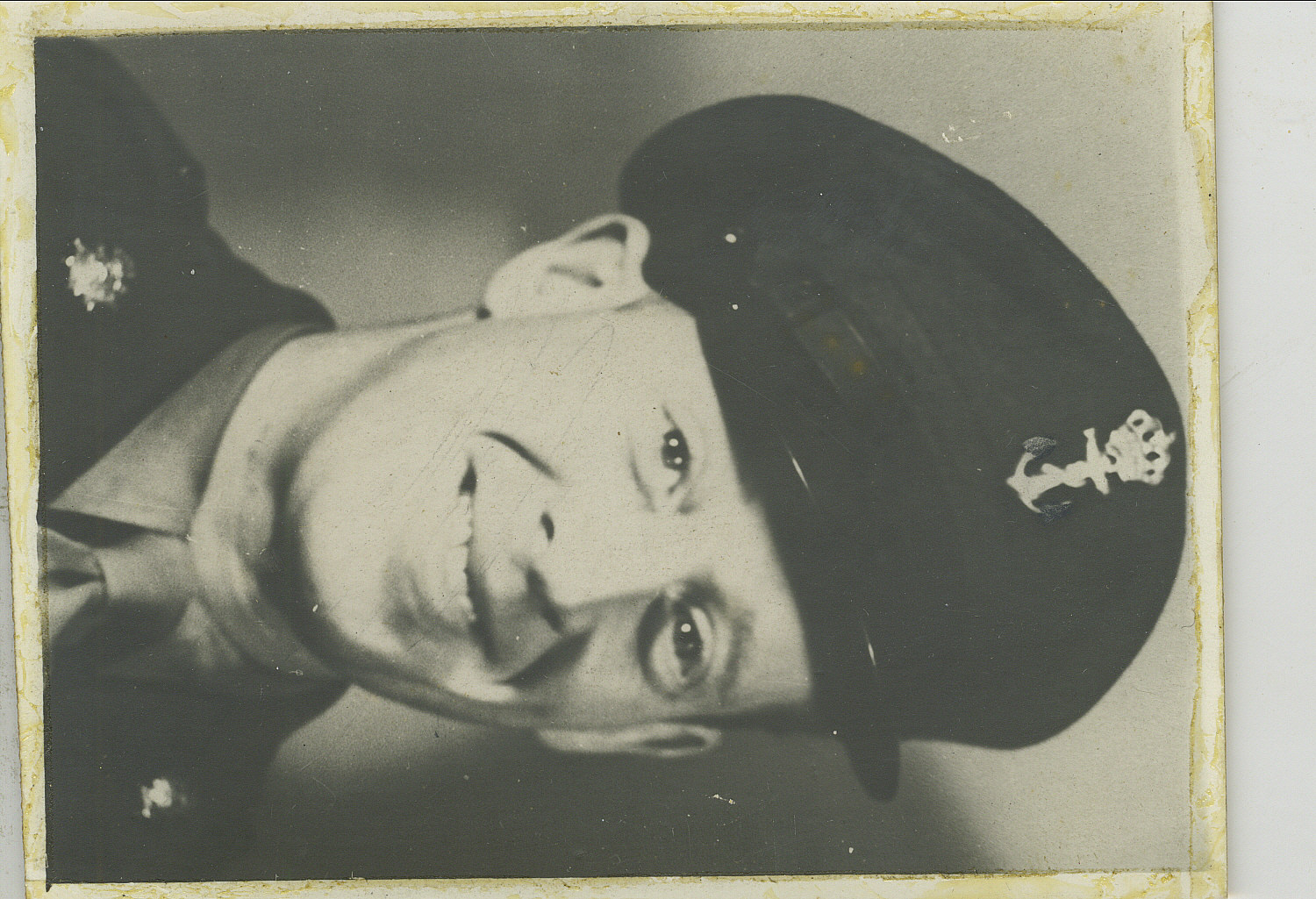
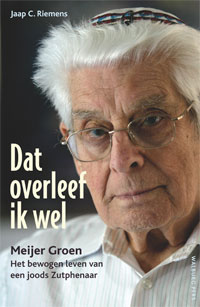
If you have read the book Jew Face or know of my family, you know that my father was one of five children.  His oldest brother was Meijer (pronounced Meyer), he had an older brother David, an older sister Sofia, and a younger sister Elizabeth (aka Belia).  Elizabeth was murdered by the Nazis, David died in a car accident in the mid 70s, and Sofia died of natural causes less than a year ago.  The only one who was left was Meijer, until a few days ago.  It is for this reason that I write this post.

My Uncle Meijer, my father’s oldest brother, passed away this week.  With people living in different parts of the world, I cannot say that I knew my uncle well in my adult life.  What I do know is the significance of his passing and my childhood memories.

To the best of my knowledge my uncle never spoke much English.  As a child however there was one sentence I do remember him knowing, and as he has passed on, and I look back at my childhood,  I would be remiss if I would not make mention of it.  He would call me over, look straight at me with a smile and say, “We are friends for…” at which point I would reply “ever”.  This was a well know interaction in the family and always gave me a wonderful feeling as a child towards my uncle.  As a 50 year old man today, I still look back at it and smile.

The significance of the passing of my father’s brother Meijer is that it is the end of an era in many ways.  The last of my father’s immediate family, Meijer Groen’s passing creates one more gap between our world today and the world of those who went through the Nazi occupation, persecution, and murder of the European Jewish community, specifically that of Holland.

As the son of Nardus Groen, it makes me feel like an entire chapter of my family’s heritage and history has closed or maybe more appropriately, been altered.  If you do not believe that souls pass on to a different world when their bodies die here on earth I ask you to indulge me as you read this.  I sit here and pray that in that world my father and brother have met once again, that they both have peace, and reach the high levels God can provide to both of them.

This is my wish and my prayer.  Not just for today, but for…..ever.

The following is an excerpt from Jew Face: A story of love and heroism in Nazi-occupied Holland.  It takes place soon after the end of the war

Suddenly, a motorbike pulled up to the house. On the bike were two young men. The man in front had a familiar look about him, but Sipora couldn’t place why right away. The man on the back of the bike spoke first.

 “Are you Sipora Rodrigues?” he asked in a friendly tone, accompanied by a smile.

 Sipora was somewhat startled but felt at ease with the man’s approach and confirmed with no reluctance that she was.

 “I have a message for you from Nardus,” continued the man. “He said he got your letter and that you will be hearing from him again very soon.”

 Sipora felt a warm feeling come over her. It would have been easy for Nardus to avoid the whole situation if he had so desired. In these postwar times, with thousands of miles separating them, even with a child on the way, it would have taken very little effort on Nardus’s part to have no involvement whatsoever with her or the child. She was not surprised, because everything he had done till now showed that the kind of man he was made this reaction more likely, but still, this extra effort meant a lot to her. She was curious about these men now.

 “So I know Nardus told you how to find me,” said Sipora, “but may I ask, who are you?”

 “I’m Meyer Groen,” said the man riding the bike. “Nardus’s older brother.”

 Then the man on the back of the bike spoke again.

 “I’m their brother-in-law,” he said, motioning to Meyer. “My name is Jacques Baruch. It was good to meet you.”

 Somewhat in shock over having met two people so significant in Nardus’s life, Sipora just stood there, smiling.

 Jacques got back on the bike, and after the two bid farewell to Sipora, she heard him say to Meyer, “Nardus did pretty well for himself.”

 Sipora watched as the two rode away. In a world where so little good was happening, this was a day when she could at least smile and feel a little less alone. 


Blind Faith

Since this website is not a forum for political endorsement I will not declare my personal allegiance in the upcoming presidential election.  Ask me in another forum and I will have no shame in stating my preference and speak with me one on one and I will gladly debate you, but unless I feel something is unquestionably relevant to the survival or history of the Jewish people, I will do my best to stay on point.  This website, one that was set up to promote the book Jew Face, is being used to bring to light holocaust denial, holocaust mentality, anti-Semitism, and historically relevant facts as they pertain to the Holocaust and my parents’ experiences.

So today I will speak of the upcoming election, but in a way I have not seen anywhere else till now.   When 6 million people get murdered by a force as strong as the Nazis were between 1933 and 1945, there is very little criticism given to the victims.  And rightly so.  The innocent victims, people who were merely guilty of being born Jewish, did nothing to deserve their horrible fate.  The brutality of the Nazis is well documented and needs to be continually documented so that it will never be forgotten.  There is however one criticism often given to the victims as a group.  This criticism is that they listened blindly and followed like sheep.  Now I do not have the arrogance to make this criticism because none of us know what we would have done in this situation.  However, this argument may be backed up by looking at those who did stand up and fight, or recognized what was going on and did not follow blindly.  My father, Nardus Groen, was one of those people, and although he was the first to credit it to good fortune and God’s blessing, it is hard not to make an argument that his behavior lead to his survival, my mother’s survival, and the existence of their entire offspring, yours truly included.

So heading into the November election, whether you are Conservative or Liberal, love or hate President Obama, Republican or Democrat, I have one strong request from you.  Use your mind.  Don’t blindly follow anything.  If you hate Obama, I guarantee you that some of the criticisms of your sources are either spun or fabricated, and if you love Obama I guarantee the same.  Do not follow anyone like sheep.  Even those you consider to be like minded.  Be fair, be thoughtful, and be aware.  For when you follow like sheep, you are often being lead to slaughter.  And if anything can be learned from the past, it’s that independent thought is a much better road to survival than blind trust.


August 13, 1943

69 years ago today was Friday August 13, 1943.  In Holland this was a time when as a Jew, if you were fortunate enough to still be alive, your life was in constant peril.  If you did not look Jewish you still needed to have a false identity and what was perceived as a benefit or purpose to the Nazi occupiers. The Jewish institutions were being systematically depleted and destroyed with the ultimate goal of total extermination.  The NIZ, the hospital where my mother lived and worked as a nurse, had reached that point where the final raid was upon them.  As a young pretty woman who was clearly Jewish and one who had seen her whole world turned upside down, Sipora Rodrigues-Lopes was on the verge of giving up.  She would find the strength and with the support of Nardus Groen would find her way out of the NIZ.

In many ways their story takes on its greatest significance on this day, August 13, 1943, a day when their connection became strong and their travels began.  The following is the books Prologue and shows the events of this fateful day.

PROLOGUE
The date was Friday, August 13, 1943, and it felt like the worst moment of Sipora’s young life. She knew that the Germans were in the building and getting closer to finding her. She had already been through so much and she knew that the situation was going to get a lot worse before it got better. Her will to live was being taken over by despair. She was not the type of woman who would ever do anything to speed up her own death, but she also did not feel like running or fighting. So she decided that she would just wait on the third floor and when the Nazi soldiers located her,
she would willingly leave with the rest of the patients and hospital staff . At least then she felt as though she could do some good by making the sick and elderly patients a little more comfortable.
Nardus, however, had no intention of allowing this to happen. As had been the case since the beginning of the Nazi invasion of Amsterdam, he instinctively knew that whatever Jews were not murdered instantly would instead suffer greatly through torture, experimentation, rape, or brutal slave labor. Since he found Sipora before the soldiers did, he knew he had to get her out. And to a man like Nardus, it did not matter what Sipora thought of this idea. It was going to happen his way. And that was that.

When Sipora saw Nardus, she had already sunk so deep into
hopelessness she wasn’t even able to feel any sense of relief. And she was determined to let him know. “I am just going to wait here and let them take me too,” she told Nardus.

“They will need a nurse for the trip. If nothing else, I can make
them feel more comfortable.”

Some moments define an individual, and other moments can define a relationship between two individuals. In many ways, what was about to take place would define much of Nardus and Sipora’s relationship. True to his nature, Nardus was not suggesting or asking what would happen next. What he was doing was telling Sipora what would happen next.

“I’ll tell you what,” he said in his straight-to-the-point manner, “since you are going to your death anyway, and that is your plan, I will throw you out the window right now myself. At least then you will die quickly. Either way you will die.”

Sipora was crying now. “What’s the point?” she said. “There’s no hope. My family is gone; your family is gone. They’re even taking sick and old patients from here and transporting them out of the city.”

Knowing that he needed to remain calm and in control, Nardus made it very clear to Sipora what was to happen next.

“Get up and let’s get out of here. We will find a way to survive this. All you have to do is trust me and listen to what I tell you to do.”
Although what she was experiencing felt like hell, Sipora was at least able to move now. What made the difference was that someone else, someone she was growing to trust more and more by the day, was taking control and leading her in what at least felt like a better direction.

Neither Nardus nor Sipora had any idea what was to come next, but it did not matter. The only thing that mattered now was that Nardus would never allow either one of them to just sit and wait to be killed. At this moment, which signified all the drama, horror, and significance of the times they were living through, these two people were thrust together in a way that set the tone for all that was yet to come.


Sports, destiny, and remembering a father

With today being 5 years since the passing of my father, Nardus Groen, in a blog that speaks of the book Jew Face and Nazi Germany’s occupation of Holland between 1940-45, you might ask yourself why this post talks about a Football (Soccer) game. Here’s why.  I remember calling my parents in Holland during times when I was living either in America or Israel.  My parents always warmly welcomed my call and had time to speak with me.  With one exception.  When there was a football match on my father was busy and would instruct me to call back at a later time.  It didn’t  have to be an international match between the Netherlands and a rival nation.  If Ajax of Amsterdam was playing, or one of Europe’s elite teams were on the television, there was very little that would pry him away from the television.  It was a passion of my father’s as it still is today for my mother.  So with that in mind, on June 13, 2012, exactly 5 years after my father’s passing, it is impossible to ignore the fact that today, Holland must defeat Germany in order to have a reasonable shot at surviving the first round of Euro 2012 Football Championships.  It’s exactly what my father would have wanted on a day like today.  That and of course a Dutch victory over Germany. And maybe that will be what actually happens with the help of one special fan who is remembered with love and respect watching and cheering on from a very special place. Go Holland!


Congressional Tribute to Nardus Groen


[Congressional Record Volume 153, Number 112 
(Friday, July 13, 2007)]
[Extensions of Remarks]
[Page E1512]
From the Congressional Record Online through the 
Government Printing Office [www.gpo.gov]

                     TRIBUTE TO 
                 RABBI NARDUS GROEN

                      ______

                            HON. JOE SESTAK

                            of pennsylvania

                    in the house of representatives

                        Thursday, July 12, 2007

  Mr. SESTAK. Madam Speaker, I rise today to recognize and honor the 
life of a husband, father, grandfather, great grandfather, brother, 
son, veteran, and community leader--Rabbi Nardus Groen, who passed away 
on Wednesday, June 13 after living a full life of community service.
  Rabbi Nardus Groen was born in Rotterdam, the Netherlands, on 
December 18, 1919 and grew to become a hero and a family man. As a 
member of the Dutch Underground during World War II, Rabbi Groen was 
captured by German soldiers multiple times and heroically managed to 
escape each time. One particular act of heroism occurred in 1940 when 
Groen was guarding a Jewish hospital in the Netherlands during its 
evacuation. Although the patients had escaped, Groen was protecting a 
group of Jewish nurses as the Nazis approached. Selflessly, he slipped 
on a Red Cross arm band and escorted the nurses into a room. When the 
Nazis asked who was in the room, Groen explained that he was caring for 
patients with Scarlet Fever. Fearing the illness, the Nazis spared the 
Jewish nurses, including Groen's future wife, the former Sipora 
Rodriguez-Lopes.
  After World War II, Rabbi Nardus Groen served at Camp Lejeune, North 
Carolina under the American Marine Corps. Following his stint with the 
Marines, Groen worked as a psychologist at a Jewish orphanage for 
Holocaust survivors. He helped countless youths cope with one of the 
greatest tragedies in human history. Two years later, he began to serve 
as a rabbi at the oldest congregation in the Western Hemisphere in 
Surinam. Groen led a mixed Sephardic Ashkenazic congregation in Surinam 
until 1952 when he served as a rabbi in Einhoven, the Netherlands. He 
became one of the foremost leaders of his community, uniting two 
different cultures in one synagogue.
  Nardus Groen moved to Lansdale, PA as a renowned rabbi in 1963 where 
he served as Beth Israel Synagogue's rabbi for 13 years. He provided 
guidance and spiritual leadership to Beth Israel's community, helping 
his community grow to the vibrant Jewish center it is today. Groen 
moved back to Europe and retired in 1986 as the chief rabbi for the 
eastern six provinces of the Netherlands. He lived what he preached and 
will be remembered across the Netherlands.
  After his retirement, Rabbi Groen and his loving wife Sipora lived in 
the Netherlands and Delray Beach, Florida after his retirement before 
permanently settling in Florida in 2005. Rabbi Groen spent his last 
years as a loving father to Marcel Groen, Leo Groen, Ruben Groen, David 
Groen, and Debra Groen; a loving brother to Meyers Groen and Sophia 
Groen; a loving grandfather and great grandfather to twelve 
grandchildren and six great grandchildren; and a loving husband to 
Sipora Groen.
  Madam Speaker, I ask you to join me in honoring and remembering Rabbi 
Nardus Groen. Through his hard work, Rabbi Groen has spread hope across 
three continents and will be remembered as a strong leader, a caring 
mentor, and a true mensch.

Jew Face: An excerpt connecting then and now

What has always been the most remarkable thing about the book Jew Face, in my opinion at least, has nothing to do with how the book was written.  The most remarkable thing has always been that the story is true.   As a writer, I could ask for no greater gift than to have at my disposal a story that is so rich with almost every human emotion imaginable, and of a subject matter not only important in history, but in this particular instance,  inspiring and hopeful.  Whenever possible in this blog I will try to draw the story to a real connection, be it through the date or through people involved in the book and the people close to them.  The following excerpt involves the story of Sam Abram and his sister Nettie.  Sam was a very close friend of my father, and his daughter Chelly recently had her birthday and on Monday will commemorate, according to the Jewish calendar, the anniversary of her father’s passing 14 years ago.   With her permission I am making this mention and posting this excerpt from the book Jew Face.

Saving Nettie

 As the Germans were to come in on various occasions and raid neighborhoods, the Jewish community in Amsterdam became smaller and more dispersed. Those either not willing to accept the evidence or whose innate courage prevented them from leaving their home would ultimately find themselves shipped off to what we now know would ultimately be their cruel treatment in concentration camps, and in most cases, death.

 Throughout 1941, Seys-Innquart, Aus der Funten, and his other henchmen were in the process of determining a location to use as a deportation center for the Jews of Holland. The two most logical places were the Esnoga, the Great Spanish-Portuguese Synagogue, and the Hollandse Schouwburg, the great concert hall of Amsterdam. After reviewing it carefully, the Nazis felt that the Schouwburg was the more logical choice. Because of the large amount of Jewish patronage over the years, the proximity to the Jewish ghetto, and the purpose in which it was now going to be used, the Nazis changed its name to the Joodse Schouwburg and prepared it for use as a deportation center.

 The plan had in many ways already been put into action. The concentration camps of Westerbork and Vugt were set up in the north and south, respectively, and beginning in January of 1942, after mass roundups, Jews were no longer allowed to live anywhere in the Netherlands but Amsterdam or the two camps. When arriving in Amsterdam, these people would either live in the homes of others or would reside in public institutions such as schools or hospitals.

 The Schouwburg had been set up and was used for Straf Gevaals (“S Cases”) and for whatever group of random Jews the Nazis chose to keep there until deportation.

 Meanwhile, the death camps of Auschwitz and Sobibor were close to operating at full capacity. The Germans were taking the process of eliminating the Jewish population of Europe to a new level. Once they reached that stage, in July of 1942, the system in which they handled the Jews of Holland was cut and dry. Homes and institutions were raided, and if not emptied out in full, they were left devastated and in shambles. Most of the people picked up in these raids were brought to Westerbork, where they would stay for a short while, days at most, before being transported to the death camps. Those not sent to Westerbork went through Vugt. The majority of the remaining was first processed in the Schouwburg and then went through the same pattern of Auschwitz or Sobibor via Westerbork.

 Even before the mass deportations of July of 1942, the Grune Polizei (“Green Police”), the Nazi police force patrolling Amsterdam, would make regular raids and roundups in Jewish neighborhoods. Many of the Jews who had an understanding of what was taking place went into hiding before they were forced to leave their homes. For many, this was the reason they survived, although, as was the case with everyone who hid, some were more fortunate than others.

 The situation in Amsterdam was worsening from week to week. Thousands of people had already been taken from their homes, and it was becoming more and more clear that this was going to get a lot worse before it got better.

 Most of the people being seized from their homes at this point were individuals. Families and couples appeared to be spared for a large part, but it was a tenuous situation at best, and the future had a very ominous feel to it.

 One day early in 1942, Nardus was approached by one of his good friends, Sam Abram. Sam lived close to Nardus, and they had attended Yeshiva together, frequented the same gatherings, and knew and liked each other very much. Sam had a younger sister, Nettie, and he was concerned that this young, attractive, single woman would be in danger of being sent to one of the camps. And his fears were justified. Many of the women in the neighborhood had disappeared, and with the incidents of brutality leaking out, no one wanted to spend too much time imagining what this meant. They just knew that is wasn’t good. So Sam asked Nardus if he had a way to help Nettie stay out of the camps and remain in Amsterdam.

 There was really only one way Nardus could help her: He had toMore


The Life That Was Not Lived

The following  piece written by my father of blessed memory is the Foreword for the book “Jew Face: A story of love and heroism in Nazi-occupied Holland.” It is extremely appropriate for Yom HaShoah (Holocaust Remembrance Day).

FOREWORD
by Rabbi Nardus Groen, of blessed memory

The life that was not lived:

This is the story of two people whose experiences cannot be seen as
separated from one another. At the same time, it includes a multitude of people
whose story will never be told. We therefore consider it a privilege as well as a
duty to share with you some of the 4,380 days of our being on this earth.
Existence is more or less a state of exposure. Life, on the other hand,
is a matter of faith. If there was such a thing, my choice would be for
something in between. Some attributes may be applied to it, and others
may not fit the shoe.

We may in the course of it meet people who, for whatever it’s worth,
may be portrayed as heroes, while others are cowards, pacifists, or activists.
They are all the products of mankind. For them, there will always be a
place under the sun (with the exception of the traitor). But being as we are
a homogenous society, no one can ever be left out. And as it is by the very
inclination of the human race, the dark shadow of the wicked will play an
overpowering role in leaving behind the marks in the way of scars brought
upon them by society.

If the worst could ever be turned into good, the only lesson to be learned
of that is, never ever forget. For in the past lay the present, and in the present
the future. Without that, we will be repeating our mistakes and shortcomings,
and as a result the world will not be the place it was created to be.

In order to live, you still have to be able to somehow believe in the
goodness of mankind. In that light, we will start with our first words to
describe that which has been and never should have been.


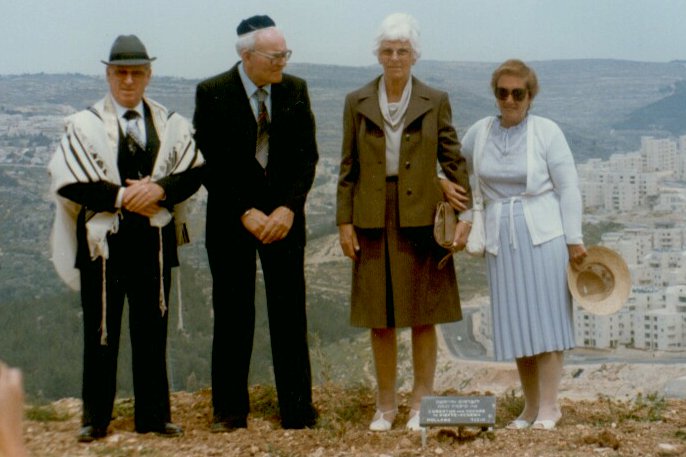
The Righteous Among the Dutch

(from left to right: Nardus Groen, Bertus te Kiefte, Geeske te Kiefte, Sipora Groen)

This photograph is taken at Yad Vashem, the Holocaust Memorial Museum in Jerusalem in 1984.  It was taken on the day that a tree was planted to honor the heroic actions of Lubertus and Geeske te Kiefte.  Their heroic actions are documented in the upcoming book Jew Face.