Tag Archives: Judaism

The Last Seder?

mealDespite my own personal ideological struggles, I am a Jew who believes in the philosophies of Judaism before I believe in those of any other religion.  However, I do feel that now maybe more than any time in history the alliance between Christians and Jews has never been more important.  The rise of Islam, a rise that in many places preaches only Islam, has put the concept of freedom of religion in more danger than any time in modern history.  With that in mind I am making a short post to discuss, and hopefully create a discussion regarding the connection between Passover and Easter.

I often say, only partially tongue in cheek, that there are 2 major differences between Christianity and Judaism.  One is that while Christians are awaiting the 2nd coming, us Jews are still awaiting the 1st.  Either way we are still awaiting the supposed Messiah or Messianic era.  The second difference would be the disagreement over who is the best Jew of all time.  There would be some discussion on the matter, but as a Jew I would put in my vote for Moses, and I would be surprised if I didn’t end up backing the winner.  Christians however, even if they have a fondness for Moses, clearly would pick Jesus.

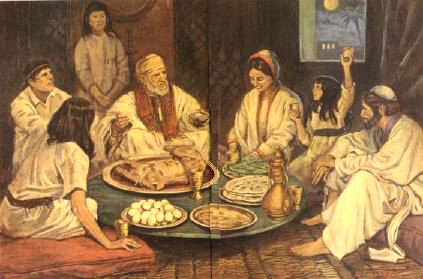
It is widely believed that “The last supper” was actually a Passover Seder.  Seeing the apparent time of year and the fact that a group got together around the table for discussion, there is much credence to this belief.  Ultimately, those who believe in the Messiah coming in a mystical, ultra spiritual way would see the events celebrated by Christians as a realistic method for the savior to be revealed.  Us Jews however do not believe that has actually taken place.  However, if either belief causes people to behave in ways of peace, love and tolerance, they help the world far more than hurt the world.

What are your thoughts?

Remembering My Father

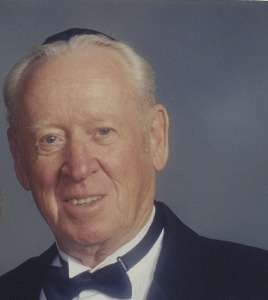
dadc193 years ago today in Rotterdam, Holland, my father Nardus Groen was born.  His life was one filled with substance, meaning, and love.  I remember him fondly and miss him often.  Despite what one might take from the book “Jew Face”, I was aware of my father’s faults.  Every human being is flawed and my father was no exception.  However, one of the things I witnessed from the time I was a child, was that he never spoke one bad word of his parents who were murdered in Auschwitz.

My father was a great man.  I say that with certainty and pride.  He was principled, strong, ethical, and loving.  I often wonder if he would have liked the book “Jew Face” and my portrayal of his life.  I have often said that the greatest joy for me in writing the book was that in writing it I felt as though I got to know my parents as young adults.  My father never was able to confirm if that feeling of mine was justified, but it is one that I keep with me and cherish.

To use more modern vernacular, when looking at my father in the most difficult of times, my father was a bad ass.  He claimed in later years that he often felt fear, but his actions during the worst of times showed a behavior that showed otherwise.  The hardest thing for me as his son has always been the feeling that I have never been close to being the man that he was.  But then again, many never will be.

He was proud of who he was, and as a Rabbi he tried to use his understanding and extensive knowledge of Judaism to help and teach others, Jew and non-Jew alike.  The debate on what makes one truly religious is an endless one, but in my eyes and the eyes of many others, my father was indeed very religious, even if somewhat unconventional in practice.

He loved my mother, his children, grandchildren and great-grandchildren very much. No one has ever perfected the art of showing that love, my father being no exception, but to this day his love is never questioned.  Together with my mother, who God willing turns 91 in 2 weeks, a new world sprung forth of decent and loving people who do them both proud.

So today, on what would have been my father’s 93rd birthday, I remember my father, Rabbi Nardus Groen, with love and respect, and hope that some of what I have done this past year has helped part of the world know why.


Tisha B’Av: In the Mind and in the Heart

Most of my posts are done with some degree of research and historical reference.  Although the basis of this post will originate in overall Jewish and personal experience, this particular post comes entirely from the heart.  The wide range of emotions felt by any one individual make up who they are and although there are many, the 2 primary ones are joy and sadness.  Emotions are impacted by our level of maturity.  This does not necessarily imply that one is immature if they do not feel certain emotions, but that who we are and how we have grown, positively or negatively, will impact our emotional responses.  I say this because when I look at how I feel about Tisha B’Av today compared to years back, the difference is significant.

I’ve always known the religious and historical reasons for the commemoration of Tisha B’Av, the 9th day of the Jewish month of Av.  It is said that both Jewish Temples in Jerusalem were destroyed, many years apart, on the same day, Tisha B’Av.  The city burned, people died, and the greatest physical symbol of Judaism was destroyed twice, on the same calendar date.  Since the Holocaust, Tisha B’Av has held greater meaning as it is used to recognize the loss and sadness of the Jewish people during that horrific time.  And yet, through so many of my adult years, although I always intellectually understood the importance and acknowledged it to different degrees, I would be dishonest if I were to say I truly felt sad.  This was until a few years ago.

So what changed?  I did not become more observant.  I am still someone who for right or wrong, picks and chooses what Jewish laws I keep and which ones I do not.  No one sat me down and gave me a speech to influence my feelings.  And yet, tonight, as I sit and write this on Tisha B’Av, I feel a genuine sadness.  I credit much of how I feel to the impact the writing of the book had on me.  However, not in the way one might think.

My experience in writing the book had me immerse myself into the world of my parents between 1940 and 1945.  How fortunate I was to feel at times as though I was there with them yet never actually be hungry, desperate, cold, hunted, and in constant danger.  I imagined I was there yet at no time was my life ever threatened.  What this did was teach me one of the most important and poignant lessons of my entire life.  It’s not all about me.  We all live our lives that consist of the good and the bad.  Many do live with some degree of fear or danger.  I do not, and I thank God for that.  But today I am a different person.  I am now someone who understands that it is not only my personal suffering and tragedy or that of those close to me that matters and should cause me true sadness.  Tisha B’Av is a day to recognize the sadness of others and to allow ourselves to truly feel it with emotion, not just intellect.  A day in which my own personal growth has now given me the opportunity to put myself in someone else’s shoes and see past my comfort and freedom and be truly sad for the pain and suffering of the Jewish people.  Now on Tisha B’Av my heart feels what my mind always knew.  I once heard a Rabbi compare Tisha B’Av and Yom Kippur and how we fast full days on both saying, on Yom Kippur if one truly understand the awe of judgment by God, who would be able to eat?  And on Tisha B’Av, knowing the true sadness of the day, who would want to eat?  That makes sense to me now, not because I understand it, I always did, but because now I feel it with true emotion.