
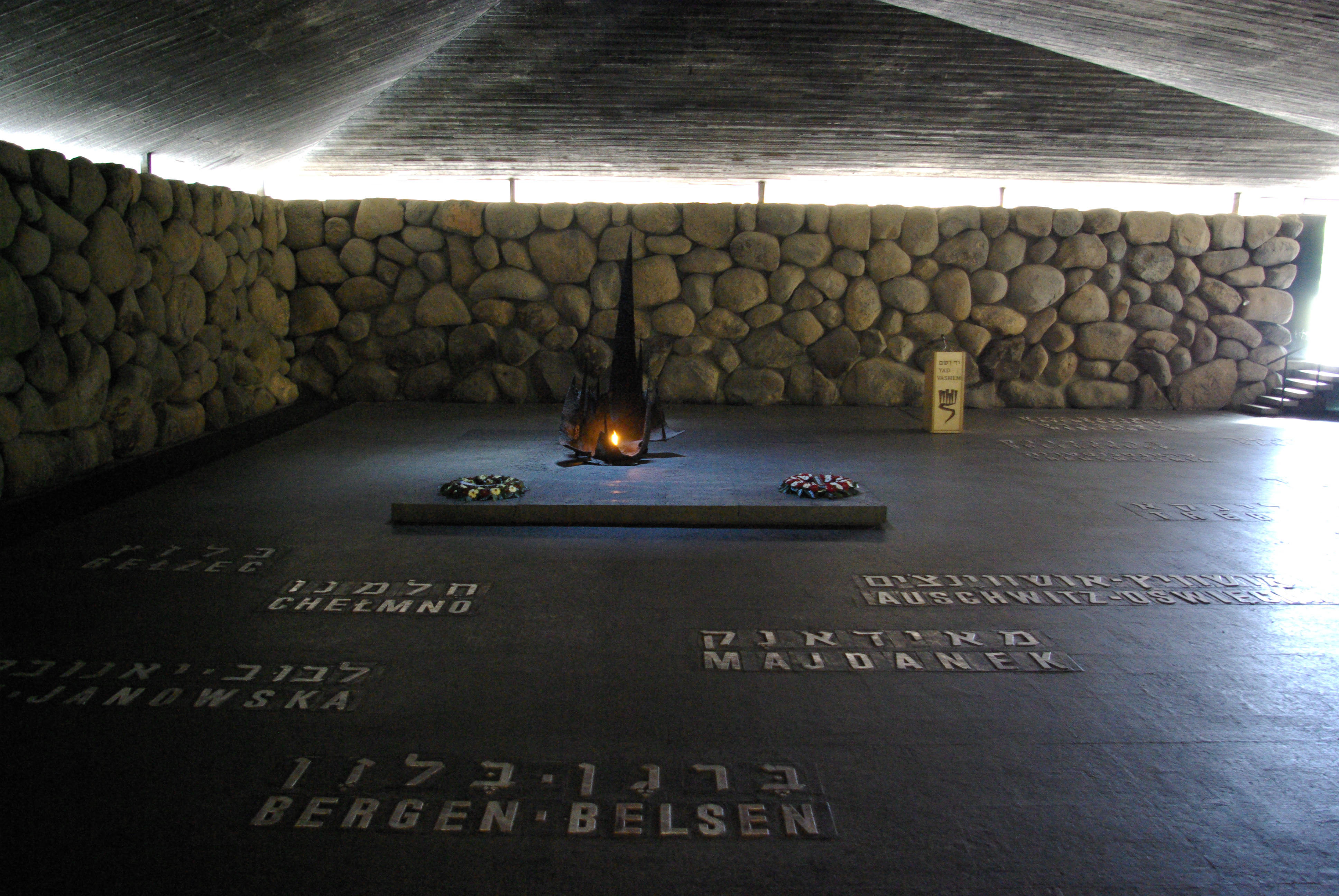
The Hall of Remembrance at Yad Vashem, the official Holocaust Memorial Museum in Jerusalem, Israel.
The Hall of Remembrance at Yad Vashem, the official Holocaust Memorial Museum in Jerusalem, Israel.
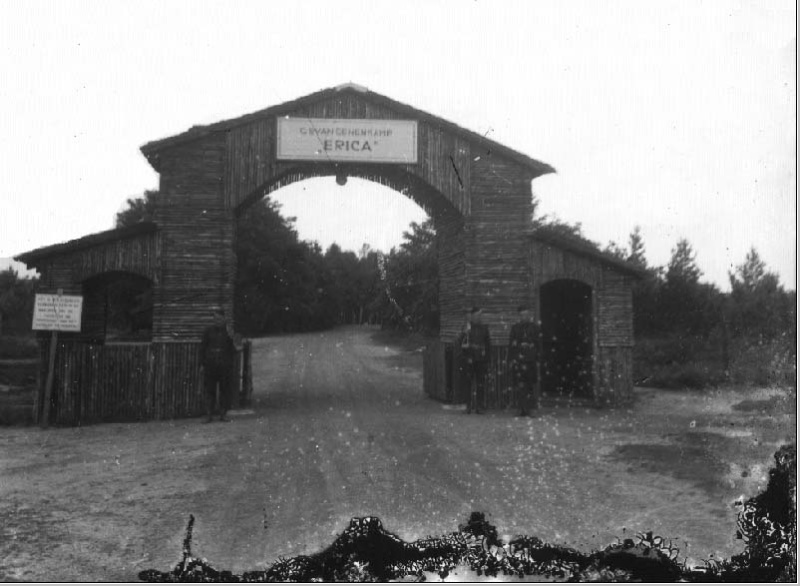
Camp Erika, also known as Camp Ommen was a hard labor and prison camp in Holland during the Nazi occupation and is a setting for an important story that takes place in the upcoming book “Jew Face” . Many members of the Dutch Resistance once arrested were sent to this location. On many occasions they were forced to dig their own graves and then shot.
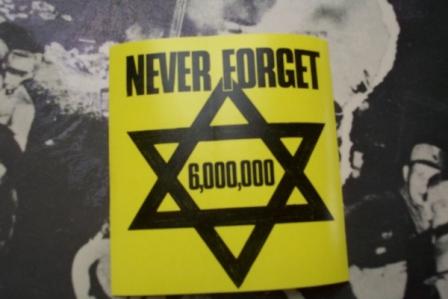
When writing a book about a time so significant and devastating to the Jewish people, one has a moral responsibility to acknowledge and honor those who perished from the brutality and suffered the horrors perpetuated by one of the most, if not the most evil governments in the history of civilization. On the surface this seems to be an uncomplicated task, but when confronted with decisions on how to present the story, one must use their own judgment in choosing the means that best accomplish the goals set out in putting pen to paper.
Once on a visit to Williamsburg, Brooklyn, I made the comment that although I live my life almost entirely different than the Hasidic Jews that live there, I love going there because when I walk through the neighborhood I realize that with all the death and destruction Hitler orchestrated against the Jewish people, in the end he did not win. Nazi Germany is long gone and the specific threat that it posed to the very existence of the Jewish people no longer exists, but the war of the anti-Semite against the Jewish people has not ended and still needs to be fought. The attempt at intellectualizing Holocaust denial and the efforts by those who wish to accomplish this on a global scale threatens the Jewish people in a deceptive and methodic way. Little by little there is a danger that more and more people will choose to believe that it did not happen and that 6 million Jewish lives were not killed by Hitler’s Germany. In writing this book, and titling it “Jew Face”, even at the risk of offending some of my fellow Jews, I do so with the purpose of getting the attention of as many people as possible. The alarming title will startle people, but if it gets many to read what happened and be aware, then it has served a positive purpose.
You can’t fight fire with smoke. You must fight fire with fire. And if giving this book a title that shocks people and makes them interested in its content I increase awareness of what truly took place, I have been successful in accomplishing the book’s most important task. Honoring the victims and helping the world never forget what took place.
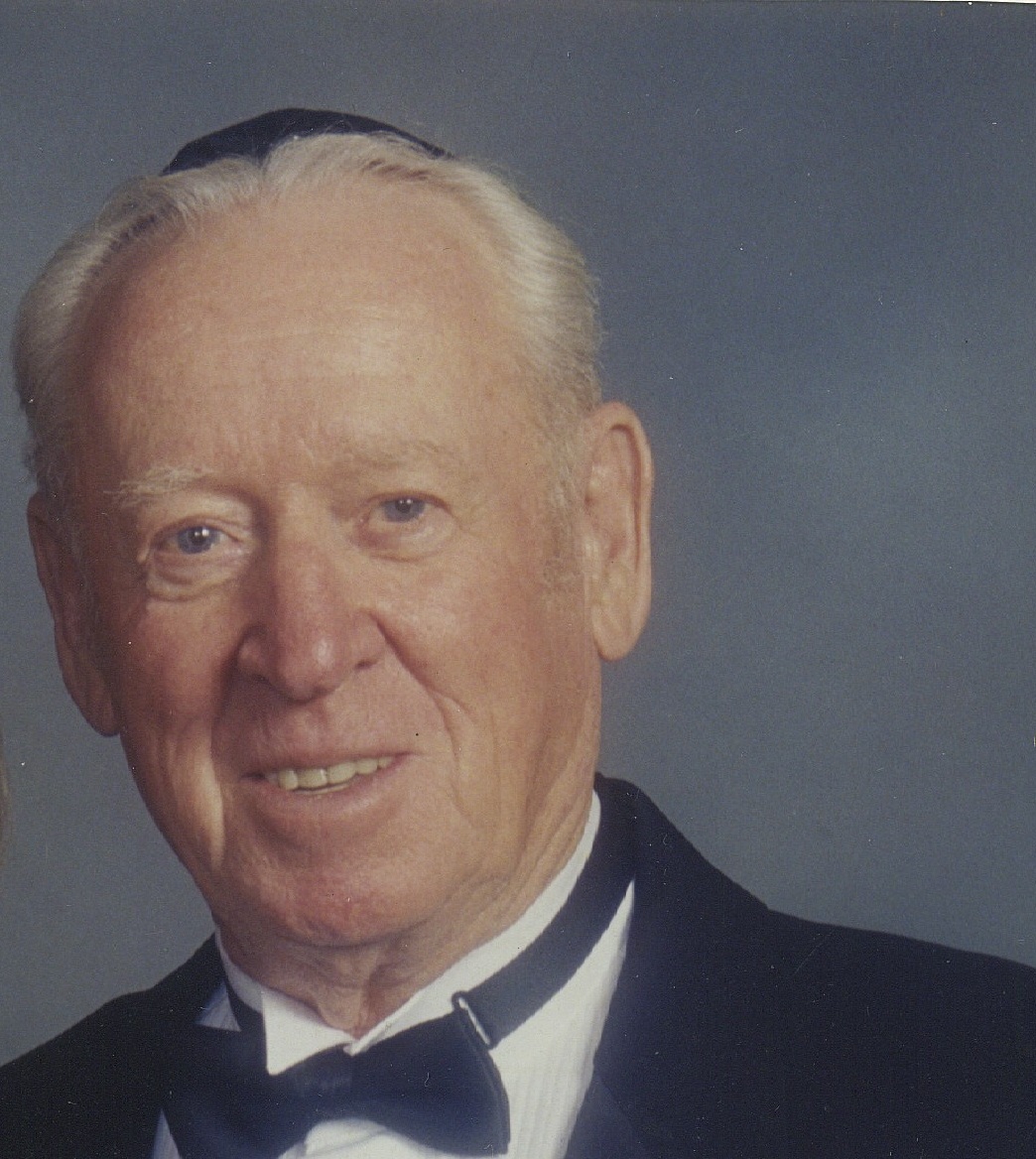
The following is a Congressional tribute to my father less than 1 month after his death by then Congressman Joe Sestak of Pennsylvania.[Congressional Record Volume 153, Number 112 (Friday, July 13, 2007)] [Extensions of Remarks] [Page E1512] From the Congressional Record Online through the Government Printing Office [www.gpo.gov] TRIBUTE TO RABBI NARDUS GROEN ______ HON. JOE SESTAK of pennsylvania in the house of representatives Thursday, July 12, 2007 Mr. SESTAK. Madam Speaker, I rise today to recognize and honor the life of a husband, father, grandfather, great grandfather, brother, son, veteran, and community leader--Rabbi Nardus Groen, who passed away on Wednesday, June 13 after living a full life of community service. Rabbi Nardus Groen was born in Rotterdam, the Netherlands, on December 18, 1919 and grew to become a hero and a family man. As a member of the Dutch Underground during World War II, Rabbi Groen was captured by German soldiers multiple times and heroically managed to escape each time. One particular act of heroism occurred in 1940 when Groen was guarding a Jewish hospital in the Netherlands during its evacuation. Although the patients had escaped, Groen was protecting a group of Jewish nurses as the Nazis approached. Selflessly, he slipped on a Red Cross arm band and escorted the nurses into a room. When the Nazis asked who was in the room, Groen explained that he was caring for patients with Scarlet Fever. Fearing the illness, the Nazis spared the Jewish nurses, including Groen's future wife, the former Sipora Rodriguez-Lopes. After World War II, Rabbi Nardus Groen served at Camp Lejeune, North Carolina under the American Marine Corps. Following his stint with the Marines, Groen worked as a psychologist at a Jewish orphanage for Holocaust survivors. He helped countless youths cope with one of the greatest tragedies in human history. Two years later, he began to serve as a rabbi at the oldest congregation in the Western Hemisphere in Surinam. Groen led a mixed Sephardic Ashkenazic congregation in Surinam until 1952 when he served as a rabbi in Einhoven, the Netherlands. He became one of the foremost leaders of his community, uniting two different cultures in one synagogue. Nardus Groen moved to Lansdale, PA as a renowned rabbi in 1963 where he served as Beth Israel Synagogue's rabbi for 13 years. He provided guidance and spiritual leadership to Beth Israel's community, helping his community grow to the vibrant Jewish center it is today. Groen moved back to Europe and retired in 1986 as the chief rabbi for the eastern six provinces of the Netherlands. He lived what he preached and will be remembered across the Netherlands. After his retirement, Rabbi Groen and his loving wife Sipora lived in the Netherlands and Delray Beach, Florida after his retirement before permanently settling in Florida in 2005. Rabbi Groen spent his last years as a loving father to Marcel Groen, Leo Groen, Ruben Groen, David Groen, and Debra Groen; a loving brother to Meyers Groen and Sophia Groen; a loving grandfather and great grandfather to twelve grandchildren and six great grandchildren; and a loving husband to Sipora Groen. Madam Speaker, I ask you to join me in honoring and remembering Rabbi Nardus Groen. Through his hard work, Rabbi Groen has spread hope across three continents and will be remembered as a strong leader, a caring mentor, and a true mensch.
Theresienstadt plays an important role in a chapter in the book. I had family members who did spend time there and there is a story surrounding them that needed to be told.
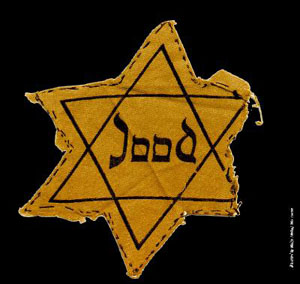
When the Nazis occupied Holland in 1940, 10% of Amsterdam’s population was Jewish. In those days, Amsterdam was not as it is today, a city with various minorities making it far more difficult to identify with certainty a person’s religion or ethnicity. In 1940, a person with a dark complexion and dark hair in Amsterdam was assumed to be Jewish. To the German’s, the ‘Joden Kop’ was a way of harshly identifying that they recognized the face of a Jew. Sipora Groen, my mother, was seen as having one of those identifiable faces. Hence the title of the book “Jew Face”, the story of my parent’s life, taking place primarily during the time of the occupation between 1940-45 and revolving around their journeys and experiences during those years not only of horror and sadness, but also courage and strength.

The Esnoga, the famous Portuguese Synagogue of Amsterdam, holding a service for survivors of the Holocaust on May 9, 1945.

The Hollandse Schouwburg was Amsterdam’s premier venue for concerts and shows before the Nazis occupied Holland in 1940. By 1942 it was turned into a detention and deportation center for Amsterdam’s Jews. Most who went through the Schouwburg would end being transported to Auschwitz and Sobibor.
 Holland's Heroes