
VERY SOON I WILL BE POSTING AN INTERVIEW DONE WITH MY MOTHER SIPORA GROEN. HOW TO BUY THE BOOK.
 PLEASE SHARE THIS
With countless books having been written about the Holocaust, the obvious and fair question is, what sets the book Jew Face apart from the others? Well, I make no claims to being objective since I wrote the book, but having spoken with many people who have read it, what makes this book different is two factors. Firstly, it is very much a love story. One I am very pleased to have written since it resulted in my 4 siblings and myself being here. Despite the natural difficulties I as a son ran into when trying to tell the story of my parents romance, I am told I got the message across in a way that leaves no doubt to the love that was formed in the most horrific of times. Secondly, I believed it important, even appropriate to write a book that made you feel good on some levels. I made absolutely sure to do honor to the blessing of the 6 million Jews murdered by Hitler and his Nazi henchmen, while realizing that the reality of the outcome for my parents, albeit it filled with tragedy and loss, was one of the truly happier endings to come out of the time of the Holocaust.
In this very important and increasingly frightening time, maybe telling the story that shows how ultimately as a people we were not defeated provides more strength to combat a growing evil, and to show another side of the humanity that resulted from one of the most horrible times in human history. 6 million Jews as well as millions others were murdered, and their sacrifice and blessing will live on forever and we must never allow our enemies to succeed in denying this atrocity in human history did take place. However in many ways, those who survived are as important as any group of people in our history, for at a time when one evil man created a movement that killed more Jews than any time in history, a group survived and endured. I am proud to be the son of two of those very special people, who not only survived, but helped our people survive.
 Help me tell my mother and father’s story of survival. I CHALLENGE PEOPLE TO DO MORE THAN JUST POST TO EACH OTHER IN A GROUP. SHARE THIS ON YOUR PAGE AND SHOW PROOF THAT HITLER DID NOT WIN. This picture, the one I originally posted yesterday February 4, 2014 is my mother Sipora Groen. During the Nazi occupation of the Netherlands, my mother lived through the murder of her fiance, her favorite cousin, her father, her only brother, and numerous other family and friends. The story in the book “Jew Face: A story of love and heroism in Nazi occupied Holland” is the love story of my mother and father and how they both survived during the most horrific times and how together with God’s mercy, their incredible courage, help from the Dutch resistance and a Dutch couple whose righteousness reached the highest level, they lived to build a life. If every one of you shares this on your page, the amount of people this will reach will continue to grow and besides increasing the awareness by showing another side of the Holocaust, we will all do something special for a 92 year old woman, my mother, who went through hell starting when she was only 19 years old but managed to come out, build a life with her husband, my father, and thank God in the best possible way. By continuing to enjoy life.
Behold my 92 year old mother, the same person on the cover of the book “Jew Face”, using her smart phone to post on Facebook. Is it possible that my mother, Sipora Groen is the oldest person to post on Facebook. If not, I am sure she’s close.
 Yesterday while cooking chicken cutlets I began a conversation with a friend about the recent death of Philip Seymour Hoffman. I was mere seconds away from making a disparaging remark about a celebrity overdosing on drugs when the tong I was using popped out of its lock causing the fork and knife next to it to go flying in the air and land on the ground. My friend, ever the mystical one, said it was caused by some sort of unknown energy in the room. After I laughed at his comment I stopped to think about it and decided not to make my disparaging remark, the one that would have shown no compassion, and reassessed my feelings towards the issue. In doing so I asked myself the following question: Can drug overdose be considered a form of suicide?
Some of the similarities are glaringly significant. In both cases we feel sadness for the loved ones left behind, knowing that the victims do not do what they do to hurt another person. In many cases loved ones question themselves. Could I have done more to help them? Could I have stopped it from happening? Could I have saved them if I was in the right place at the right time? Often loved ones feel a justifiable albeit helpless anger towards what they may see as the ultimate in selfishness. And the most significant similarity may be the self-destructiveness involved. In the case of suicide, by its mere definition it is self-destructive. In the case of drug overdose, the continuing pursuit of the high at all costs is clearly self-destructive, even if the conscious motivation is not actual self-destruction.
So the question that follows is, should we feel sorrow or pity for the person who overdoses on drugs? Some might ask the same question about someone who commits suicide. I personally do not even ask the question when looking at suicide. To reach such despair in one’s life that the feeling one is left with is that the only solution is to kill oneself, is tragic no matter which way you twist it. You know, that a person never wants to reach that point where they have no other way out, and if they do, they will ultimately do what they can to force fate’s hand regardless of how badly someone would like to prevent it, since their intent, and that may be the key word, is to stop the pain and end it all at all costs.
Although there is no question that consistent drug use has a very good chance in ending with one’s death and is also a way of stopping the pain, I will stop short of calling it a form of suicide. There are many things people do they know to be unhealthy for them, some that are likely to shorten their life. They do them because they can’t help themselves or feel they can get away with it, not because they consciously want to die. A person who abuses drugs to the point of death is more like the person who continues to smoke cigarettes, or the obese person who can’t stop eating. In some instances they may not care, but they are generally not abusing their body with the sole intent of taking their own life. Even if they are comfortable with what they perceive as a slow death, their initial focus is feeling better, not death. Drug users have even less control of what they do, because the drugs can completely take over their life, and even though sometimes they can’t stop it because of a personal despair, their purpose is usually to get high, not to end their life.
Another important difference is that a drug abuser has a better shot at reversing the negative spiral than someone on the way to actual suicide. Had someone actually convinced Philip Seymour Hoffman to get help and eliminate drugs from his life, an overdose would not have taken his life on Saturday. But with the intricacies of the mind, despair is something a lot harder if not impossible to control and if someone has the intent to end it all, the battle to prevent it as a battle riddled with serious and often impossible obstacles to overcome.
So I come away from this all somewhat humbled, because rather than taking a high (no pun intended) and mighty stance, I realize that drug overdose is a tragedy that often causes an untimely death and pain to those left behind, even if the intent generally distinguishes it from true suicide. Not being a mental health professional or drug counselor I may be off here on some of my points, but ultimately I realize that all I can do as a human being is show compassion to anyone suffering on any level they never wished to suffer. It will make me a better person and maybe one day allow me to help someone who needs help and maybe even save someone’s life. It may also never make a difference, but it is certainly more productive than a disparaging comment while cooking chicken cutlets.
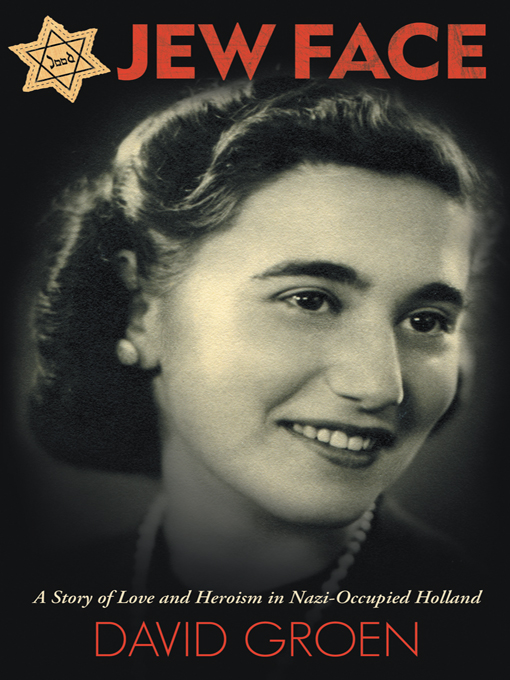 I will be on the radio tomorrow morning, January 30th around 7:30AM on a Montreal radio station . CKVL 100,1 FM MontrealThe interview will be about the book Jew Face: A story of love and heroism in Nazi occupied Holland and will be conducted by my friend Sandra Sirois who I would like to thank in advance for this opportunity. The interview will be in English and will be translated into French for the local audience. If you would like to listen you can do so by clicking the following link:
 As someone who is always keeping his eyes open for anti-Israel and anti-Jewish sentiment, something that most honest people know to be one of the same, I tried to find evidence that the banning of the SodaStream ad from the Super Bowl by FOX was one more example of hatred of the Jewish people. Despite any solid evidence to back this up, the ripple effects of this story have been enormous in a variety of ways.
Although diminished over the years, I have a personal connection to SodaStream. This personal connection has caused me to pay a little extra attention to the company and the success it has generated. When I heard that Scarlett Johansson had agreed to be a spokesperson and would be in a commercial airing during the Super Bowl, as was the case with many other Jews and Zionists, I felt a tremendous degree of excitement and pride. Not only was this a blow to the BDS (Boycott, Divestment, Sanctions) Movement inasmuch as it had a major Israeli company on the public stage, it also represented a high profile, popular and beautiful actress showing the character and strength to support an Israeli company with no apparent concern for the backlash she might receive from others within her industry and from other industries.
But it gets better. As many already know, SodaStream is an example of everything that is right in modern Israeli capitalism. Here is a company, providing a good product, environmentally sound and beneficial to its users, seemingly providing great success to its owners and management team while providing fair and equitable employment to residents of the areas of Israel where the product is manufactured. Let me repeat that for Roger Waters and other proud supporter of the BDS Movement. Providing fair and equitable employment to residents of the areas of Israel where the product is manufactured. That encompasses what they like to refer to as the “occupied territories”.
The best news of all however, is that not only despite the fact that SodaStream’s ad was pulled from the Super Bowl but maybe even because it was, the company has become more well known in the past few days than it may ever have dreamed of becoming. In some ways I’ll go as far as saying that a situation that was supposed to be nothing more than a business venture has turned into a political gain for the State of Israel. The United States of America, a country I am proud to call my home, is now the setting for one of the most blatant examples of corporate censorship you will ever encounter. The control that Coca-Cola and Pepsi have over the Super Bowl is so tremendous they have basically forced the network covering the event to not allow an advertisement that attacks their product. The fact that the company that manufactures this product, SodaStream, is being unjustly attacked for making a product at the expense of the human rights of others, will totally expose those whose activism against Israel is based on anti-Semitism rather than a genuine, albeit misguided pursuit of justice. The irony practically makes me giddy and although I myself am not a soda drinker, the impact this has had will cause me to purchase SodaStream as a gift for someone at my first opportunity.
Of course the one sobering fact is that logic and truth have never stood in the path of those who have wished to cause pain to and destruction of the Jewish people. With that said the fight needs to continue on many fronts, and today as a Jew and Zionist I thank Scarlett Johansson and SodaStream for what in the minds of many is a victory in one of the many battles we will unfortunately continue to have to fight. Then again the personal connection I mentioned earlier makes it very easy to believe that SodaStream would be in the middle of something so significantly helpful to Israel’s image at a time it needed it the most.
 At the risk of being lambasted by my Republican friends and acquaintances, let me begin by asking the following question. How long will western society survive with growing poverty if the wealthy receive benefits and priority not given to those less wealthy?
It can be argued that Bill de Blasio’s mayoral campaign revolved around this very issue. Personally I am not his biggest fan, but I wonder if the very criticism he received on the night of the snowstorm of January 21, 2014 was indeed validation of his position.
I do not live on the Upper East Side of Manhattan so I am unable to make any accurate claims in this article regarding the specific events that took place. However, what I do know is that there is a lot of money within that community and I am fairly certain that many of the residents are used to a certain treatment based on their financial status. So when there is a complaint that the snow did not get removed fast enough, I can’t help but wonder if this is more a product of there now being a level playing field than about there being a poor response to the storm.
The administration was criticized for taking too long to remove snow from certain areas of the Upper East Side, while areas of Brooklyn were completely cleared. DeBlasio campaigned on the idea of one New York and equal treatment for all 5 boroughs. The question that needs to be asked is whether or not the slower pace at which the snow was removed from the Upper East Side was more a reflection of him keeping that promise than it was of him not being properly prepared. It is fairly easy to predict that many Manhattan residents will say it is the latter, especially based on what they have been used to over the years, but we all know that people often give opinions based on personal bias rather than fact. I can’t help but wonder if Bill de Blasio’s remarks about being able to do more for the Upper East Side may be more a reflection of political pressure than of culpability. If indeed this was a product of local government giving equal treatment to all its citizens, it represents a shift in policy rarely seen so clearly on such a large stage in a major U.S. city. I for one would like to see the results of an investigation purely to know the answer to this question since it carries great significance. Personally I make no claims to knowing what the answer actually is, but can’t help but hope it represents an equality not usually provided to the less fortunate.
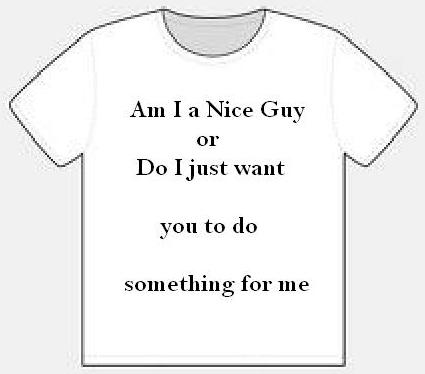 Let me start by putting everyone’s concerns to rest. This post is not a means of exposing personal anger or displeasure. The extent to which this applies to my own life may or may not be obvious to those who know me best, but either way it is of little consequence. The initial question, does it pay to be nice, is in itself somewhat of a loaded question.
Looking at it from a completely literal standpoint, to imply that it pays to be nice may send a message that there can be monetary value attached to nice behavior. The best way to put that to rest is by reminding everyone that given a choice, people will not part with their money. This means that the aspect that makes someone nice is the fact that they are giving with no demand for compensation of any sort and subsequently people will not generally provide payment if they can avoid doing so.
But let’s be honest. When people say, “it doesn’t pay to be nice”, they more often than not are referring to rewards other than financial ones. Will they get the desired result from being nice? Will they reap emotional or practical benefit? Will they strengthen a relationship? The core of this question may go the honest intention of the person being nice and what being nice actually and truly means.
Why do we do things for others? Is it to make ourselves feel good or to make others feel good or gain benefit? If we are to say that the one reward we are looking for is that good feeling generated by our niceness and the reaction it generates, is the act no longer selfless? Is it indeed a very basic example of selfishness at its core, albeit in its most honest form, a concept often stated in the writings of Ayn Rand. This leads to the next question. If one is being nice for their own sake rather than for the sake of others, are they indeed being nice or are they being self-serving?
I think that too often people try to redefine or even worse, recreate human nature. People need motivation, and even the kindest of people generally do things for the pleasure they receive in providing a kindness. There may be those on the highest religious level who do things solely because they think it is God’s will, but even these people, assuming they are being totally sincere, are doing so to get in the good graces of a higher power. In other words, they do so to benefit on some level.
What it ultimately comes down to is expectation. If ones expectation is their own personal feeling and the reward that provides, being nice will more than likely payoff for them. If however their reward is contingent on a person’s response, their reward is anything but a certainty.
The next issue needed to be addressed is the distinction between nice and good. Leo Durocher was famous for saying, “nice guys finish last”. Does that mean Durocher was preaching bad behavior? Absolutely not. There is a difference between good and bad, even if everyone does not agree what actions belong in each category. However a person can be good without being nice. Good deeds and correct actions are not contingent on nice overtures. Some of the best people you can ever meet, and by best I mean rich in goodness, may very well be people whose words and mannerisms are not what we would consider nice. I can make a very strong argument that given a choice between someone who is good and someone who is nice, we have more to gain by surrounding ourselves with someone who is good. Even though nice and good are not mutually exclusive.
So why do I believe people won’t read this? I don’t know that I do. But if putting that in the title got you to this point in the article, I’m glad I misspoke and want to thank you for being nice enough to read what I wrote. Hopefully you gained some benefit from my words and my appreciation is all the payment you required.
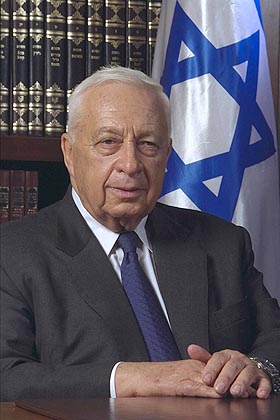 When I think of Ariel Sharon and what kind of leader he was and the person he appeared to be, I realize that his legacy tells the real truth about Israel, its leadership and its approach towards its enemies.
Let me begin by saying that I have always lived by the basic premise that when a man or woman who has devoted their life to the betterment or safety of the Jewish people passes on, I as a Jew will mourn their loss. With our history, both ancient and modern filled with persecution and murder, we as a people need to appreciate those whose lives were focused around what at least appeared to be, the protection of the Jewish people and or the security of the modern Jewish State of Israel. With that in mind I speak from my heart when I say Rest in Peace Ariel Sharon.
When one examines Ariel Sharon’s life, it is clear that this was a man who was strong and forceful, unafraid, and at times one might say brutal. If we look at the list of Israeli Prime Ministers starting with David ben Gurion in 1948, it is very clear that the two most militant were Menachem Begin and Ariel Sharon. It should therefore come as no surprise that Ariel Sharon served under Begin as Secretary of Defense. To me however there is a very clear difference between the two men. Menachem Begin, my personal political hero, was so militant leading up to the establishment of the State of Israel that some described him as a terrorist. However as Prime Minister, an argument could be made that Begin was more moderate than Sharon. To someone without a vested interest in Israel and the Jewish people, Menachem Begin’s greatest legacy was the peace treaty with Anwar Sadat and Egypt. Ariel Sharon on the other hand was seen as far more controversial, even to the point of being called a war criminal by his enemies. As someone who tries to be fair and equitable in my opinions I contemplated his legacy and in doing so realized that Ariel Sharon’s behavior as a leader in the Israel Defense Forces (IDF) and Prime Minister of Israel, actually tells the truth about Israeli leadership and its approach towards Arabs and the Palestinian issue.
Consider this fact. Mohammed Abbas, President of the Palestinian National Authority, by most accounts a moderate, was quoted as saying, “We have frankly said, and always will say: If there is an independent Palestinian state with Jerusalem as its capital, we won’t agree to the presence of one Israeli in it.” Abbas was the leader of the element within the PLO responsible for the hijacking of the Achille Lauro cruise ship in October 1985. It was during this hijacking that Abbas’s people, shot a 69 year old Jewish wheelchair bound man named Leon Klinghoffer in the head and threw his body overboard. I use Abbas as an example to compare the Palestinian’s most “moderate” leader to Israel’s most extreme leader, Sharon.
The incident that causes some people to brand Sharon as a war criminal was the massacre in Sabra and Shatila. Under his command as Secretary of Defense for the IDF, Sharon did nothing to prevent the massacres of Palestinians in these southern Lebanon refugee camps. The massacres were perpetuated by Lebanese militants with connections to the Syrian government, which incidentally was then run by the father of Syria’s existing dictator, Bashar al-Assad. Therefore, if we choose to look at this with brutal and objective honesty, we might say that Sharon was guilty of being complicit in someone else’s crime.
Sharon also would lead the charge for more settlements in what the world likes to refer to as the “Occupied Territories”. For the sake of this discussion I will go along with the term. Subsequently, if we are to accept this logic, Ariel Sharon, the Israeli “war criminal” was primarily most notorious for two things, not preventing the citizens of another country from murdering each other, and for accelerating the building of homes for his residents in the occupied territories.
If we were to take the side against Ariel Sharon we would say that he was cold and callous with no consideration for the well-being of Arabs, particularly Palestinians within Israel and its surrounding nations. As a Jew and a Zionist I can confidently make this statement. We would dance in the streets of every city we reside in worldwide if the most militant of our enemies would be most guilty of not caring if we kill each other and for building homes on the land they occupy. What Ariel Sharon’s life shows us is that even the “worst” of Israel’s leaders still live by a higher moral and ethical standard and are less likely to murder their enemy in cold blood than the majority, if not all of the most moderate of Arab leaders. The world will likely not see it this way because anti-Israel sentiment is becoming a popular fad, but for those who analyze this honestly the truth will be glaringly apparent. Ariel Sharon’s life as an Israeli leader proves this better than anything else ever could.
 Holland's Heroes