Tag Archives: Jew Face

Commemorating the Rebbe: Reflections on His Funeral and Legacy

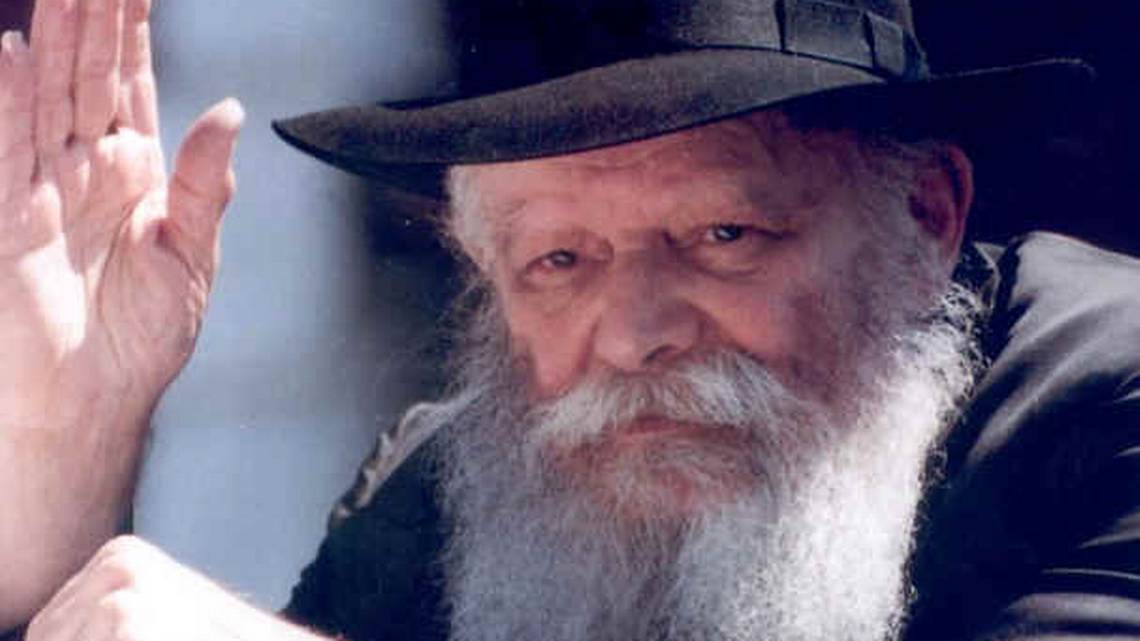
On June 12, 1994, I participated in what I would later come to realize would be one of the greatest honors of my life.  That was the day I would march together in a procession with thousands of people following behind the body of the Grand Rabbi of Lubavitch, Menachem Mendel Schneerson, or as he is referred to today by so many, the Rebbe.  That day, which coincided with the 3rd day (Gimmel) of the Jewish month of Tammuz- the Jewish calendar is a lunar one-coincides with today, June 29, 2025.  As someone who is significantly more connected to Chabad, the Jewish organizational structure developed to enormous significance by the Rebbe, than I was back then, I will share with you my experiences of that day and of days of importance before and after his passing.

To this day I remember my reasoning behind going to the Rebbe’s funeral.  My personal experiences with Chabad to that point had been limited.  I remember celebrating the holiday of Simchat Torah in Philadelphia with them once or twice in my early to mid-teens and being amazed by the excitement and enthusiasm. In 1992 when I had a wife suffering from Ovarian cancer and paralysis from the waist down caused by the cancer, I wrote a letter to the Rebbe in which I wrote something to the effect of “enough is enough”.  My now ex-wife recovered from both the paralysis and the cancer, and as I have always said about that time, I do not know whose prayers God answered, but they were indeed answered.

Over the years leading up to June 12, 1994, I worked with people who lived in Crown Heights, Brooklyn, home of Chabad headquarters at 770 Eastern Parkway, known by many as just “770”.  I had the occasional interactions and experiences with the community but never was fortunate enough to meet the Rebbe himself. But I did have the presence of mind to understand something very important, something I often said back then when he passed away and something I still say today.  While I did not see myself as Chabad, I knew that when the Rebbe passed away, the world had lost someone it really could not afford to lose, and as a proud Jew, I considered it my obligation and responsibility to go to his funeral.

I do not clearly remember the events that took place in Crown Heights that day, but I will never forget what happened as they finished.  Thousands of people began to walk behind the procession carrying the Rebbe’s body as it would be delivered to the cemetery in Queens in what is now knowns as the “Ohel”. We marched through the streets of Brooklyn with the goal of getting to the Belt Parkway, a road difficult enough to drive on, let alone march on, albeit off to the side.  We made it to the Belt Parkway, and now the crowds seemed smaller, either because we had broken into smaller groups or because the numbers were steadily diminishing.  As people came from all over the United States to pay their respects, there were yellow school buses carrying people from different communities.  Seeing people on the side of the road, these buses would stop to see if anyone would need a lift the rest of the way.  After a certain number of miles- I will never know for sure how many- I got on one of those buses.  All I remember was that it was the one bus that came down from Albany, NY, and the people on the bus were extremely friendly, as they drove me the rest of the way to the cemetery.

Years later I would write the book “Jew Face”, be contacted by Wim de Haan in Holland regarding the violin belonging to my uncle and mother’s brother Bram and begin to put together presentations in which I would tell the story, with the violin being played by an accompanying violinist.  In July of 2023 I received an inquiry from Chabad of Delmar, NY about having an event that following November.   After first communicating with his wife Chanie, I got on the phone with the Rabbi of the Chabad of Delmar, Zalman Simon.  Delmar, NY is a hamlet right outside of Albany. This is what the Rabbi told me.  When he was 9 years old, that summer he remembered that the Rebbe passed away.  His father took him on the one and only bus from Albany to go to the Rebbe’s funeral, and even though he was a young boy, he remembered the bus stopping off the side of the road to pick up people walking to the cemetery.  As there was only the one bus from Albany, I can say with certainty that I was one of those people.

While the story is remarkable in how coincidental it is, it also speaks to one of the great accomplishments of the Rebbe.  Because of the push to have Chabad houses all over the world, and Shlichim (messengers) of Chabad in every corner, Judaism is accessible to anyone visiting a free society.   With this accessibility comes connection, and with the connection, unity, on full display when I was able to say, somewhat whimsically, at the event in Delmar in November 2023, 29 years after the Rebbe’s funeral, “nice to see you again Rabbi”.

Years later after far more exposure to Chabad, including going to Crown Heights for Simchat Torah 8 times and being a regular attendee at services at the one near my current home, I can honestly say I have met people from all ends of the religious spectrum at various Chabads. That is something that truly matters, because it is indicative of how Chabad houses all over the world give the opportunity to find a Jewish home in communities where it otherwise might not be possible.  It allows men and women of all ages to find Judaism in some of the most remote parts of the planet.

Even though the Lubavitcher Rebbe passed away 31 years ago, his reach and influence lives on, and as a result, even in these troubled times, Judaism is alive and well. The acronym of the Hebrew name “Chabad” stands for Wisdom, Understanding and Knowledge.  With outreach and education worldwide, we see the prevalence of those values in the Rebbe’s disciples, and for that we can be grateful.  As I previously started, I went to the funeral in 1994 because I felt we could not afford to lose someone as important as the Rebbe.  Little did I know back then, maybe in the ways that matter most, we didn’t.

Am Yisrael Chai

Never Again is Now!

Like what you see? Feel free to share!

HELP25.org
https://hollandsheroes.com/


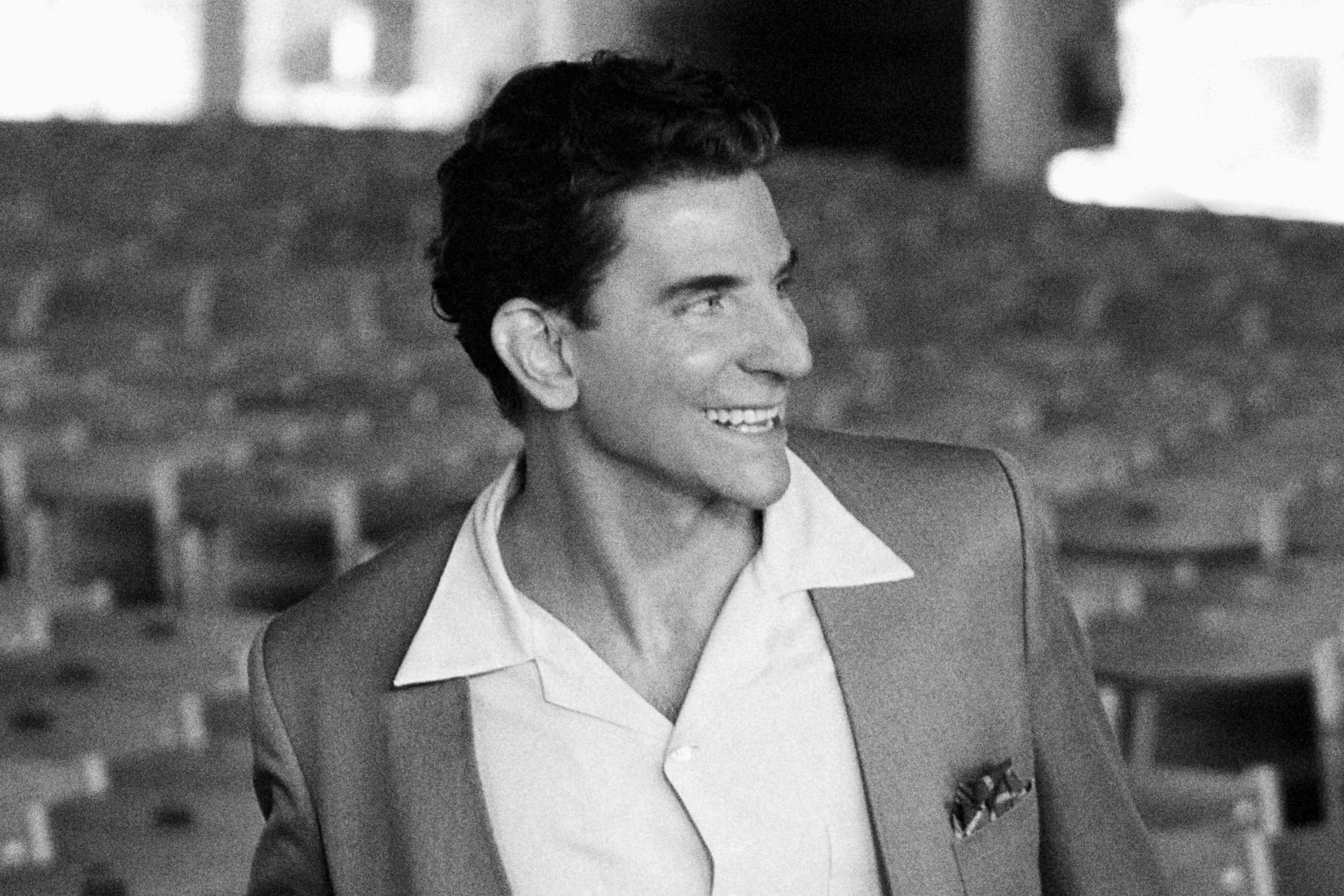
Why the attack on Bradley Cooper is unfair and not at all about him

Maestro. (L to R) Carey Mulligan as Felicia Montealegre and Bradley Cooper as Leonard Bernstein (Director/Writer) in Maestro. Cr. Jason McDonald/Netflix © 2023.

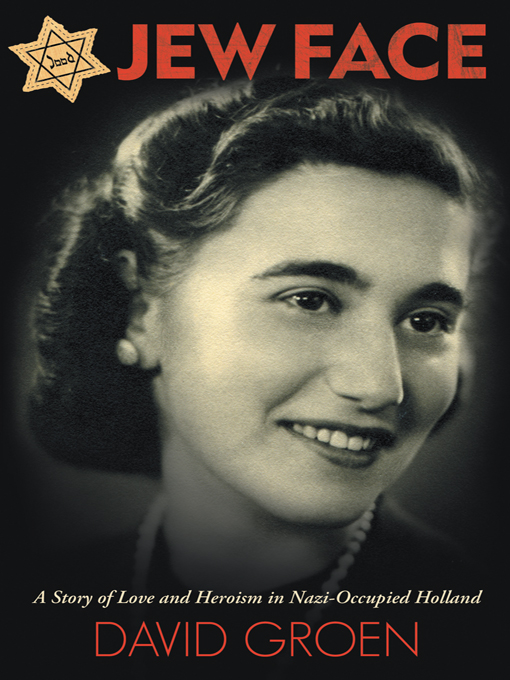
As a proud Jew and vocal Zionist, I find the recent backlash against Bradley Cooper to be beyond ridiculous. Before anyone chooses to criticize the choice of how best to look like Leonard Bernstein, one needs to start by doing one thing. Look at a picture of Leonard Bernstein. The man had a pronounced nose. But as someone who has a stake in this conversation, I believe this whole discussion needs to go much deeper. What is my personal stake you ask? It is a simple answer. I am the author of a book titled , “Jew Face: A story of love and heroism in Nazi-occupied Holland.”

I have so many problems with this discussion that I almost don’t know where to start. I will start by saying that if you are someone who sees depicting an immensely talented Jew in a different manner than he actually looked, your attempts to avoid prejudice indicate either an ignorance as to to what it means to be a Jew, or a leaning toward such prejudice. Whether or not this movie is prejudiced against Jewish people will be indicated in the plot and dialogue, not in the attempt for the lead actor to look like the person he is playing. On the surface, I am not concerned. Leonard Bernstein was a brilliant conductor. This is why this movie is being made. Other aspects of the movie, be they favorable or not, will only indicate prejudice if they are incorrect or used to push an agenda against Jews. If for no other reason, this alone would be enough for me to tell people to get a grip.

What also bothers me is something that has bothered me for quite some time, albeit a wonderful opportunity for self-promotion. The word Jew is not a bad word. The context in which any word is used when describing a person or group will often determine how good or bad a word is. One of the main reasons I called my book “Jew Face” is because when you looked like my mother in 1940 Amsterdam, there was no questioning the fact that you were Jewish. But funny enough, not because she had a pronounced nose, which she somewhat did when she was younger. Rather because of the fact that she had dark hair, and a darker complexion than the typical Dutch person, and being from Spanish-Portuguese descent, even darker than many Jews. One of them being my fair skinned, redheaded (at the time), father. I guess that would mean, by 1940’s Dutch standards, if you got someone with dark hair and even slightly dark skin to portray my mother, that would be seen as Jew Face as a negative term. So this speaks to how perception is what creates this problem, not fact. The fact is, that if you depict a Jewish man or woman accurately, you are being a responsible reporter or filmmaker. If you break away from the truth to depict a hateful stereotype, THEN you should be seen as a problem. It should not be based on how accurately you attempt to make the person’s facial features look.

Going back to how the word Jew is not a bad word, I will reflect on a story regarding my late mother Sipora Groen, the woman on the cover of “Jew Face”. When speaking to a group of people and telling her story with the help of my book, someone confronted her saying, “Jew Face is an ugly title”. My mother responded immediately saying, “it was an ugly time”. If your focus is on the fact that the way something sounds offends you, rather than the importance of its content, you become part of the problem.

Which brings me to my next point. If you are up in arms about a prosthetic nose, used to depict a Jewish legend with a large nose, I must ask you where you were in the past? Where were you when Ilhan Omar said, “it’s all about the Benjamins”, when criticizing Jewish influence? Or when Marjorie Taylor Greene said that there are “Jewish space lasers” trying to shoot down Santa Claus. Or when Bryan Adams distorted facts about Gaza while never criticizing Palestinian terrorists targeting Jewish civilians. Have you paid to hear Roger Waters lately? The man who repeatedly calls Israel an Apartheid State? Or are you just concerned about a high profile nose, because it suits your agenda or speaks to your ignorance?

Bradley Cooper has never exhibited any public prejudice towards anyone. For all I know, and I won’t research it because I don’t care, he isn’t even the one who decided on the nose. If you want to fight for Jewish causes, how about taking on the difficult fights. Not the one that brings attention to a silly stereotype that only means anything if you associate it with something negative. All this is to me is another example of virtue signaling. For those who don’t know what virtue signaling is, it is when you express a strong opinion because you want to show how good you are, not because you really care. Before you say another word about Bradley Cooper and a prosthetic nose, look into your heart and figure out how much you really care.

Like what you see? Feel free to share!

Also learn more at

 http://bramsviolin.com


When Past, Present, Milk & Honey collide

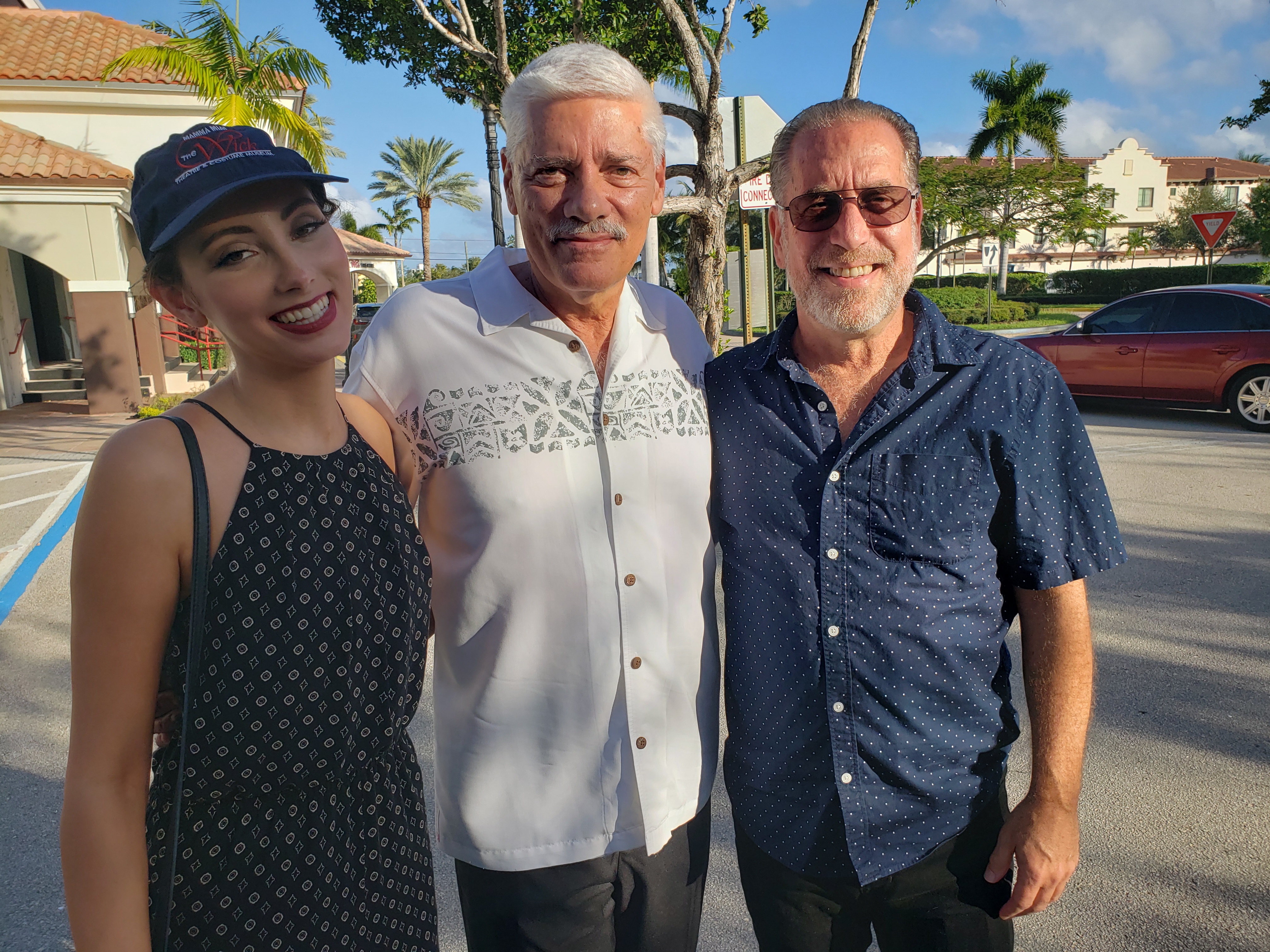
Alexandra, Vince, and David

In the latter months of 2012, Alexandra Van Hasselt was searching for family members on the internet. In her efforts she would make contact with Ron Van Hasselt, a distant cousin on her father’s side. In his own research, Ron came across information regarding one of his relatives, David Van Hasselt. He found a book in which David Van Hasselt’s death in the Mauthausen concentration camp was documented. The book he found was the book I authored, Jew Face. David Van Hasselt was the first cousin of my mother Sipora and someone very special to her.

After having contact with Alexandra, Ron would forward her my contact information. Alexandra’s father, Vince, would subsequently contact me via email. Vince’s father was Eddie Van Hasselt, the brother of David and also my mother’s first cousin. As good fortune would have it, Vince, together with his wife Melanie and daughter Alexandra, were living in Florida, less than an hour from my mother, who at the time was 90 years old. They would meet, Vince and I would meet in New York, and little by little the whole family would get to know each other and a special connection would develop between many members of my family, and Vince, Melanie and Alexandra. But of all the relationships, perhaps the most special of the relationships was between my mother and Alexandra. Having grown up in a household with diverse culture, my mother played piano, sang, and had a tremendous love for the arts. Alexandra, a young girl of 15, was already a very talented dancer, with a beautiful singing voice and a growing love for acting. The bond that would develop between these 2 newly acquainted cousins, separated by 85 years, was as unique as any imaginable. They would sing together, have long talks with each other, and form the most unlikely of friendships. In Alexandra, my mother saw her younger self, a young lady filled with talent, joy and promise. In my mother, Alexandra saw a kindred spirit, whose age and experience and love, gave her extra encouragement to pursue her dreams and be someone who my mother could live through vicariously. For Alexandra, although saddened by mother’s passing in 2017, that special relationship would always stay with her.

All of this would be what would make today, October 30, 2022 so special. Today I got to see Alexandra perform in Jerry Herman’s play, Milk and Honey. Based in Israel in the early 1960s, this wonderful production was playing at the Wick Theater in Boca Raton, Florida. As I sat there, next to 2 of my brothers, my sister-in-law, and Vince and Melanie, watching Alexandra perform on stage with her powerful and talented presence, in a play about Israel, the magic of what took place 10 years ago and in subsequent years, came back to me in full force. I felt an almost mystical connection between past and present, made even more palpable by the young character in the play who was 9 months pregnant and due to give birth at any time. Her name, Sipora. After the play when I asked Alexandra how it felt when she learned that there was a character in the play of that name, the same name as my mother, she replied that it was very special and that on this day she had thought about my mother a lot.

I know I am far from alone in feeling that the importance of telling the story of what took place under Nazi-occupation can’t be overstated. But I’ve also felt that in telling the story and opening up this connection with the past, we have the opportunity to witness the continuation of life in its most poignant manner. In 1941, when word of David Van Hasselt’s death would reach Amsterdam, it would fall on my mother, a young woman of just 19, to inform David’s mother, Vince’s grandmother, of the death of her son. Today, more than 80 years later, David’s great niece Alexandra would perform on stage in front of 3 of Sipora’s children, and his nephew Vince, in a story about nothing other than Israel, the Jewish state. With all the trials and tribulations life has to offer, it is hard to find something more indicative of how life goes on, and even thrives, as this connection between past and present.

The play and the performance were beautiful, but perhaps nothing was more beautiful than the lesson learned from all the events surrounding it for me and my family. The lesson that what we do matters, and that who we come from stays with us forever.

Like what you see? Feel free to share!

Also learn more at

 http://bramsviolin.com

and

 http://kennethsarch.com


Open Letter to Mark Zuckerberg regarding Facebook’s banning of the Holocaust movie, “Beautiful Blue Eyes”

Dear Mr. Zuckerberg,

Although I have not directly heard your feelings on the subject that I am about to address, seeing as you hold the ultimate responsibility for what takes place on Facebook, it is of critical importance that I reach out to you.  I am referring to the sitewide banning of the movie “Beautiful Blue Eyes” from every aspect of Facebook. https://www.rollingstone.com/tv-movies/tv-movie-news/facebook-holocaust-film-race-policy-1234592908/

I could start by saying that I have no personal stake in the success of this movie, but that would not be entirely true. You see Mr. Zuckerberg, not only do I have a stake in it, you do as well.  I do not know you, so I do not claim to know how you feel about your connection to the past, but I do know you are a Jewish man who has never hidden from that fact.  It must be understood that the survival of the Jewish people will always be connected to acknowledging and remembering our persecution. So I ask you, does the future of the Jewish people mean anything to you? Or are the policies of Facebook so out of touch with reality and are you so detached from the operations of this giant you created that we are subjected to this ignorant and highly detrimental stance?

My personal issues towards this matter can be best explained by telling you a little bit about my background.  I am the son of Holocaust survivors, and the importance of this and how it relates to me personally is not by any means exaggerated.  When I see Facebook banishing a movie with the title “Beautiful Blue Eyes” because as the ruling states, it violates the policy against content that “includes direct or indirect assertions or implications about a person’s race,” knowing a little what the movie is about, I am in utter shock and disbelief.  The title of the story is based on someone who is part of the story, someone with blue eyes, who was murdered by the Nazis.  As someone whose father had eyes the color of a blue ocean, knowing that both his parents and younger sister were also murdered by the Nazis, it’s hard to imagine one of the 3, if not all of them, not having blue eyes. And had my father not been blessed to survive, his blue eyes would not have stopped the Nazis from murdering him as well. 

But the stronger message here may come from relating to the story of my mother and her side of the family.  Whether Facebook chooses to acknowledge this or not, the Nazis often identified their victims, particularly their Jewish victims, from their physical appearance.  This was as evident in the Netherlands as anywhere else. My mother, born in Amsterdam and of Sephardic Jewish descent, looked different than most Dutch people at that time.  My father, who had red hair and blue eyes, could, for all intents and purposes, hide in plain sight.  My mother, with dark hair, brown eyes, and a darker complexion, immediately was recognized as being Jewish.  It was only through the help of my father who worked with the resistance, and the hand of God, that my mother survived.  But sadly, her father and brother, with similar physical attributes were taken to Auschwitz and murdered. The importance of my mother’s appearance was so significant and so important in understanding what took place that I even named the book in which I chronicle their 5 years in Holland during the Nazi Occupation, as “Jew Face”. https://hollandsheroes.com/general-book-information/ And just like “Beautiful Blue Eyes”, the title was based partly on a character in the book, my mother, and partly on an incident that took place.

As someone who is proud to be Jewish and forever cognizant of the past, present, and likely future threats we will always face, my reasoning for calling the book “Jew Face” was clearly not a racist or bigoted attack on, of all people, my fellow Jews.  Maybe the point can best be made clear to you and anyone who may choose to bury their head in the sands of Woke Beach, by sharing the following anecdote.

After the publishing of my book, close to 5 years after my father’s passing, my mother would occasionally speak to various institutions about her experiences during those horrific times.  She would often use the book as a guide in telling the story, and when on one occasion she informed the audience of its title, “Jew Face”, a woman commented to her that, “this is an ugly title for a book”.  My mother’s immediate and instinctive response was, “it was an ugly time”.  Maybe this is what you and the people who work for you are not comprehending.  Sometimes to make a point, a point that can ultimately promote love and understanding and even save lives, you need to say and do harsh things.  To avoid this in the name of equality or standards is at best shortsighted and divisive, at worst it is out and out dangerous.  In fact, this application that states it violates the policy against content that “includes direct or indirect assertions or implications about a person’s race,” is so out of touch with the reality, it is closer to Holocaust denial than it is to enforcement of a ruling in the name of the common good.

I urge you to look at this situation with a broader and more educated perspective and realize that decisions such as these are counterproductive to what you claim to be important.

Sincerely,

David Groen

Like what you see? Feel free to share!

Also learn more at

 http://bramsviolin.com

and

 http://kennethsarch.com


The Power of “Night”

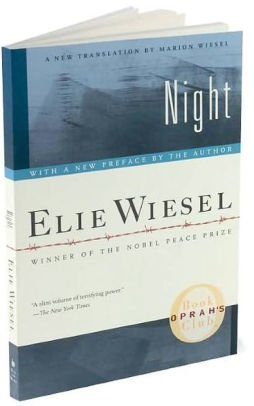
Recently, as I was working on the book regarding the story of my Uncle Bram’s violin, I came to the conclusion that there was one book that could help me at the very least, try to get some sort of grasp on what Bram went through as a teenager transported to Auschwitz with his father. The book I am referring to is “Night”, by Elie Wiesel. While the impact of reading it was profound, it was nevertheless different than I anticipated, and one might argue even more important.

In September of 1943, 22 days shy of his 19th birthday, my Uncle Bram was murdered in Auschwitz. As I work on giving him the legacy he deserves, through having his memory be remembered in a way that not only gives respect to his memory but also inspires others, reading “Night” seemed logical, albeit difficult. While the impact it had in regard to my work was powerful, it was not what I expected.

When I wrote “Jew Face”, I often successfully tried to feel like I was with my parents as young adults going through the trial and tribulations of evading murder by the Nazis. But trying to do this with someone who was in Auschwitz is an exercise in futility. Probably a fortuitous one. The pure horror described by Elie Wiesel in his book, and the countless accounts and images provided over the years show the devastation as best it can, but the generations that follow are inevitably limited in what they can feel.

In his preface Wiesel writes:

“Only those who experienced Auschwitz know what it was. Others will never know.

But would they at least understand?

Could men and women who consider it normal to assist the weak, to heal the sick, to protect small children, and to respect the wisdom of their elders understand what happened there? Would they be able to comprehend how, within that cursed universe, the masters tortured the weak and massacred the children, the sick, and the old?”

I am not quite sure what it means to understand the unimaginable. I am not sure how to comprehend an army’s mission to dehumanize an entire group of people. Millions of people. I thought that maybe reading the book I could somehow feel like I was there. At least enough to help me write more about what it must have been like for my lost Uncle and millions of others, including so many others in both my mother’s and father’s families. I will not go as far as saying I reached anywhere close to that point, or if I ever will. I do know however that in finishing it something else, maybe even more important happened. I felt an increased sense of responsibility. A responsibility to do more than just read, or even write a book. A responsibility to do something significantly more important than relating to the horrors. My responsibility is to consistently tell the story. To make sure continuing generations know what happened. To let them know that those places that still stand where events leading to the murder of 6 million Jews or where monuments of remembrance have been placed are so much more than tourist attractions. They are the representation of the very soul of those we remember. They have the sanctity of a cemetery, and they give life to the souls of those taken from us by vicious murderers.

I sat down to read “Night” hoping something important would happen to me. While it was not what I expected, I came away with something far more important than I anticipated. An increased determination to make sure the world knows what happened and never forgets. To let it be otherwise would be more than tragic than I could imagine, and substantially more dangerous.

Like what you see? Feel free to share!

Also learn more at

 http://bramsviolin.com

and

 http://kennethsarch.com


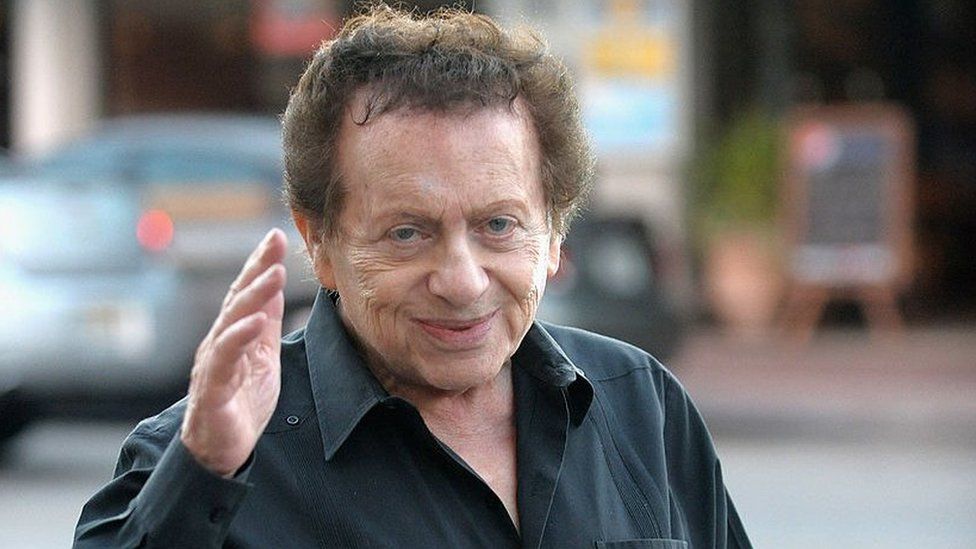
Remembering my time with Jackie Mason

It was a warm and sunny Sunday afternoon around 6 years ago and I decided to go into the city and enjoy some time walking in and around Central Park.  Towards the later part in the afternoon I sat down in an area near 58th street to do some people watching.  Looking around I suddenly noticed the man himself, Jackie Mason.  This was the second time I had seen him relatively up close, the previous time being a few years back in an all-night deli on 7th Avenue when I walked up and said hello the way a fan does when they encounter a celebrity.  So this time, seeing him nearby and on his cell phone, I made eye contact with him and nodded my head in respect.  He proceeded to walk in my direction, stood about 6 feet from me and finished his phone call.  After putting his phone in his pocket, he walked towards me and the following dialogue ensued.

Jackie Mason: “ Do I know you?”

Me: “No, but I met you once about a year and a half ago in a deli around the corner.”

Jackie Mason: “You think I should remember you?”

Me: “No, but I’m a big fan.”

Jackie Mason: “Did you ever see me on Broadway?”

Me: “No, sorry. I never did.”

Jackie Mason: “So now I know 2 things about you.  Number 1, you’re an egomaniac.  You think I should remember you from a year and a half ago.  Number 2, you’re a f..ing liar. You say you’re such a big fan but you couldn’t spend $20 to see me on Broadway.”

After he grinned and I laughed, the conversation went on and got a little more serious. I told him who I was, a little about my history and of course, about my book Jew Face. I asked him if there was anything he might be able to do to help me get my book out there.  He in turn took my phone number, said he might know some people and said he would be in touch.

And so began my friendship with Jackie Mason.

I am not sure if it was the next day or 2 days later when I received a call from him inviting me to sit and meet with him and a few others in a café in Manhattan.  While it turned out that neither the people I met with that night nor any other night when joining him in the future would be able to do much to help my writing career, it soon did not matter to me.  I was hanging out with Jackie Mason and it was fun.

While I can only speak to the part of his lifestyle to which I was exposed, it was very specific and very consistent.  He would go out to dinner with one group of people, and the later in the evening go out for desert and a drink, be it coffee or soda in a café or diner with a second group of people.  While I was part of a group he himself selected, it nevertheless was a group, and it appeared that he would decide who it was he wanted to hang with on any given evening and they would be called and asked to join him.  In the beginning I was invited to the after dinner get-togethers, and while I don’t remember all the places I was invited to, I specifically remember the Applejack Diner, located on 55th street and 7th Avenue, Juniors, famous for its cheesecake, and the iconic Sardis, located in the heart of Broadway.  To sit at a table in Sardis with someone who had his cartoon picture hanging up in Sardis, was beyond cool for me.  And naturally, when walking the streets of Manhattan with a celebrity of Jackie Mason’s caliber, many people would stop and greet him, and very often ask for a picture with him.  And if the person rubbed him the right way, they would get one.

Eventually I would be invited to some of the dinners with him as well.  One time being in a French restaurant on the Upper East Side when one of the people joining us was his friend and high profile lawyer Raoul Felder.  While I am by no means shy and I have the confidence to feel comfortable in the company of just about anyone, I also knew these people lived in a very different world than I did, so I was almost never the biggest talker at the table.  I often spoke about my book and my parents’ story when being introduced by Jackie to someone new which more than likely was why he had a nickname for me.  To Jackie Mason I would be known as the “Holocaust guy”.

The man loved politics. I always wondered if part of it was so that he would have enough material to make fun of at least some of it, but when he sat down and discussed his views he did so with a passion.  While his interest in politics was strong, he never struck me as being partisan.  Without getting into specifics, I still remember him equally hating different high profile politicians on 2 opposite sides of the aisle.  His love for politics was so strong that if there was a major political event taking place, he was more interested in following the programming than he was the people he might have been with at the time.

He told a story of how Rodney Dangerfield once walked into a restaurant and started yelling at him, claiming that he had stolen his part in Caddyshack 2.  It didn’t seem to bother him much and he seemed to actually see it as a funny story, especially since according to him Dangerfield had actually turned down the part.

There were 2 moments I remember clearly from my time with Jackie Mason.  The first was crossing the street with him one late night, seeing him take his good old time not crossing at an intersection, and practically bear hugging him to pull him out of the way of an oncoming car.  While he was fine with me doing what I did, very possibly saving his life, it wasn’t such a big deal to him because he wasn’t concerned. It helped me realize that part of what made Jackie Mason special was his lack of fear.  Lack of fear of what anyone thought of what he had to say, and lack of fear of an oncoming car.  Frankly, as someone who cared, I am relieved and happy he ended up passing away of natural causes.

The second moment was being invited up to his apartment.  It was just once and just to meet him before we went to meet people at a café, but it still felt like an honor to be given that degree of trust and access to someone of his stature.

I remember him liking his favorite tables where he went, not eating anything with a face, and starting so many conversations with, Hello Hello.

One evening we were sitting outdoors at Applejack Diner and a man came over and engaged him in conversation.  Apparently the man had seen Jackie at the Catskills in the past and knew some of the same people.  When the man asked him if still ever performed in the Catskills, in that classic Jackie Mason form he replied, “No. I passed away.”

And now he has indeed passed away.  While my time being part of his circle ended over 4 years ago, I remember the man fondly.  That being said, I know that to many he a controversial figure.  His humor wasn’t for everyone, he never held back his opinions, and he chose to live his life the way he wanted, regardless of whether or not fan, friend or family approved.  I can honestly say that if I had to judge the man I would be lost.  Since that was not my role nor place in his life I never tried and never will.  I do know that there were 2 things about him that I loved.  He was proud to be a Jew and he was funny.  So very proud and so very funny.

 May he rest in peace.

LIKE THIS POST? SHARE IT ON FACEBOOK OR TWITTER

BRAM’S VIOLIN

HOW TO BUY THE BOOK

JOIN “THE GLOBAL COALITION FOR ISRAEL” ON FACEBOOK

IN CONJUNCTION WITH GLOBAL COALITION FOR ISRAEL


Why this is my most important Tisha B’Av


benchdg2

This year, starting on the evening of August 10th till the evening of August 11th, the Jewish people commemorate the day known as Tisha B’Av, the 9th day of the Jewish month of Av.  It is the day that commemorates the destruction of both Holy Temples in Jerusalem and as it is universally recognized as the saddest day on the Jewish calendar, it is also a day in which the Jewish people remember the greatest tragedies in our history.  Specifically for those of us in this generation, the murder of 6 million Jews in the Holocaust.  For me personally, in many ways this is my most important Tisha B’Av.

When I wrote the book Jew Face, telling about my parent’s experiences in Holland during the Nazi-occupation, one of the most remarkable aspects of writing it was that I felt as though I went back into time and was with my parents as young adults.  This experience, for lack of a better term, was an incredibly “cool” experience and to be honest one I loved experiencing.  But as is the case with so much in life there is a flip side.  In my recent trip to Amsterdam that same, I guess I will call it sensation, returned for the first time since writing the book.  Except this time it was not as pleasant.  Walking through Amsterdam, specifically the former Jewish neighborhoods, I felt the horror that took place between 1940 and 1945.  Standing in front of what was once the “NIZ”, the Dutch Jewish Hospital,  I could almost sense the Nazi trucks approaching, the soldiers storming the building, and knew that I was within meters of the place where my mother shouted to the chief Nazi administrator, ” why are you doing this?”, to which he replied, “ask the Rabbis”.  I walked on the street that was likely my father’s favorite street on any given Shabbat and could feel what was once an incredible presence of Judaism.  I walked through the streets of Amsterdam at times feeling what I could only describe as the presence of ghosts in what to me was in some ways a graveyard of what was once a thriving Jewish community.

I recognize that I can not know how much of this experience was real and how much of it was just something I felt from within, but since it was more an experience than an overall state of mind I don’t feel it matters one way or another.  What does matter however, as I get close to the commemoration of the saddest day of the Jewish year, that I felt the greatest sadness I have ever felt as a Jew for the plight of my people.  Intellectually I have understood the importance of Tisha B’Av for much of my life.  Emotionally however, I have never understood as I do today, and go into it with an understanding that makes this my most important Tisha B’Av.  A Tisha B’Av in which I have a better emotional understanding of the pain and suffering this day honors and remembers, and the hope that that same pain and suffering is not only never something the Jewish people ever experience again, but that the evil that causes it is never given the power to do that anywhere again or to anyone again on this earth.

LIKE THIS POST? SHARE IT ON FACEBOOK OR TWITTER

HOW TO BUY THE BOOK

READ MORE OF WHAT I HAVE TO SAY IN THE COMMON SENSE LIBERAL

JOIN “THE GLOBAL COALITION FOR ISRAEL” ON FACEBOOK

GLOBAL COALITION FOR ISRAEL IS NOW ON TWITTER @gcimovement

IN CONJUNCTION WITH GLOBAL COALITION FOR ISRAEL


Does it make a difference?

122

In speaking with my mother, a Dutch survivor of the Holocaust, I have learned that Holocaust Remembrance Day is like any other day set aside for commemoration of an event.  In some ways it’s not really necessary.  Every day is, to some extent at least, a day in which the Holocaust is remembered.  For those who honor their parents as they should, who really needs Mother’s Day, right?

Maybe not.  Yes it is something that sticks with so many of us on a constant basis, but the question we really need to ask is what is the real purpose of a Holocaust Remembrance Day?  Especially one sanctioned by the United Nations of all things. An organization that has repeatedly shown disdain for, and prejudice against Israel and the Jewish people has a day in which they are saying everyone should remember the victims of the Holocaust during the reign of Adolph Hitler’s Nazi Party.  Is this day a day designed to strengthen world morality in order to see to it that no similar atrocity ever happens again?  Consequent actions and behaviors by the UN over the years certainly wouldn’t back that up.  Is it a satisfaction of guilt for a so-called world organization that does far less than it should to protect innocent people?  Or is it part of the farce that is the United Nations image that allows it to continue its worthless existence in which it does more to make corrupt people rich and powerful than it does to care for the weak and persecuted?

Whatever it actually is, if the results of this day set aside to remember does indeed increase awareness somewhere and with someone, who knows what type of positive ripple effect it could have.  I wrote a book about what my parents went through in the time of Nazi occupation.  Was this something I did as a totally selfless act?  The honest answer to that question is no.  Any success or achievement I have or will get out of the book certainly satisfies me on a personal level, but that does not negate the fact that nothing is more satisfying to me than inspiring or enlightening someone when it comes to the events that took place.  Now magnify this and imagine how many people may never have known that 6 million Jews were murdered by the Nazis if it were not for a Day of Remembrance.  If any of these people are inspired to the point that they actually do something to make a difference in the future, then no matter how disingenuous the formation of a memorial may be, it does some good, and in a world with so much bad, and in a world where hating Jews is becoming more and more in fashion, we need all the help we can get.  Even if it comes from a reluctant source.

LIKE THIS POST? SHARE IT ON FACEBOOK OR TWITTER

HOW TO BUY THE BOOK

READ MORE OF WHAT I HAVE TO SAY ON OPEDGUY.COM

CLICK TO JOIN “THE GLOBAL COALITION FOR ISRAEL” ON FACEBOOK

GLOBAL COALITION FOR ISRAEL IS NOW ON TWITTER @gcimovement

IN CONJUNCTION WITH GLOBAL COALITION FOR ISRAEL


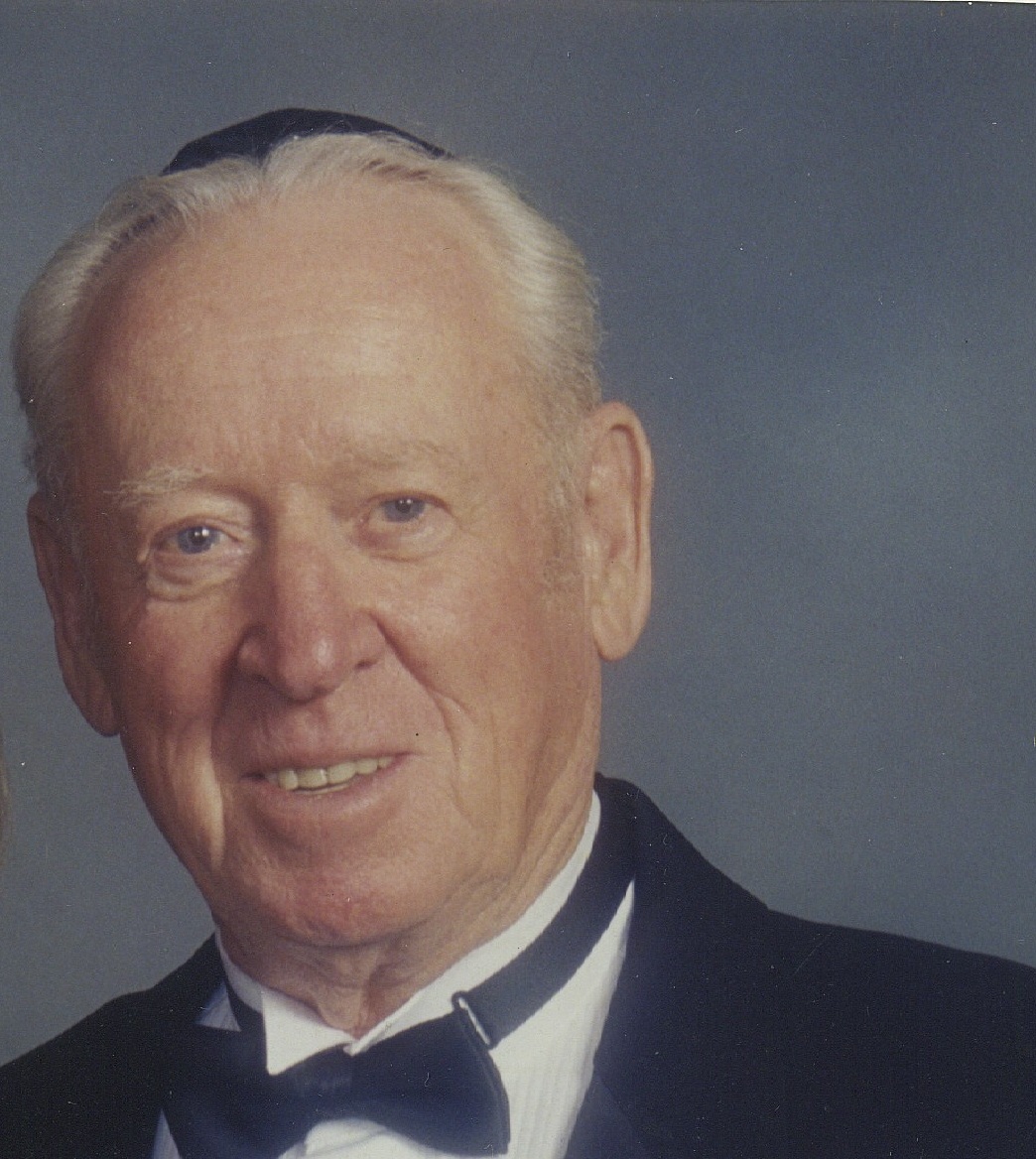
Remembering my Father

dadc1


I write this brief post in loving memory of my father, Rabbi Nardus Groen.  Today, December 18th, 2014  would have been his 95th birthday. Although I will never be the man that he was, I continue to work hard on becoming the man he would have wanted me to be. Despite the fact that I was very aware of my father’s flaws, the more I look back, the more people I meet, the more I learn about life, the more I realize what a great man he truly was.  The strength and inspiration he provided me not only during his life but as I remember him to this day motivates me to do positive things and take action to make the world a little bit of a better place.  Often when I do what I do I ask myself this very simple question: “What would Dad have done?” Chances are my answer isn’t always the correct one, but my love and respect for him is a large part of what motivates me to try my best.  He will always be one half of that truly great blessing in my life, 2 wonderful parents, and even though he passed away 7 1/2 years ago at the age of 87, he still is with me to this day, as he will be, and I say this joyously, for the rest of my life.


LIKE THIS POST? SHARE IT ON FACEBOOK OR TWITTER

HOLIDAY GIFT IDEA

HOW TO BUY THE BOOK

CLICK TO JOIN “THE GLOBAL COALITION FOR ISRAEL” ON FACEBOOK


Holiday Gift Idea

9781468573909_COVER.indd


Anyone who reads my posts knows that at the bottom of all of them is a link on “How to Buy the Book”. I will not deny that although I do my writing for the love of the craft, I also use this opportunity as a means to subtly promote the book I wrote about the experiences of my parents.  As the holidays approach I am throwing any subtlety out the window.  Simply put, the book “Jew Face: A story of love and heroism in Nazi-occupied Holland”, is a great gift for both Hanukkah and Christmas.  And here is why.

First of all and somewhat unfortunately, the book has a greater relevance today than it would have had in previous years.  The importance of telling an inspirational story of Holocaust survivors has always been there, particularly with the existence of denial and hate all over the world, but with the significant growth of evil and anti-Seimitism in today’s world, being aware of what took place has never been more important.

That being said, this is not your typical Holocaust era book.  This is very much a love story, despite the seriousness of the subject an easy read, and a book that acknowledges in style and substance the fact that my parents were, in many ways, 2 of the lucky ones.  I always put it this way when I talk about it to others.  No one should ever have to go through what my parents did over the 5 year period between 1940 and 1945, but compared to so many others, they were very fortunate.  For the record, certainly by the time I was old enough to hear the story, they were very much aware of their good fortune.

My father, Rabbi Nardus Groen of Blessed Memory, was a great man.  He was not a perfect man, but he was a great man.  The courage and strength he exhibited during the Nazi terror was unlike that of most men. In the book I do my very best to tell the stories of his remarkable actions during this time as well as the astounding bravery and strength of my mother, Sipora Groen, who, less than a month from her 93rd birthday is still an inspiration and joy to all those who know her.  I often say that it seemed to me that the only thing that ever scared my father was being without my mother.

In the book I make a clear distinction between the good guys and the bad guys. The bad guys were the Nazis and anyone who cooperated or worked with them.  The good guys were everyone else.  Therefore the character flaws and occasional strained relationships existing among normal decent people are not on display in this book.  This is not a book about the good and bad qualities of decent people.  It is a book about the good and bad in humanity, and how despite the awful price our people and our world had to pay, how good ultimately won.

If you want to learn more or purchase an inspirational and relatively inexpensive gift for someone this holiday season, CLICK HERE.

HAPPY HOLIDAYS!!!!!!!!


LIKE THIS POST? SHARE IT ON FACEBOOK OR TWITTER

HOW TO BUY THE BOOK

CLICK TO JOIN “THE GLOBAL COALITION FOR ISRAEL” ON FACEBOOK

Follow Holland’s Heroes on Twitter @hollandsheroes