Tag Archives: International Holocaust Remembrance Day

When Remembrance Loses its Meaning

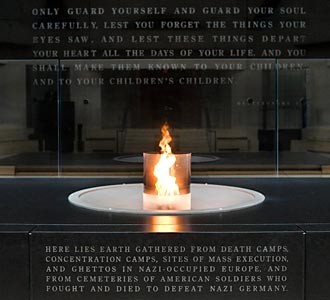
As we commemorate International Holocaust Remembrance Day, we sadly find Holocaust awareness moving in the wrong direction. The argument can certainly be made that more people today know the terms Holocaust, Nazi, and the name Hitler than at any time in history. But knowing a term or a name does not make someone truly aware. Awareness comes from knowledge and understanding—understanding how devastating the evil manifested in the Holocaust truly was, and the impact it continues to have on the generations that followed.

As has been the case throughout history, we live in a world filled with both good people and bad people. Evil is not exclusive to any specific era; it has always existed. However, there have been moments when evil reached an entirely different level. Quests for power within nations, or wars driven by conquest, occur in every generation in one form or another. What sets the Holocaust apart from every other event in history is that never before had evil been so successful in wiping out so many people from a single group. Add to that the fact that this is being written by the son of two people who lived through that horrific time, underscoring just how recent it was, and the importance of recounting this story today becomes as vital as ever.

As many of you may or may not know, I am a strong believer in people staying in their lane. I say this because I do not want what I am about to say to be misconstrued as political, nor do I want it to come across as an attack on—or endorsement of—the behavior of any individual or group. That is not my lane. My lane is Holocaust education and awareness, rooted in the story of my family, and more specifically, the story of my Uncle Bram and his violin. I am not here to tell anyone what to think or what to say. My hope is simply that by sharing what I know, people will be enlightened to think and speak in ways that promote tolerance and love over bigotry and hate.

Rising antisemitism is, naturally, of grave concern to us all. Ideally, I would like to never give up hope that it will one day disappear, however unlikely that may be. More urgently, however, is the responsibility we all share to ensure it never spirals into anything even remotely resembling what took place beginning in 1933. This brings me to the issue I feel compelled to address: the casual invoking of the term Nazi and the name Hitler. As I noted earlier, aside from addressing direct threats to Israel and the Jewish people, I publicly stay away from anything remotely political. And since I have heard people across the entire political spectrum misuse these terms, I am not speaking to any one group or individual. Instead, I want to explain why this behavior is not merely offensive—it is extremely dangerous.

Long before I wrote the book Jew Face, and long before I began speaking publicly, I remember walking as a teenage boy in London, where I attended a Jewish day school, trying to comprehend what it must have been like to live during the Holocaust. I was no older than seventeen when, at one point, seeing a clear, unobstructed path before me, I closed my eyes and tried to imagine what it would be like to suddenly lose between 50 and 90 percent of everyone I knew and loved. When I opened my eyes, I felt devastation unlike anything I had ever experienced—though it was not grounded in reality. For nearly every Jew in Europe who survived, my parents included, that devastation was reality.

And that loss was not the result of a plague or natural causes. It was the result of the systematic murder of the Jewish people—a mass killing so deliberately designed to wipe us off the face of the earth that it is more accurately described as extermination. An extermination that led to the murder of six million Jews. This does not even begin to account for the years of living in constant fear, when every Jew in Europe was forced into hiding or compelled to alter their identity in the hope of avoiding detection. Nor does it fully capture the sadistic brutality inflicted upon the Jewish people, or the reality of concentration camps—places designed either for immediate death or for slow, torturous ones.

The Holocaust was real, devastating, and recent. Its impact is still felt by the Jewish people, individually and collectively, to this day. When comparisons are drawn to events that barely scratch the surface of this devastation, it is deeply offensive to all who were murdered or who suffered during that time.

The danger lies in normalization. What Hitler and the Nazi regime did was evil on such an enormous and catastrophic scale that invoking their names through casual comparisons risks bringing that evil to life in a way that almost normalizes it for those with hateful words or dangerous intentions. It must be understood that this was not just evil on a mass level—it was insanity on a mass level. If I believed in putting my head in the sand when confronted with danger or evil, I would not do the work I do. But that work comes with responsibility. And part of that responsibility is making it clear that the vast majority of people alive today have never witnessed anything even remotely resembling the suffering and horrors of the Holocaust.

Let that understanding guide how we remember this day—and how we honor those who perished.

Am Yisrael Chai

Never Again Is Now!

Like what you see? Feel free to share!

HELP25.org
Leave a comment   | 


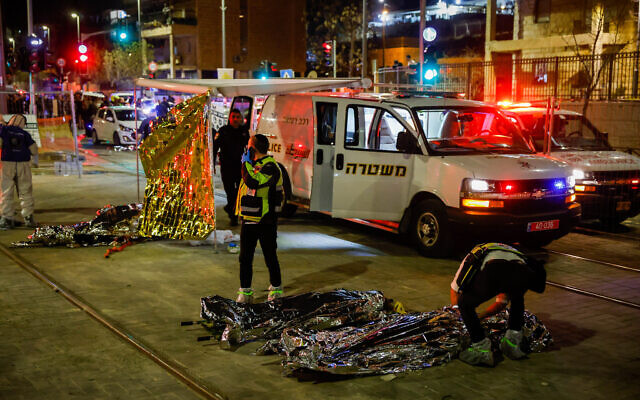
The shooting in Jerusalem on International Holocaust Remembrance Day reminds us that the fight never ends

It is International Holocaust Remembrance Day and there are still those who will murder us just for being Jews. The shooting today in Jerusalem is evidence of this sad fact. At last count 7 people were killed, likely on their way home to Friday night dinner after Shabbat prayers.

We can never completely rest. I wish it were otherwise, but this is a fight that never ends. I will continue to do my part in telling the story of my family to bring to life the reality of the murder of 6 million Jews. As the son of Holocaust survivors from Holland, when I read how one quarter of Dutch youth believe the Holocaust was a myth, I realize why we are so far from the peace we so dearly cherish. https://m.jpost.com/diaspora/antisemitism/article-729462 Not knowing what happened opens the possibility of it happening again, and we can never accept that possibility. When Jews get murdered outside of a synagogue just for being Jews, whether it is in Jerusalem or Pittsburgh, we need to realize that whatever we can do to combat this evil we must take upon ourselves to do.

I will honor those lost by continuing to fight in the way that I know how, which is to educate people about what really happened, and to make the point that ignorance is rarely replaced by good, far more often with evil.

Never Again!

Like what you see? Feel free to share!

Also learn more at

 http://bramsviolin.com

and

 http://kennethsarch.com


Does it make a difference?

122

In speaking with my mother, a Dutch survivor of the Holocaust, I have learned that Holocaust Remembrance Day is like any other day set aside for commemoration of an event.  In some ways it’s not really necessary.  Every day is, to some extent at least, a day in which the Holocaust is remembered.  For those who honor their parents as they should, who really needs Mother’s Day, right?

Maybe not.  Yes it is something that sticks with so many of us on a constant basis, but the question we really need to ask is what is the real purpose of a Holocaust Remembrance Day?  Especially one sanctioned by the United Nations of all things. An organization that has repeatedly shown disdain for, and prejudice against Israel and the Jewish people has a day in which they are saying everyone should remember the victims of the Holocaust during the reign of Adolph Hitler’s Nazi Party.  Is this day a day designed to strengthen world morality in order to see to it that no similar atrocity ever happens again?  Consequent actions and behaviors by the UN over the years certainly wouldn’t back that up.  Is it a satisfaction of guilt for a so-called world organization that does far less than it should to protect innocent people?  Or is it part of the farce that is the United Nations image that allows it to continue its worthless existence in which it does more to make corrupt people rich and powerful than it does to care for the weak and persecuted?

Whatever it actually is, if the results of this day set aside to remember does indeed increase awareness somewhere and with someone, who knows what type of positive ripple effect it could have.  I wrote a book about what my parents went through in the time of Nazi occupation.  Was this something I did as a totally selfless act?  The honest answer to that question is no.  Any success or achievement I have or will get out of the book certainly satisfies me on a personal level, but that does not negate the fact that nothing is more satisfying to me than inspiring or enlightening someone when it comes to the events that took place.  Now magnify this and imagine how many people may never have known that 6 million Jews were murdered by the Nazis if it were not for a Day of Remembrance.  If any of these people are inspired to the point that they actually do something to make a difference in the future, then no matter how disingenuous the formation of a memorial may be, it does some good, and in a world with so much bad, and in a world where hating Jews is becoming more and more in fashion, we need all the help we can get.  Even if it comes from a reluctant source.

LIKE THIS POST? SHARE IT ON FACEBOOK OR TWITTER

HOW TO BUY THE BOOK

READ MORE OF WHAT I HAVE TO SAY ON OPEDGUY.COM

CLICK TO JOIN “THE GLOBAL COALITION FOR ISRAEL” ON FACEBOOK

GLOBAL COALITION FOR ISRAEL IS NOW ON TWITTER @gcimovement

IN CONJUNCTION WITH GLOBAL COALITION FOR ISRAEL


How Do We Remember?

rememebrenaxceAs we remember the 6 million Jews murdered by Hitler’s Nazi Germany, we are presented with many important questions.  What is the best way to actually remember?    What can we do to make sure this never happens again?  What is our obligation as fellow Jews and human beings?

In some ways all these questions and more are answered by addressing the last question.  I start with an additional question that will likely cause extreme emotion in many reading this, but in my opinion it is a legitimate and fair one.  The question is this:  How much do we truly care?  Do we care on the high-profile days when the world and our friends are watching, or do we care whenever presented with an issue or event that draws comparison or alarm?  Do we do anything that goes beyond the things that make us look like we care?  Do we cower in fear when presented with opposition?  I am putting these questions out into thin air, not directing them at any specific people or group.  Only we know the true answer in our hearts.

Do we care when anti-Semitism rears its ugly head or do we shrug it off and say, “There is nothing I can really do about the crazies out there anyway.”  Do we make excuses for those who hate us or just hope others solve the problems for us?  Do we trust our leaders to do the right thing?  Do we support our leaders enough not to stand in their way of protecting us?  Maybe most importantly, do we stand united against those who want to make hate a way of life or do we fight amongst ourselves feeding into their very plan?  These important questions are only some of the questions I have for the good people out there.

For those who don’t take issue with the murder of 6 million Jews I ask you one basic question.  How do you look at yourself in the mirror?  How do you justify your very existence on a planet of human beings all born with the same right to live?  Do you do it so-called in the name of religion?  Do you have the gall to declare that God somehow justifies your viewpoint?  Or are you so wrapped up in your own world that you don’t see how any other world even matters, even to the point where their existence holds no meaning?

Sadly, today, on International Holocaust Remembrance Day, these questions and many more need to be asked.    The world we live in today shows signs of being no better than it was 68 years ago when Hitler’s Nazi Germany was defeated.  Only the names and places have changed.  People still kill others just because of what they are, leaders threaten to wipe out millions, and anti-Semitism is alive and well.  So today I hope that we ask ourselves all the questions that need to be asked, but maybe even more importantly ask others these questions, for although the true answers may be disturbing, hiding our heads in the sand will only increase the chances that history repeats itself.

HOW TO BUY THE BOOK JEW FACE: A story of Love and Heroism in Nazi-Occupied Holland