Tag Archives: Crown Heights

The Enduring Legacy of the Lubavitcher Rebbe

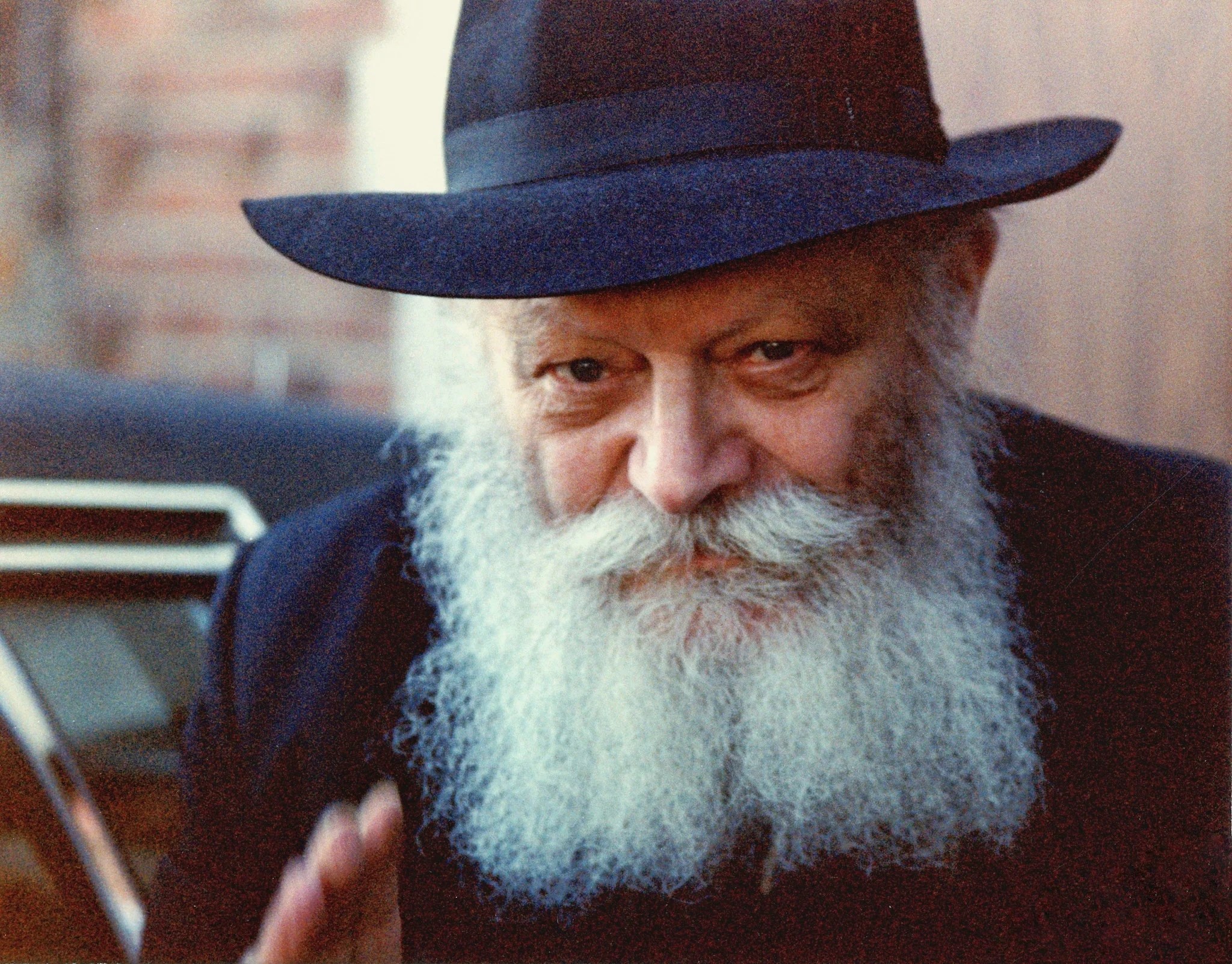
Until this year, I never knew the date of the Lubavitcher Rebbe’s birthday. Quite a leap—from not knowing to being moved to write about why the day matters—but nevertheless, I find myself compelled to share my thoughts. There may be no greater achievement in life than to cultivate something that reverberates positively after one’s body departs this earth. Anyone who knows what Rabbi Menachem Mendel Schneerson built during his life as the Rebbe will understand that his life was the very epitome of that concept.

As someone who was not born in Crown Heights, and who does not consider himself a Chabadnik per se, I may not be the most obvious person to share these thoughts. However, as a proud Jew who believes in my faith and wants to see the Jewish people thrive, I am happy to express my gratitude and appreciation for the Chabad-Lubavitch movement. I know that many people’s connection to Chabad comes from an emissary’s pursuit, but in my case—and for most of my life—I have been the one who has pursued Chabad.

I have been to Crown Heights for the holiday of Simchat Torah eight times—which, for those who may not know, means I was there for 2–3 days on each occasion. As it happens, this particular holiday is quite the celebration. I only half-jokingly say that it was there I learned how to drink alcohol. After moving to Florida, I found myself within walking distance of a synagogue to my liking—one that is, in fact, a Chabad. And over the past few years, through giving my Bram’s Violin presentation, I have had the good fortune of visiting a number of Chabad locations both in and outside of Florida. I say this because it has given me a perspective that is both honest and objective.

That honesty allows me to engage with those who say they have had negative experiences, while the objectivity—if one accepts it—gives credibility to my conclusions. What I often tell people is that Chabad communities are like snowflakes: no two are exactly alike. That reality also suggests that some complaints undoubtedly have at least some basis in truth. But when I think about the stories I hear about the Rebbe, one thing that stands out is that when he provided advice or guidance, it seems he never told one person exactly what he told another. His entire approach reflected a deep understanding that no two people are alike, and that everyone carries their own flaws and imperfections.

Recognizing this—and understanding that even leaders and emissaries in the Chabad world are human, like everyone else—allows one to accept those who err, while appreciating the vast majority who work tirelessly for the betterment of not only the Jewish world, but the world as a whole. In fact, if anything proves that Chabad is not a cult, it is the fact that individual personalities are constantly on display—even, on occasion, with imperfection.

With its acceptance, kindness, charity, and outreach, Chabad communities have had a positive impact across the world. Jews have not only found communities in some of the most unexpected places, but also a support system that, more often than not, is offered unconditionally.

The Rebbe’s teachings took an already strong Jewish movement and transformed it into a powerful and positive global force—a force that brings out the best of Judaism, making it accessible and welcoming to Jews everywhere, while extending kindness and generosity beyond its own community. As someone with significant exposure to the Chabad world, and who tries to keep a finger on the pulse of the broader Jewish world, I would not want to imagine a world in which the Lubavitcher Rebbe was never born. His impact has done more good than anyone could ever adequately measure.

Is there any greater honor one can offer on a birthday?

Am Yisrael Chai

Never Again Is Now!

Like what you see? Feel free to share!

HELP25.org

Commemorating the Rebbe: Reflections on His Funeral and Legacy

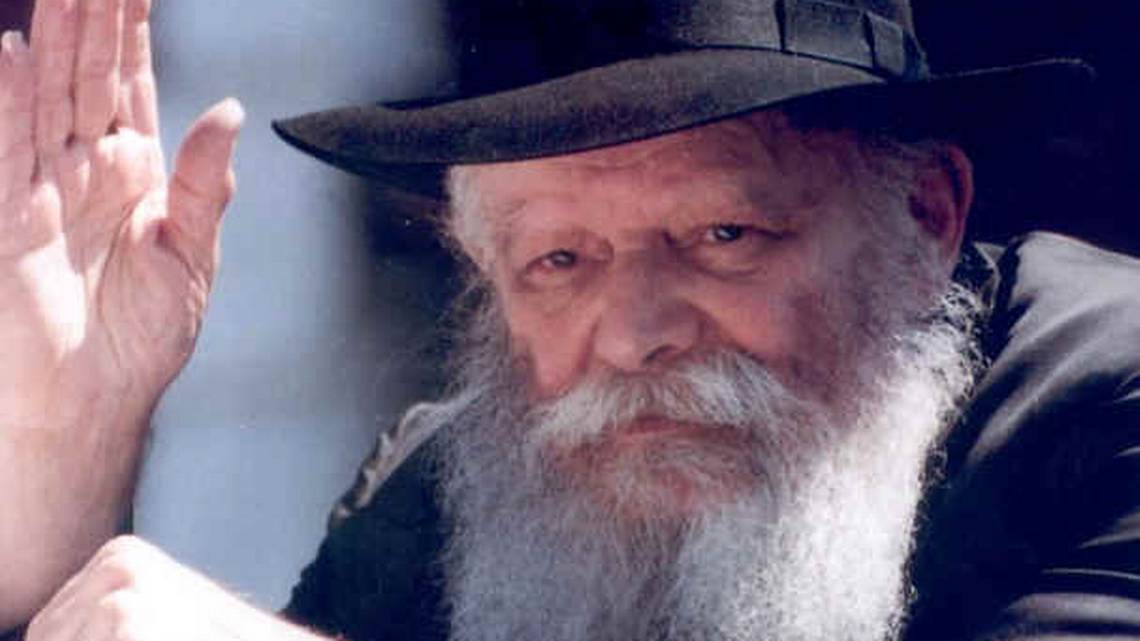
On June 12, 1994, I participated in what I would later come to realize would be one of the greatest honors of my life.  That was the day I would march together in a procession with thousands of people following behind the body of the Grand Rabbi of Lubavitch, Menachem Mendel Schneerson, or as he is referred to today by so many, the Rebbe.  That day, which coincided with the 3rd day (Gimmel) of the Jewish month of Tammuz- the Jewish calendar is a lunar one-coincides with today, June 29, 2025.  As someone who is significantly more connected to Chabad, the Jewish organizational structure developed to enormous significance by the Rebbe, than I was back then, I will share with you my experiences of that day and of days of importance before and after his passing.

To this day I remember my reasoning behind going to the Rebbe’s funeral.  My personal experiences with Chabad to that point had been limited.  I remember celebrating the holiday of Simchat Torah in Philadelphia with them once or twice in my early to mid-teens and being amazed by the excitement and enthusiasm. In 1992 when I had a wife suffering from Ovarian cancer and paralysis from the waist down caused by the cancer, I wrote a letter to the Rebbe in which I wrote something to the effect of “enough is enough”.  My now ex-wife recovered from both the paralysis and the cancer, and as I have always said about that time, I do not know whose prayers God answered, but they were indeed answered.

Over the years leading up to June 12, 1994, I worked with people who lived in Crown Heights, Brooklyn, home of Chabad headquarters at 770 Eastern Parkway, known by many as just “770”.  I had the occasional interactions and experiences with the community but never was fortunate enough to meet the Rebbe himself. But I did have the presence of mind to understand something very important, something I often said back then when he passed away and something I still say today.  While I did not see myself as Chabad, I knew that when the Rebbe passed away, the world had lost someone it really could not afford to lose, and as a proud Jew, I considered it my obligation and responsibility to go to his funeral.

I do not clearly remember the events that took place in Crown Heights that day, but I will never forget what happened as they finished.  Thousands of people began to walk behind the procession carrying the Rebbe’s body as it would be delivered to the cemetery in Queens in what is now knowns as the “Ohel”. We marched through the streets of Brooklyn with the goal of getting to the Belt Parkway, a road difficult enough to drive on, let alone march on, albeit off to the side.  We made it to the Belt Parkway, and now the crowds seemed smaller, either because we had broken into smaller groups or because the numbers were steadily diminishing.  As people came from all over the United States to pay their respects, there were yellow school buses carrying people from different communities.  Seeing people on the side of the road, these buses would stop to see if anyone would need a lift the rest of the way.  After a certain number of miles- I will never know for sure how many- I got on one of those buses.  All I remember was that it was the one bus that came down from Albany, NY, and the people on the bus were extremely friendly, as they drove me the rest of the way to the cemetery.

Years later I would write the book “Jew Face”, be contacted by Wim de Haan in Holland regarding the violin belonging to my uncle and mother’s brother Bram and begin to put together presentations in which I would tell the story, with the violin being played by an accompanying violinist.  In July of 2023 I received an inquiry from Chabad of Delmar, NY about having an event that following November.   After first communicating with his wife Chanie, I got on the phone with the Rabbi of the Chabad of Delmar, Zalman Simon.  Delmar, NY is a hamlet right outside of Albany. This is what the Rabbi told me.  When he was 9 years old, that summer he remembered that the Rebbe passed away.  His father took him on the one and only bus from Albany to go to the Rebbe’s funeral, and even though he was a young boy, he remembered the bus stopping off the side of the road to pick up people walking to the cemetery.  As there was only the one bus from Albany, I can say with certainty that I was one of those people.

While the story is remarkable in how coincidental it is, it also speaks to one of the great accomplishments of the Rebbe.  Because of the push to have Chabad houses all over the world, and Shlichim (messengers) of Chabad in every corner, Judaism is accessible to anyone visiting a free society.   With this accessibility comes connection, and with the connection, unity, on full display when I was able to say, somewhat whimsically, at the event in Delmar in November 2023, 29 years after the Rebbe’s funeral, “nice to see you again Rabbi”.

Years later after far more exposure to Chabad, including going to Crown Heights for Simchat Torah 8 times and being a regular attendee at services at the one near my current home, I can honestly say I have met people from all ends of the religious spectrum at various Chabads. That is something that truly matters, because it is indicative of how Chabad houses all over the world give the opportunity to find a Jewish home in communities where it otherwise might not be possible.  It allows men and women of all ages to find Judaism in some of the most remote parts of the planet.

Even though the Lubavitcher Rebbe passed away 31 years ago, his reach and influence lives on, and as a result, even in these troubled times, Judaism is alive and well. The acronym of the Hebrew name “Chabad” stands for Wisdom, Understanding and Knowledge.  With outreach and education worldwide, we see the prevalence of those values in the Rebbe’s disciples, and for that we can be grateful.  As I previously started, I went to the funeral in 1994 because I felt we could not afford to lose someone as important as the Rebbe.  Little did I know back then, maybe in the ways that matter most, we didn’t.

Am Yisrael Chai

Never Again is Now!

Like what you see? Feel free to share!

HELP25.org

https://hollandsheroes.com/