
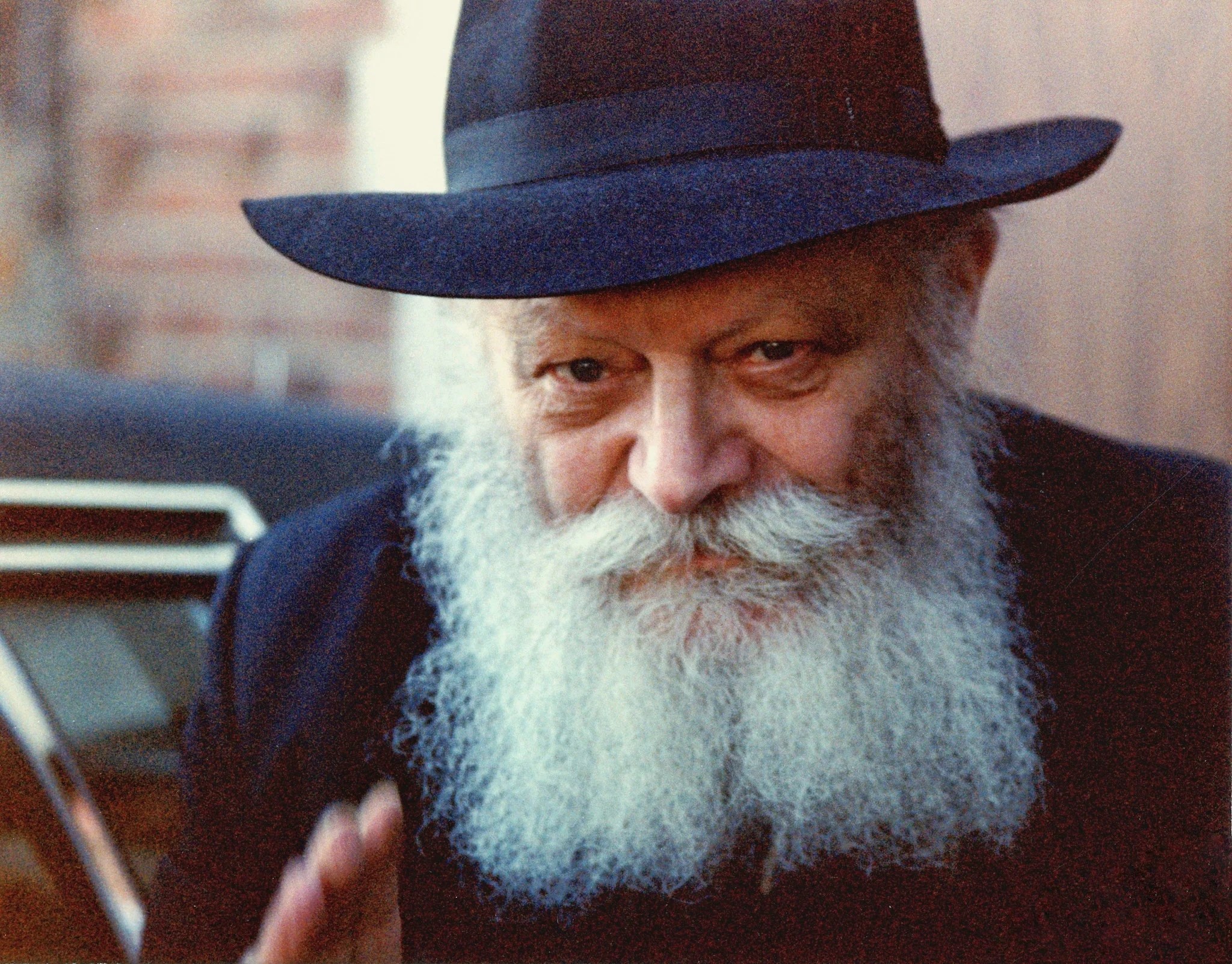
Until this year, I never knew the date of the Lubavitcher Rebbe’s birthday. Quite a leap—from not knowing to being moved to write about why the day matters—but nevertheless, I find myself compelled to share my thoughts. There may be no greater achievement in life than to cultivate something that reverberates positively after one’s body departs this earth. Anyone who knows what Rabbi Menachem Mendel Schneerson built during his life as the Rebbe will understand that his life was the very epitome of that concept.
As someone who was not born in Crown Heights, and who does not consider himself a Chabadnik per se, I may not be the most obvious person to share these thoughts. However, as a proud Jew who believes in my faith and wants to see the Jewish people thrive, I am happy to express my gratitude and appreciation for the Chabad-Lubavitch movement. I know that many people’s connection to Chabad comes from an emissary’s pursuit, but in my case—and for most of my life—I have been the one who has pursued Chabad.
I have been to Crown Heights for the holiday of Simchat Torah eight times—which, for those who may not know, means I was there for 2–3 days on each occasion. As it happens, this particular holiday is quite the celebration. I only half-jokingly say that it was there I learned how to drink alcohol. After moving to Florida, I found myself within walking distance of a synagogue to my liking—one that is, in fact, a Chabad. And over the past few years, through giving my Bram’s Violin presentation, I have had the good fortune of visiting a number of Chabad locations both in and outside of Florida. I say this because it has given me a perspective that is both honest and objective.
That honesty allows me to engage with those who say they have had negative experiences, while the objectivity—if one accepts it—gives credibility to my conclusions. What I often tell people is that Chabad communities are like snowflakes: no two are exactly alike. That reality also suggests that some complaints undoubtedly have at least some basis in truth. But when I think about the stories I hear about the Rebbe, one thing that stands out is that when he provided advice or guidance, it seems he never told one person exactly what he told another. His entire approach reflected a deep understanding that no two people are alike, and that everyone carries their own flaws and imperfections.
Recognizing this—and understanding that even leaders and emissaries in the Chabad world are human, like everyone else—allows one to accept those who err, while appreciating the vast majority who work tirelessly for the betterment of not only the Jewish world, but the world as a whole. In fact, if anything proves that Chabad is not a cult, it is the fact that individual personalities are constantly on display—even, on occasion, with imperfection.
With its acceptance, kindness, charity, and outreach, Chabad communities have had a positive impact across the world. Jews have not only found communities in some of the most unexpected places, but also a support system that, more often than not, is offered unconditionally.
The Rebbe’s teachings took an already strong Jewish movement and transformed it into a powerful and positive global force—a force that brings out the best of Judaism, making it accessible and welcoming to Jews everywhere, while extending kindness and generosity beyond its own community. As someone with significant exposure to the Chabad world, and who tries to keep a finger on the pulse of the broader Jewish world, I would not want to imagine a world in which the Lubavitcher Rebbe was never born. His impact has done more good than anyone could ever adequately measure.
Is there any greater honor one can offer on a birthday?
Am Yisrael Chai
Never Again Is Now!
Like what you see? Feel free to share!
HELP25.org
 Holland's Heroes